It started with a stubborn craving and a soggy disappointment. I was trying to recreate that iconic newspaper-wrapped fish and chips moment—the kind you dream about after a stroll along a windy pier, vinegar in the air and fingers salty from the sea. But instead of crisp and golden, I ended up with limp fries and battered cod that tasted more like regret than comfort. That’s when I realized: the real magic of fish and chips isn’t in the ingredients. It’s in the method—and the method, my friends, has secrets.
Let’s spill them all.
The Problem with American Potatoes (And What to Do Instead)
Chances are, if you’ve ever followed a French fry recipe in the U.S., it called for russet potatoes. They’re big, cheap, and usually get the job done. Except they don’t—not when you’re chasing that thick, golden chip shop fry with the creamy center and glassy crunch.
Four batches in, still no luck.
Turns out, russets caramelize too fast in high heat and never fully crisp before they turn dark and floppy. Enter: Kennebec potatoes. Or, as I like to call them, the closest thing Americans have to the UK’s beloved Maris Piper. Track them down at specialty grocers or call your local produce supplier—it’s worth the hunt.
If all else fails, here’s your ticket: frozen fries. Yes, the good ones. Most restaurant fries are frozen anyway (even your favorites), and they fry up beautifully.
Soaking, Simmering, and the Triple-Cook Truth
The holy grail of chips starts long before the oil hits the pan. First up: cut your potatoes into thick, stubby rectangles. Chunky and charming—think pub-style over shoestring.
Then soak those babies. Cold water, multiple rinses. You’re trying to get rid of as much surface starch as possible. When the water runs clear, let them sit in the fridge for a few hours (or overnight if you’re the plan-ahead type). This step doesn’t just clean—it hydrates, plumps, and preps for the next phase: boiling.
Here’s where it gets fun. Boil your chips in water laced with a splash of vinegar. This oddball move (credit to food scientist Kenji López-Alt) keeps the potato flesh intact, even when you fry it twice later on. Vinegar strengthens the pectin, and strong pectin means fewer chip casualties.
After ten minutes in simmering water, let them drain, cool, and air out. Pat them dry like they just ran a marathon. Then chill in the freezer for 30 minutes to toughen up. Cold chips = less soggy sadness later.
Oil, Fry, Freeze, Repeat
First fry? A low-temp cruise at 285°F. Think of it as a dehydration session—less about color, more about texture. After five minutes, let them cool again. Then freeze. Yes, again. The second freeze locks everything in.
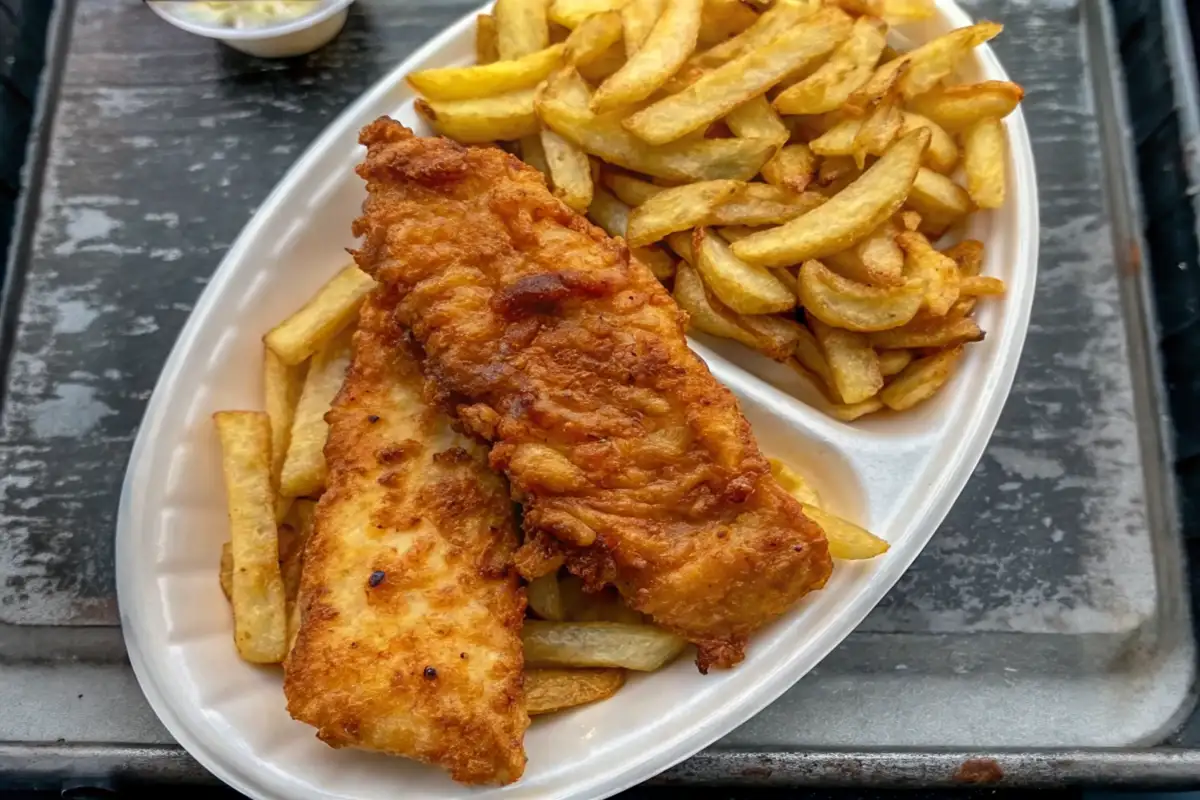
Final fry? Crank the heat to 360°F. Now you’re in crisp territory. Seven to eight minutes, and those chips will go from pale to perfect. Deep golden brown, whisper-thin crunch, buttery inside. Salt them hot, toss in a big bowl, and try not to snack them all before the fish is done.
Fish That Fries Like a Dream
Let’s talk cod. Real cod. Not the frozen fillets that sweat in your freezer drawer. Fresh cod has a firm texture that makes it a prime candidate for frying. Aim for one-inch thick pieces—cut on the diagonal for that pub-style flair.
Here’s the kicker: smaller pieces mean more surface area for batter, and more batter means more crunch. It’s a math I happily live by.
Salt the cod lightly and let it rest. The salt will pull out some moisture—just enough to help the flour stick. Then give it a light dusting of a 50/50 flour mix: all-purpose and rice flour. This is your insurance policy. No batter slippage allowed.
The Cold Beer Batter Trick
This isn’t your standard pancake-style batter. No eggs. No fancy flour blends. Just cold beer (the lighter, the hoppier, the better), rice flour, AP flour, baking powder, and salt.
The real tip here? Keep that batter cold. Like, fridge-chilled cold. It helps it puff up in the oil and stay crisp longer. And don’t make it too thick—thin batter fries better. A thick coat will steam the fish and turn gummy within minutes.
After coating your fish, let the excess drip. More batter is not better here. You want a thin, lacy shell that clings like a glassy cocoon.
Frying: Gentle, Hot, and Not Too Crowded
Fry at 375°F. No lower. No higher.
Lower each piece gently into the oil—away from your body, especially if you’re barefoot. (I’ve made that mistake. Once.) Only two pieces at a time. If the oil cools, the batter won’t crisp, and your fish will come out greasy and limp.
In four minutes flat, you’ll have golden fillets with a crackle you can hear from across the kitchen.
A Quick Word on Tartar Sauce
Sure, you could buy it. But homemade tartar sauce is like putting on red lipstick before sweatpants—it elevates everything.
Here’s a fast mix:
- Mayo
- Chopped bread and butter pickles
- Capers
- Rinsed red onion
- Dijon mustard
- Parsley
- Lemon juice
- One small clove of garlic, pressed
Whisk. Chill. Done.
The tang cuts through the richness of the fish and makes each bite feel bright and balanced.
3 Mistakes to Avoid with Fish and Chips
- Using soggy fish – Pat it dry and let it rest before battering.
- Too thick batter – It suffocates the fish and never crisps.
- Overcrowding the oil – It drops the temp and ruins the fry.
5 Ways to Serve This Classic Dish
| Version | Description |
|---|---|
| Pub-Style | Serve with mushy peas, malt vinegar, and a pint of lager. |
| Coastal American | Add coleslaw and hush puppies on the side. |
| Kids’ Night | Fish bites with ketchup and sweet potato fries. |
| Brunch Twist | Layer fish on toast with a poached egg and hollandaise. |
| Midweek Hack | Use store-bought fries and frozen cod, jazzed up with homemade tartar. |
A Crispy Conclusion
There’s something deeply satisfying about chasing crispness. It’s more than crunch—it’s the sound of doing things right, of effort paying off. Like baking your own bread or growing tomatoes on your windowsill, fish and chips cooked at home is a small rebellion against soggy shortcuts.
This dish isn’t hard. It’s just particular. And the moment you take that first bite—hot, shattery cod with a creamy center, next to thick fries that snap and sigh at the same time—you’ll get it.
It’s not just food. It’s a feeling.