
There’s a moment when you realize the thing you paid for isn’t what you expected.
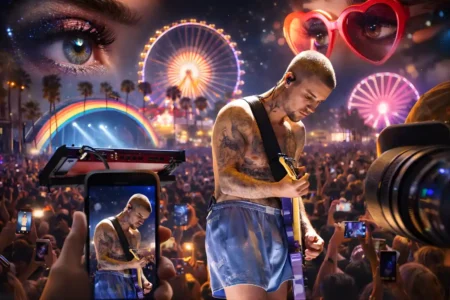
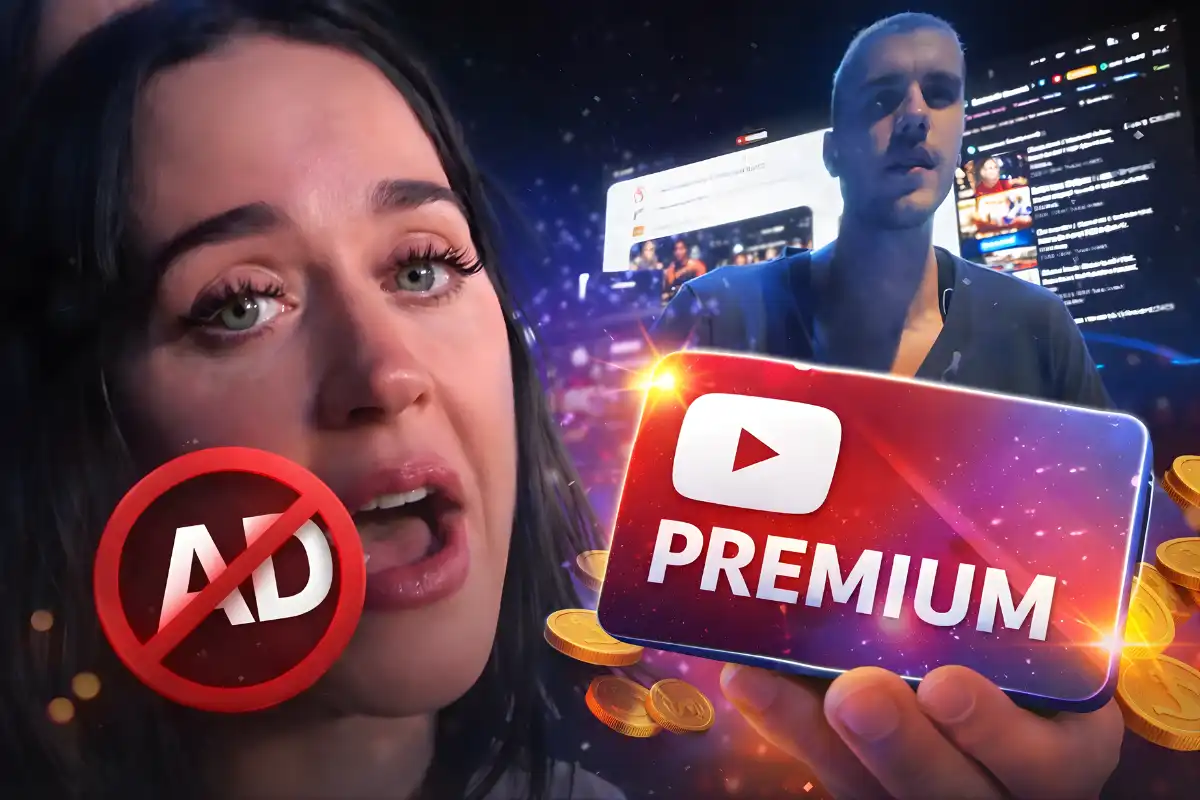
Phones were already up, the crowd buzzing, when the Justin Bieber Coachella set took a turn no one saw coming. Instead of a full live performance, Bieber stood behind a laptop, scrolling through his own YouTube videos—playing them, pausing them, singing along.
And just like that, the biggest stage of the weekend felt a lot smaller.
The Scene
The desert air was warm, the lights hit, and Justin Bieber walked on stage like a man returning after a long break. It had been years since fans last saw him headline something this big.
He opened casually. No massive choreography. No heavy production.
Then he pulled up a laptop.
At first, it looked like setup. A quick intro. Maybe visuals.
But then the screen lit up with YouTube.
He clicked. Scrolled. Chose a video.
And pressed play.
Who + Why Now
Bieber wasn’t just another act on the lineup. This was his first major return after years away from full touring, following health struggles and canceled shows.
Coachella booked him as a headliner, reportedly for around $10 million, a number that comes with a clear expectation: a high-energy, polished performance.
Fans expected a comeback.
What they got felt more like a rewind.
The YouTube theme wasn’t random. Bieber was discovered on the platform as a teenager. His rise started with grainy clips and home-recorded covers.
This set leaned into that origin story.
But doing it on a festival stage, in front of tens of thousands, changed how it landed.
The Full Story
As the set unfolded, Bieber leaned fully into the concept.
He played old clips—early performances, viral moments, music videos fans already knew by heart. At times, he sang along live. At others, he let the video carry the moment.
He even scrolled mid-show, like someone deciding what to watch next at home.
That detail stuck with people.
One minute, a global pop star.
The next, someone casually browsing.
At one point, he brought up a video of his younger self and sang with it—a quiet, reflective moment that some fans found emotional.
Others found it confusing.
There were also reports of minor buffering issues during the set. Nothing catastrophic, but enough to break the illusion of a polished show.
It felt unscripted. Sometimes intentionally. Sometimes not.
And then came the moment that went viral.
From the crowd, Katy Perry reacted out loud:
“Thank God he has Premium. I don’t want to see no ads.”
It was quick. Funny. And instantly clipped, shared, and reposted across platforms.
That line became the headline.
Public Reaction
The reaction split almost immediately.
On platforms like X (formerly Twitter) and TikTok, clips of the set spread fast. Some posts racked up millions of views within hours.
A Reddit thread discussing the performance pulled in hundreds of replies, many circling the same idea: people couldn’t decide if this was bold or just low effort.
One comment summed up the mood:
“We paid festival prices to watch YouTube.”
That sentiment showed up again and again.
Others defended it. Some fans said it felt personal, like hanging out rather than watching a show. DJ Diplo publicly supported Bieber, describing the set as intimate and different from the usual over-produced festival style.
But the divide stayed clear.
For some, it was a creative statement.
For others, it didn’t match the price tag.
And that number kept coming up.
$10 million.
The Bigger Truth
Live shows used to be about what you couldn’t get anywhere else.
This one blurred that line.
Anyone with a phone already has YouTube. Anyone can watch old Bieber clips. That’s what made the choice feel strange to part of the audience.
At the same time, the set raised a real question about what a performance even is now.
Is it about singing live?
Is it about storytelling?
Or is it about turning your own history into the show?
Bieber didn’t hide behind production. He stripped it down, maybe more than fans expected.
That gap—between expectation and delivery—is where the reaction lives.
And it’s why people are still talking about it.
CONCLUSION
Back in that crowd, with the lights still flashing and phones still recording, the moment felt oddly quiet.
Not silent. Just… different.
Justin Bieber stood there, watching his past play out on a screen, while thousands watched him watch himself.
The question hanging in the air wasn’t about the music.
It was simpler than that.
When one of the biggest artists in the world hits play instead of performing, what does that say about what we came to see?