

Something felt off before the music even started.
The lights were low, the stage was bare, and the energy in the crowd didn’t match the price of the moment. The Justin Bieber Coachella performance didn’t open with a bang—it opened with a pause.
People noticed immediately.
The Scene
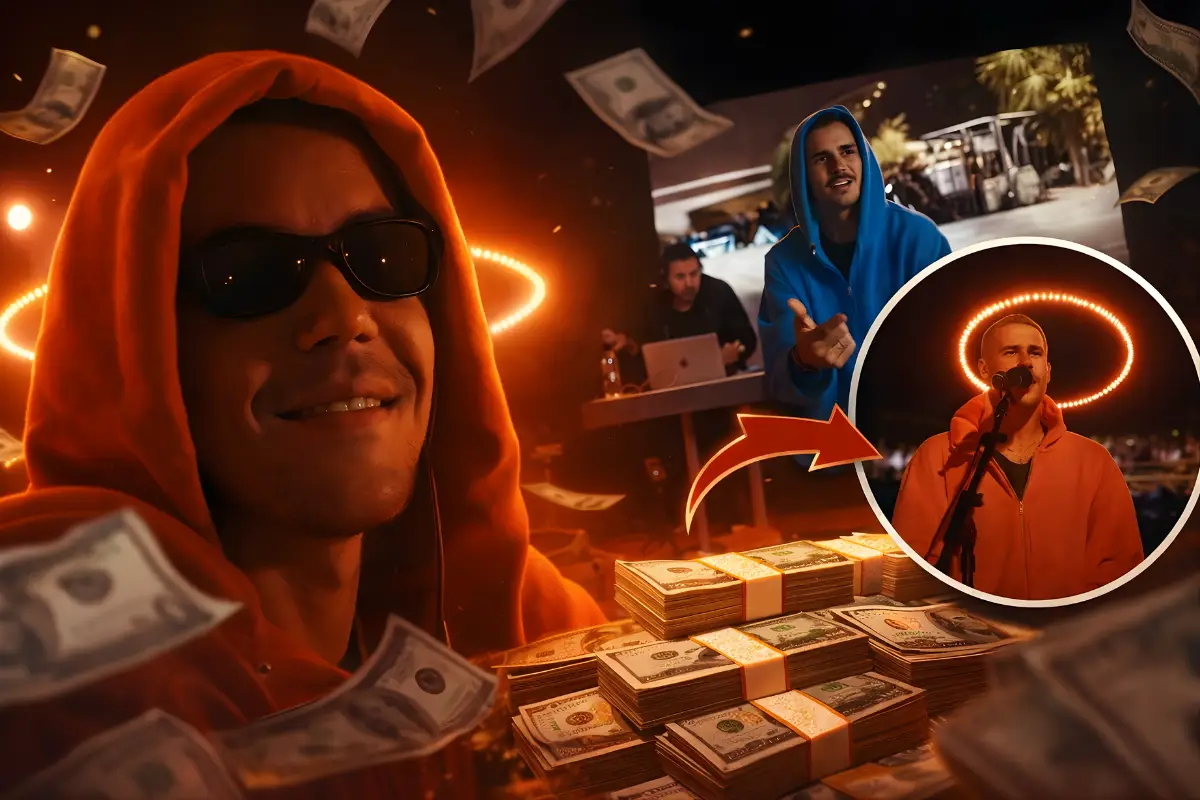
He walked out in a hoodie, shoulders relaxed, almost like he was stepping into a rehearsal instead of one of the biggest stages in live music. Justin Bieber sat down for parts of the set, sang into a mic under warm orange lighting, and let a large screen behind him carry part of the visual weight.
No dancers.
No major build-up.
No big drop.
Just a stripped-down presence that felt smaller than expected for Coachella.
Who + Why Now
Bieber hasn’t been in full touring mode for a while. After canceling parts of his Justice World Tour due to health concerns, including Ramsay Hunt syndrome, his public appearances have been limited and unpredictable.
That context matters.
It also explains why his appearance at Coachella—one of the most watched music festivals in the world—carried so much attention. Fans weren’t just watching a performance. They were watching a return, or at least something close to it.
At the same time, reports began circulating online claiming the appearance was tied to a rumored $10 million payout.
That number spread fast.
And once it did, expectations changed instantly.
The Full Story
Clips from the Justin Bieber Coachella performance began circulating within minutes on platforms like TikTok, X (formerly Twitter), and Instagram. The visuals were consistent: Bieber in a hoodie, minimal movement, calm delivery, and a noticeable reliance on atmosphere rather than energy.
For some, it felt intentional.
For others, it felt unfinished.
The biggest point of tension wasn’t just how he performed—it was how people interpreted the effort behind it. Viewers compared the set to previous Coachella headliners known for high production value, elaborate choreography, and crowd interaction.
This felt like the opposite.
Some clips showed Bieber standing still for long stretches. Others showed him seated, singing in a tone that leaned more toward studio calm than live intensity. The large screen behind him displayed visuals that some viewers described as “pre-recorded” or “detached.”
Then came the viral commentary.
One post that gained traction summed up the mood online:
“Not Justin Bieber scammed Coachella out of $10 million to play songs off of YouTube…”
That line wasn’t a verified claim. It was a reaction. But it spread faster than any official statement.
And it shaped the narrative.
Within hours, the conversation wasn’t just about the performance. It was about value—what people believe a live performance should look like when that kind of money is involved.
Public Reaction
On TikTok, short clips of the Justin Bieber Coachella performance gathered millions of views, with comment sections filled with quick, blunt reactions. The tone leaned sarcastic, with many users comparing the set to a rehearsal or a casual studio session.
On X, longer threads broke down the contrast between expectation and reality. Some users pointed to the rumored payout, while others focused on the stripped-down style itself.
The divide was clear.
One side saw a lack of effort:
- “That looked like a soundcheck, not a headline moment.”
- “People paid festival prices for that level of energy?”
The other side saw something different:
- “He’s not in that era anymore. This is who he is now.”
- “Not every performance has to be loud to be real.”
Reddit threads added another layer, with users debating whether modern festival performances are shifting away from spectacle toward mood and presence.
Even comedians and casual commentators joined in, framing the moment through everyday comparisons—like showing up to work, doing the bare minimum, and still getting paid at the highest level.
It wasn’t just about Bieber anymore.
It became a conversation about expectations in entertainment.
Bigger Truth
There’s a quiet shift happening in live music, and this moment made it visible.
For years, festival culture has trained audiences to expect bigger, louder, more polished performances. More lights. More movement. More moments designed to go viral.
But not every artist is moving in that direction.
Some are pulling back. Simplifying. Stripping things down.
And when that happens on a stage as big as Coachella, the reaction is sharp. Because people aren’t just reacting to what they see—they’re reacting to what they expected to feel.
The Justin Bieber Coachella performance sits right in that gap.
Between who an artist used to be and who they are now.
Between what fans remember and what they’re given.
Between price and perception.
Conclusion
Back on that stage, under those lights, Bieber didn’t rush to fill the silence.
He let it sit.
And maybe that’s what unsettled people the most—not what he did, but what he didn’t.
Because when a moment is that big, and the effort feels that small, the question doesn’t go away:
Is this what a $10 million performance looks like now?