

It’s that uneasy feeling when something familiar—like what’s on your plate—suddenly gets questioned.
The Italy lab-grown meat ban didn’t just block a new kind of food. It drew a hard line between tradition and technology, and it forced millions to ask a simple question: what counts as “real” meat anymore?
A Surprising Fact Most People Missed
Italy became the first country in the world to fully ban lab-grown meat, even before it was widely available to consumers.
That matters because this wasn’t a reaction to a crisis. It was a preemptive move.
In 2023, the Italian government passed a law that prohibits the production, sale, and marketing of cultivated meat. Violators can face fines of up to €60,000. The message was clear: this isn’t food Italy wants on its tables.
What Lab-Grown Meat Actually Is
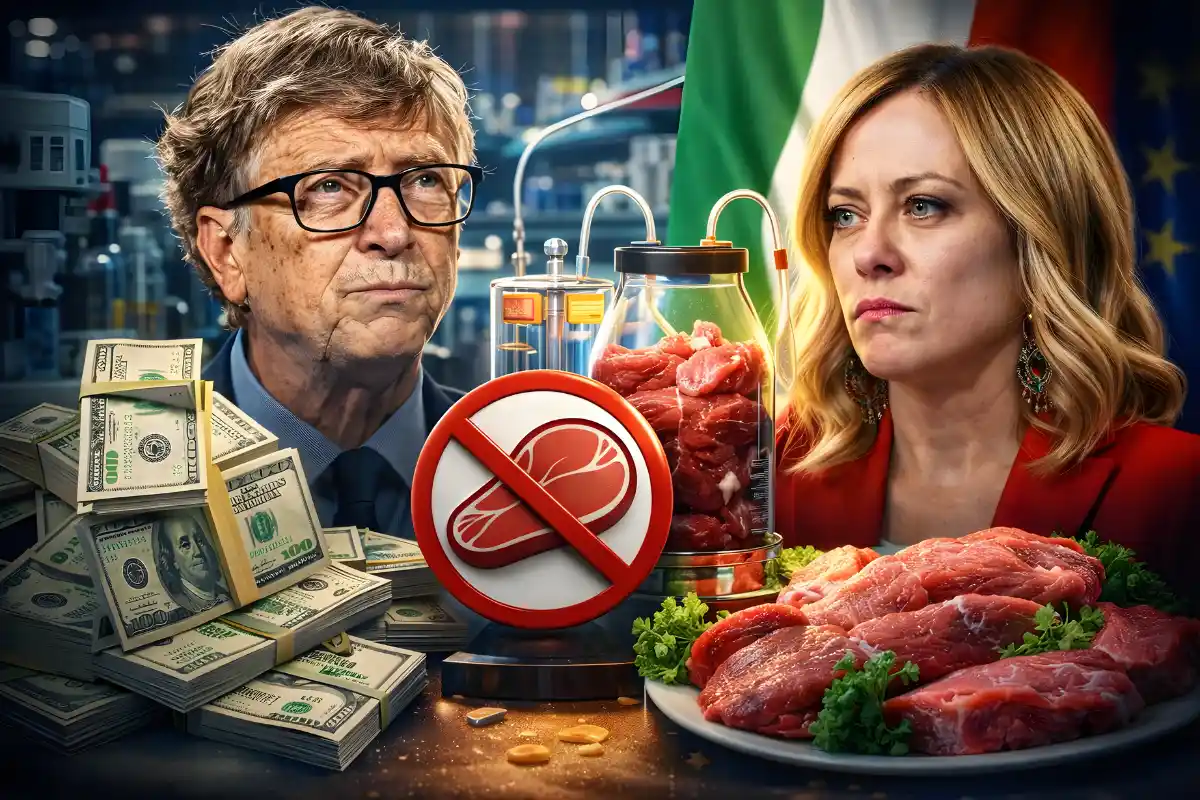
Lab-grown meat—also called cultivated meat—is made by taking animal cells and growing them in controlled environments.
No farms. No slaughterhouses.
At least, that’s the pitch.
Scientists extract a small sample of cells from an animal, then feed those cells nutrients so they multiply and form muscle tissue. The end result is meant to look, cook, and taste like traditional meat.
But it’s still made in a lab.
And that distinction is exactly what sparked concern.
Italy’s leaders argued that this type of food breaks away from centuries of agricultural tradition tied to the Mediterranean diet. For them, food isn’t just nutrition—it’s identity.
What This Means for Everyday Life
Right now, most people haven’t even seen lab-grown meat in stores.
But the ban still affects daily life in indirect ways.
Food prices. Farming jobs. Investment in future food systems.
Italy’s decision protects local farmers, especially small producers who rely on traditional livestock. It also sends a signal across Europe, where regulators are still deciding whether to approve cultivated meat for sale.
For consumers, it keeps things familiar—for now.
But it may also slow down access to alternatives that claim to reduce environmental impact. Livestock farming accounts for about 14.5% of global greenhouse gas emissions, according to the United Nations.
That’s the trade-off.
Keep tradition, or shift toward new solutions.
The Real Obstacles and Skeptic Concerns
Even without bans, lab-grown meat faces major hurdles.
Cost is one of the biggest.
Early versions of cultivated meat were extremely expensive to produce. While prices have dropped, scaling production to feed millions is still a challenge.
There are also questions about long-term health effects, even though regulators in places like the United States have approved limited products.
Then there’s trust.
Some consumers simply don’t like the idea of meat coming from a lab.
That discomfort shows up clearly online. On platforms like Reddit and Facebook, discussions around lab-grown meat often lean skeptical. Many users describe it as “unnatural” or say they would rather stick with traditional farming.
One common sentiment: if it needs a lab, it doesn’t belong on a dinner plate.
The Bigger Debate Playing Out
Italy’s decision isn’t just about food. It reflects a larger divide happening across the world.
On one side, there are supporters who see lab-grown meat as a way to reduce environmental damage and improve animal welfare. Investors, including figures like Bill Gates, have backed companies working on these alternatives, hoping to reshape the future of food production.
On the other side, critics argue that replacing traditional farming with lab-based systems could harm rural economies and disconnect people from how food is made.
And that tension isn’t going away.
Some U.S. states, including Florida and Alabama, have moved toward similar restrictions. Meanwhile, countries like Singapore have already approved and started selling cultivated meat.
Same technology. Completely different reactions.
A Human Story Behind the Policy
In northern Italy, farmers like Marco Bellini, a third-generation cattle producer, watched the debate closely.
For him, it wasn’t about science.
It was about survival.
“We already struggle with costs,” he told a local outlet. “If lab meat comes in, what happens to us?”
His concern is shared by many small farmers who see cultivated meat not as innovation, but as competition backed by large investment.
And unlike tech startups, they can’t pivot overnight.
Conclusion
Back in Italy, nothing on the dinner table looks different—yet.
The steaks are still cut the same way. The recipes haven’t changed.
But the Italy lab-grown meat ban has already reshaped the conversation about what food should be.
For farmers like Marco, it feels like a win.
For scientists and investors, it’s a roadblock.
And for everyone else, it leaves a quiet question hanging in the air:
If the future of food is being decided now… whose plate will it actually serve?