

The number hits before the feeling does. A total at the bottom of the receipt that looks wrong, even when you know it isn’t.
The grocery price surge is no longer a headline—it’s a weekly routine for millions of Americans trying to stretch the same paycheck across shrinking carts.
Nearly half now say affording food has become difficult, and 52% report spending more than they did just a year ago. The first question most people ask is simple: how did basic groceries get this expensive, this fast?
The Human Anchor
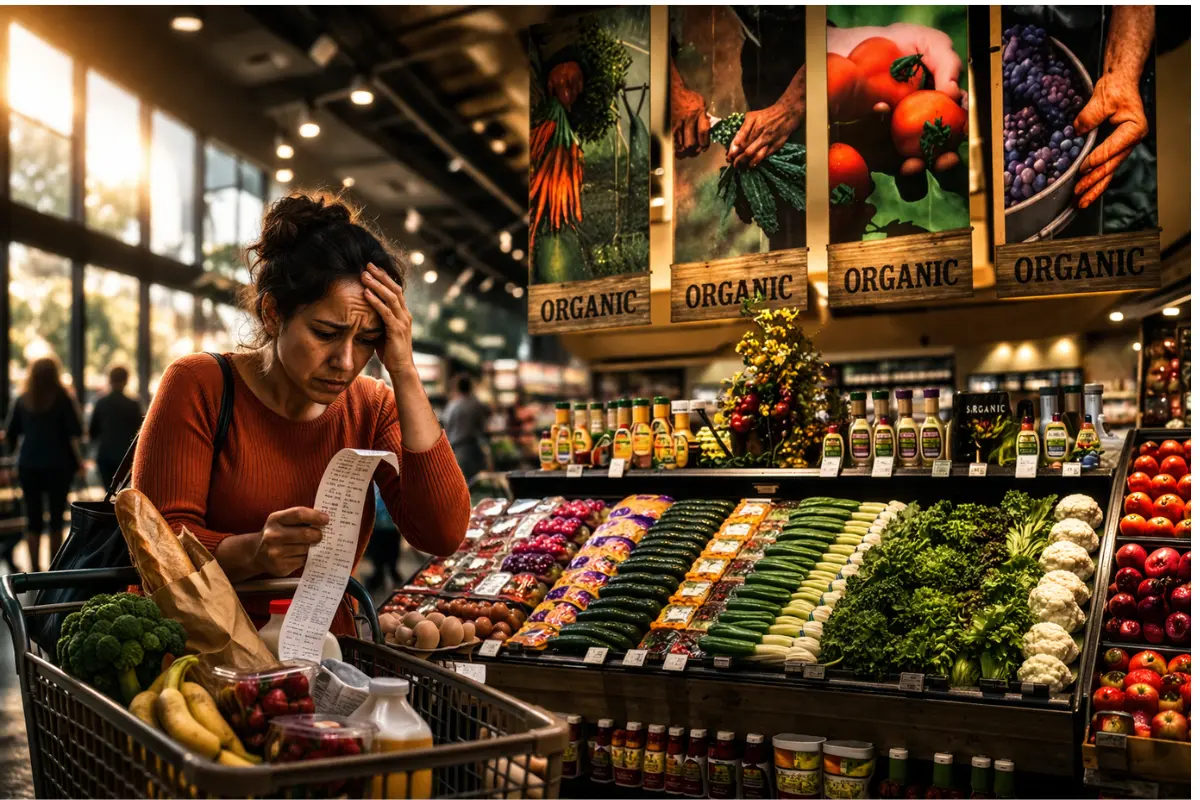
Maria Lopez, a 42-year-old administrative assistant in Phoenix, used to budget $150 a week for groceries. Today, she says that same list costs closer to $260.
She hasn’t changed what she buys. Bread, eggs, chicken, vegetables. Basics.
“I stopped buying extras,” she explained in a local interview. “No snacks, no drinks, nothing fun. And it’s still more.”
She now shops twice a week instead of once, trying to catch smaller totals before they grow out of control. It hasn’t helped much.
Core Fact + Stakes
The numbers behind the grocery price surge confirm what shoppers like Maria already feel.
- 52% of Americans say they are spending more on groceries than last year
- Nearly half report difficulty affording food
- Grocery prices have risen roughly 20–30% since 2020 (U.S. inflation data trends)
That gap between income and cost is where the pressure builds.
For many households, groceries are now competing with rent, gas, and utilities in a way they didn’t before. What used to be a flexible expense has become fixed—and unpredictable.
And unlike other bills, you can’t just turn it off.
Why It’s Happening
The grocery price surge didn’t come from one place. It’s the result of several forces stacking at once.
Supply chains never fully returned to pre-2020 stability. Transportation costs remain elevated, especially for perishable goods. Fuel prices, even when they dip, still ripple through every part of food distribution.
Then there’s agriculture itself. Weather patterns have become less predictable, affecting crop yields and livestock production. The avian flu outbreak, for example, wiped out millions of chickens, sending egg prices soaring more than 60% at their peak.
At the same time, labor costs across farming, processing, and retail have increased. Stores are paying more to stock shelves, and those costs are passed on to shoppers.
According to data tracked by the U.S. Bureau of Labor Statistics, “food at home” prices rose faster than general inflation during several key periods between 2022 and 2024.
That difference matters.
Because even when inflation headlines say things are “cooling,” grocery bills often don’t reflect that change right away.
The Debate
Not everyone agrees on what’s driving the grocery price surge—or who’s responsible.
Some economists point to lingering inflation and supply issues as the main cause. From that view, higher prices are the natural result of disrupted systems slowly correcting themselves.
Others argue something else is happening.
Corporate earnings reports from major food companies have shown strong profit margins during the same period prices were rising. That has led to growing online debate about whether companies are using inflation as cover to keep prices elevated.
A widely shared discussion thread on Reddit, with hundreds of comments, focused on one simple question: “If costs are stabilizing, why aren’t prices going down?”
There isn’t a single answer.
But the tension between those two explanations—economic pressure versus pricing strategy—continues to shape how people interpret what they see at the checkout.
The Relatable Gut-Check
You stand there, looking at the total.
You try to remember what you used to pay.
And you can’t shake the feeling that something doesn’t add up.
That’s the real impact of the grocery price surge. It’s not just the numbers—it’s the constant recalculation. The mental math. The small decisions that didn’t used to matter.
Skip the snacks. Switch the brand. Put one thing back.
Repeat next week.
Online, that experience has turned into its own kind of shared language. Grocery haul videos on TikTok routinely rack up millions of views, with creators laying out a few bags of food and asking viewers to guess the total.
The answers are always too low.
On Facebook and Reddit, users compare receipts from years past. A cart that once cost $120 now pushing $200 or more.
“I make more money than I ever have,” one commenter wrote, “and I feel broke every time I leave the store.”
That sentiment shows up again and again.
Not panic. Not outrage.
Just quiet disbelief.
Conclusion
Maria still keeps her grocery list on her phone. Same items. Same plan.
Every week, the total changes anyway.
She pauses at the register now, watching the numbers climb before they settle. Not shocked anymore—just bracing for it.
And like millions of others, she’s left with a simple question she didn’t used to ask: if this is what basic food costs now, what gives next?