


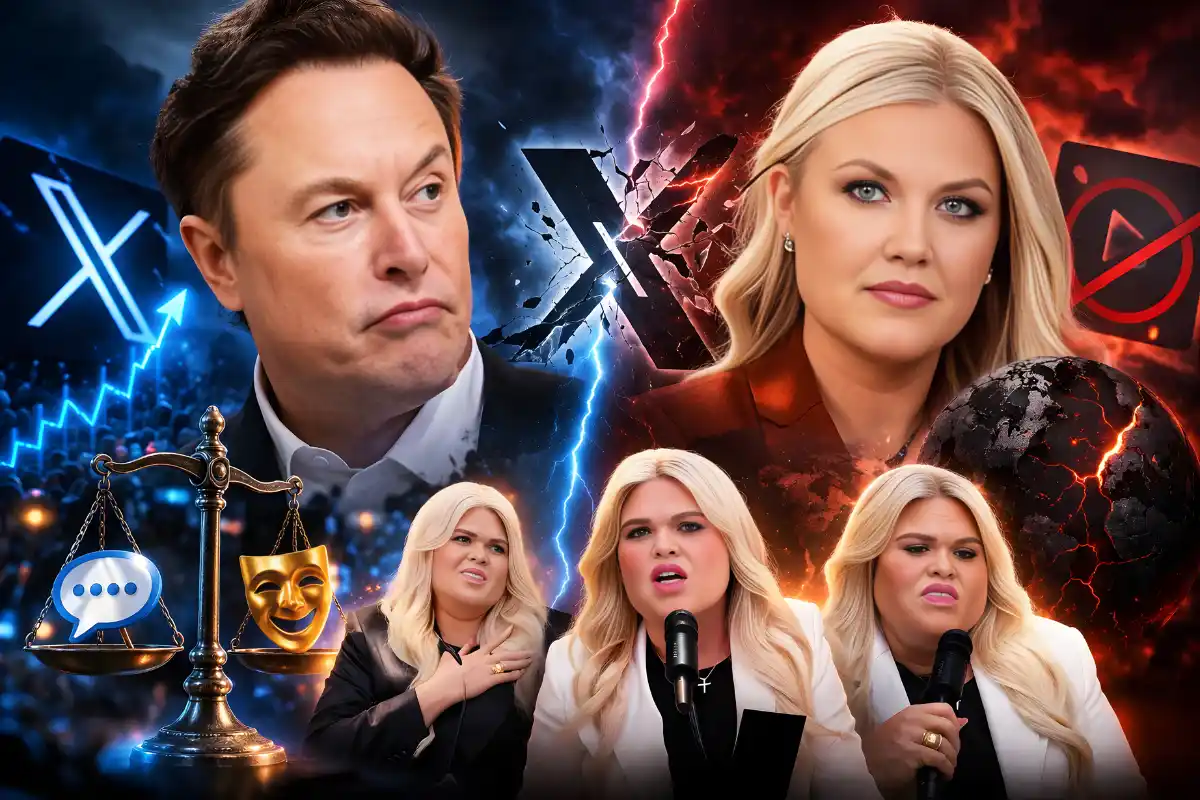
That uneasy feeling when your face seems to be everywhere online—and you never asked for it—is exactly what the Druski Erika Kirk parody controversy tapped into this week.
A viral comedy clip pulled in more than 170 million views, but the real storm began when viewers started attaching a real person’s name to it. Within hours, screenshots, claims, and reactions flooded X, turning a simple sketch into something far more complicated.
The Scene
The video was already everywhere before most people even knew who made it. A blonde woman, speaking into a mic, delivering lines that felt just a little too exaggerated to be real.
Then came the name.
Drew “Druski” Desbordes, known for character-based comedy, was behind the clip. But online, many viewers quickly decided the woman looked like someone else—Erika Kirk—and that assumption spread faster than the joke itself.
And just like that, the focus shifted.
Who + Why Now
Druski has built a following on exaggerated personas—characters that lean into stereotypes for humor. His sketches often walk a fine line between parody and realism, which is part of why they travel so well online.
This one landed at the exact moment when short-form video dominates attention. Platforms reward anything that keeps people watching, and a clip that sparks debate tends to travel even further.
At the same time, X has leaned heavily into a looser approach to moderation under Elon Musk, especially when it comes to parody or satire. That backdrop made the situation feel familiar to many users, even before facts were confirmed.
The Full Story
The original video was posted and quickly gained traction, climbing into the tens of millions of views in a short span. Its format was simple: a stylized, over-the-top character delivering lines meant to feel both funny and slightly uncomfortable.
That discomfort was part of the appeal.
Viewers began sharing clips, screenshots, and reactions. Some laughed at the performance. Others focused on how real it felt. And then a key shift happened—people started claiming the woman in the video was Erika Kirk.
There was no verified connection.
Still, the idea stuck.
At the same time, a screenshot began circulating that appeared to show Erika Kirk asking Elon Musk to remove the video, calling it harmful and humiliating. Another image showed Musk responding, saying the content would stay up because it fell under parody and free speech.
Neither post was real.
According to reporting from Hindustan Times, both the alleged request and Musk’s reply were fabricated, yet they spread widely and were treated as fact by many users. The confusion deepened when X’s own AI chatbot, Grok, incorrectly identified the woman in the video as Erika Kirk in a viral response that gained significant engagement.
That moment poured fuel on the situation.
Now the story wasn’t just about a comedy sketch. It was about identity, misinformation, and how quickly a narrative can lock in before anyone checks it.
One clip. One wrong name. Millions of views later, the damage felt real, even if the premise wasn’t.
Public Reaction
On X, the conversation split almost instantly.
Some users defended the video as obvious satire. They pointed out that Druski’s style has always relied on fictional characters, not real individuals. For them, the bigger issue was how quickly people jumped to conclusions.
Others focused on the impact of viral content. Even if the clip was meant as comedy, attaching a real person’s name to it changed the stakes. A trending topic can shape how someone is seen, whether the claim is true or not.
A Reddit thread with hundreds of replies captured the mood: part humor, part frustration, and a steady stream of users trying to untangle what was real.
One common line kept showing up: people don’t always care if something is accurate, only if it feels believable.
That tension—between truth and virality—sat at the center of the debate.
Meanwhile, some creators pointed to the role of AI in the confusion. When a chatbot gives a confident but incorrect answer, it can spread faster than any correction.
And once a story reaches that scale, corrections struggle to catch up.
Bigger Truth
This wasn’t just about a video.
It was about how quickly identity can become collateral damage in viral culture.
A joke can be written in minutes. A name can be attached in seconds. And once millions of people see it, separating fact from assumption becomes nearly impossible.
Platforms reward engagement. Audiences reward familiarity. And somewhere in the middle, a real person can get pulled into a story they were never part of.
That gap—between what’s allowed and what feels fair—is where most of the discomfort sits.
Because technically, nothing illegal happened here.
But that doesn’t mean nothing happened.
Conclusion
By the time the confusion around the Druski Erika Kirk parody started to clear, the video had already reached hundreds of millions of views and the narrative had taken on a life of its own.
The clip kept playing.
The name kept circulating.
And the line between character and real person stayed blurred long enough to matter.
So the question isn’t just whether the video should stay up—it’s how much control anyone really has once the internet decides who a joke is about.