
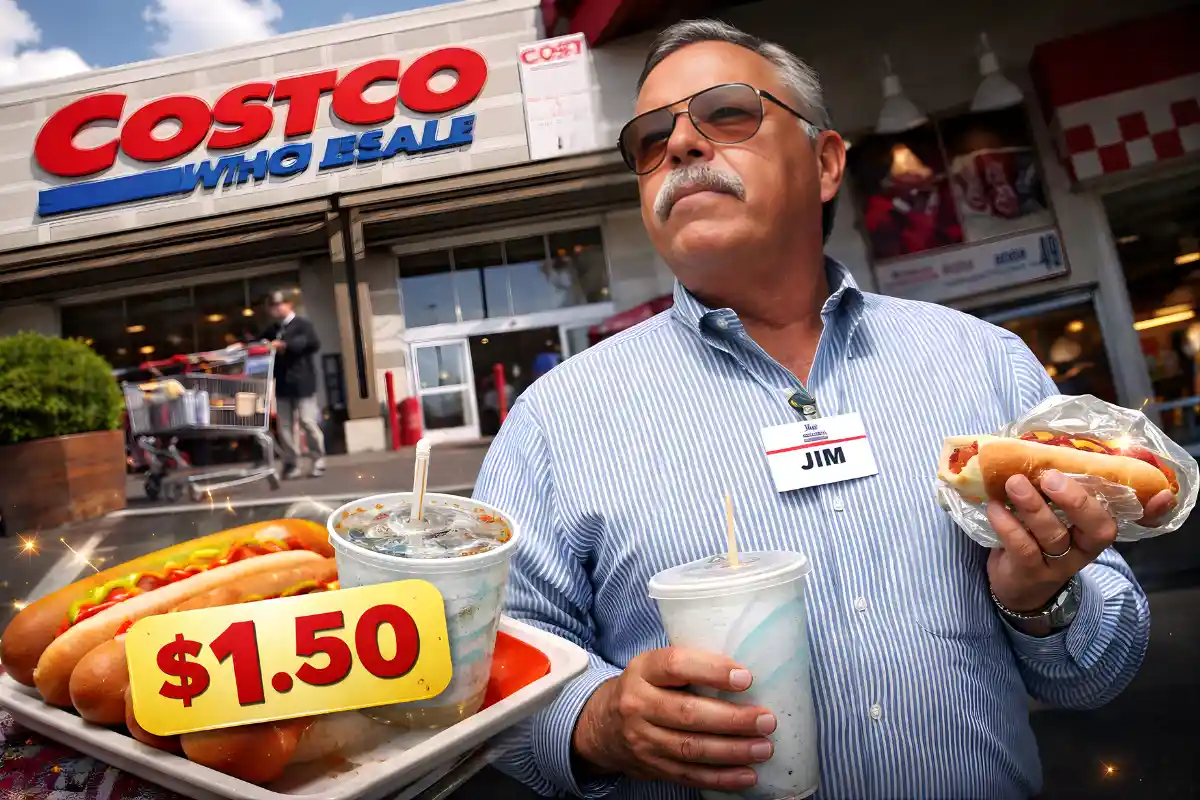
There’s a strange kind of comfort in knowing at least one price hasn’t changed. In a time when groceries jump week to week, the Costco hot dog price sits there like a stubborn reminder that not everything has to move with the tide.
For many shoppers, it’s the last thing they grab before heading out. A hot dog. A drink. $1.50. Always the same.
The Person Behind the Promise
Back in the 1980s, a warehouse manager named Jim Sinegal had a simple idea: treat customers well, and they’ll come back.
He wasn’t flashy. No big speeches. No grand vision statements.
Just a focus on value.
Sinegal co-founded Costco in 1983 and built the company around low margins and trust. Not “good deals.” Not “competitive pricing.” Real, consistent value.
The hot dog came two years later.
And somehow, it became the symbol of everything.
The Core Fact That Still Surprises People
The Costco hot dog price has been $1.50 since 1985.
Not adjusted. Not tweaked. Not quietly changed.
Still the same.
That combo includes a quarter-pound all-beef hot dog and a soda with refills. Today, that price feels almost out of place. Inflation alone would push it closer to $4 if it had followed normal trends.
Costco sells over 150 million of them each year.
And they’re not making money on it.
That’s the part most people miss.
Why Costco Refuses to Raise It
This wasn’t an accident. It was a decision.
At some point, Costco could have raised the price. A few cents here. Maybe a dollar over time. No one would’ve blinked.
But inside the company, the hot dog became something else.
A line in the sand.
When current CEO Craig Jelinek once suggested a price increase, Sinegal reportedly shut it down with a blunt warning. The exact wording spread online and turned into legend, but the message was clear: the price stays.
Costco even changed suppliers in 2009, moving away from Hebrew National and producing its own hot dogs under the Kirkland brand. They built their own manufacturing systems to keep costs under control.
They switched soda partners from Coca-Cola to Pepsi in 2013.
All to protect that $1.50.
Not because they had to.
Because they chose to.
The Real Strategy Behind It
The hot dog isn’t just food. It’s a signal.
Costco runs on a different model than most retailers. Instead of making big profits on products, they rely heavily on membership fees. That means keeping customers happy matters more than squeezing extra cents out of each item.
The hot dog does three things:
- It brings people into the store
- It reinforces trust in pricing
- It creates a small ritual customers remember
If one item hasn’t changed in 40 years, it makes everything else feel fair.
Even when it’s not.
That’s powerful.
The Debate Around the Price
Not everyone sees it as genius.
Some analysts argue it’s unnecessary. Selling millions of items at little to no profit adds up. Even a small increase could bring in extra revenue without hurting demand.
Others say it’s exactly why Costco works.
Retail experts often point to the hot dog as one of the strongest branding moves in modern business. It’s simple, visible, and easy to understand. No marketing campaign could match it.
A Harvard Business School case study even highlighted Costco’s pricing discipline as a key reason for its long-term success.
Meanwhile, shoppers don’t debate it much.
They just line up.
What People Are Saying Online
The Costco hot dog price shows up online more often than you’d expect for a food item.
On Reddit, threads with hundreds of comments break down the economics. Some users try to calculate the exact loss per hot dog. Others share stories about stopping by Costco just for the combo.
“It’s the last honest deal left,” one user wrote in a thread that drew over 800 replies.
TikTok leans more emotional. Videos compare rising grocery bills with the unchanged $1.50 combo. The tone is half-joking, half-serious.
A small symbol of stability.
Even comedians have picked it up. Stand-up bits about inflation often circle back to Costco, framing it as the one company refusing to play along.
The Gut-Check Moment
You notice it when everything else feels off.
When your usual grocery bill creeps higher. When small things cost more than they used to. When you start doing the math in your head before adding something to your cart.
Then you walk out of Costco.
Hot dog in hand.
Still $1.50.
And for a second, it feels like something stayed put.
Back to the Line Outside
Late afternoon, carts rolling out, receipts checked at the door. Near the exit, there’s always a small crowd around the food counter.
Some people are tired. Some are just hungry.
Most of them aren’t thinking about business strategy or inflation rates.
They’re thinking about lunch.
And right there, in a paper wrapper and a plastic cup, is the same deal that’s been waiting for them for decades.
The Costco hot dog price hasn’t moved.
The question is—when everything else has, how long do you expect it to last?