

For a moment, it feels like that split second everyone has faced — the choice that seems right at the time but lingers years later. The Kevin Costner Waterworld decision didn’t look like a gamble when it happened. It looked like control.
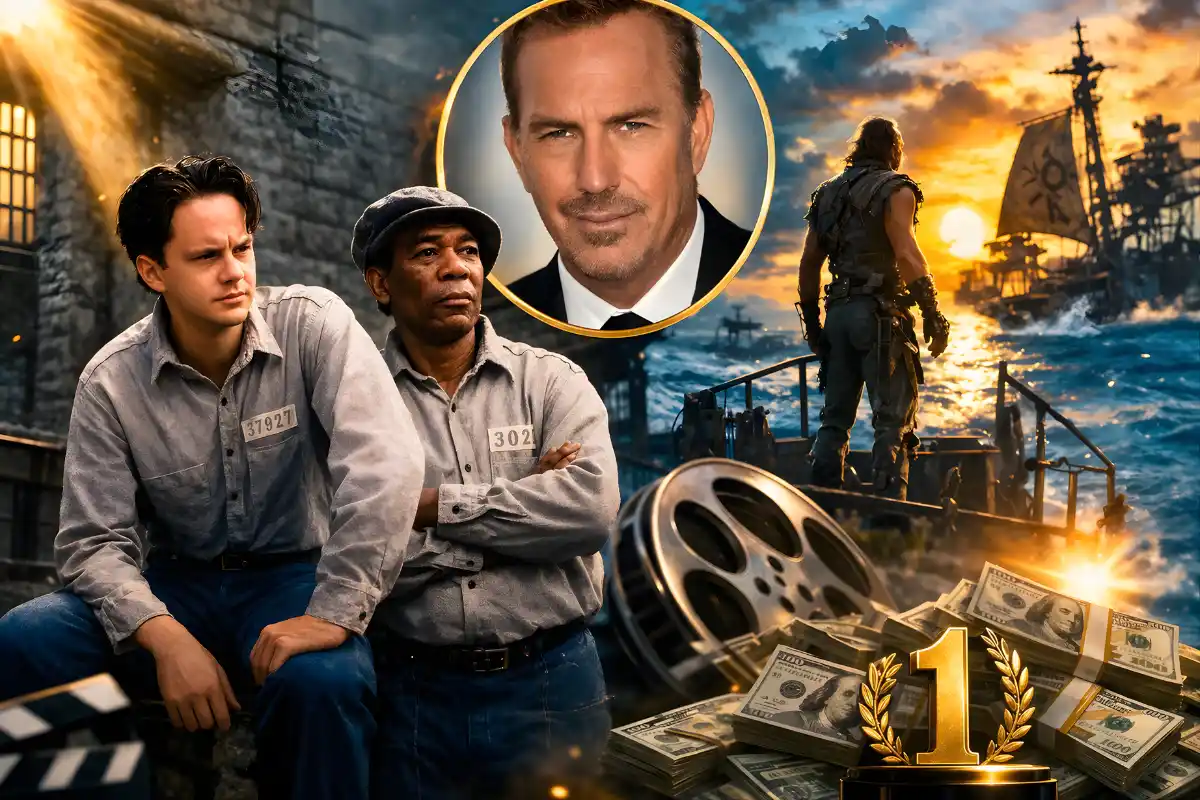
In the mid-1990s, Kevin Costner was standing at the peak of his career. He had already won Oscars, delivered box office hits, and built a reputation as one of Hollywood’s safest bets. So when a prison drama script landed on his desk — quiet, slow, and without obvious blockbuster appeal — he passed. He was already committed to something bigger.
That choice tied him to Waterworld. And left The Shawshank Redemption to someone else.
The Scene
The script sat there, unflashy and easy to overlook. No explosions. No sweeping battles. Just a story about a man in prison.
Kevin Costner, fresh off major success, had his attention locked elsewhere. Waterworld was already in motion — a massive production, ambitious, expensive, and designed to dominate the box office. At that point, turning down a low-key drama wasn’t unusual. It was expected.
He moved forward with the ocean epic.
And the prison film moved on without him.
Who + Why Now
The Kevin Costner Waterworld decision keeps resurfacing because of how differently the two films aged. At release, the gap wasn’t obvious. The Shawshank Redemption opened quietly in 1994 and struggled to bring in audiences. It made around $28 million domestically — modest at best.
At the same time, Waterworld was dominating headlines.
Its budget reportedly climbed to around $175 million, making it the most expensive film ever made at that time. Studios pushed it hard. Media covered every detail of its troubled production. It wasn’t just a movie — it was an event.
But time flipped the narrative.
Shawshank slowly built a following through home video and cable TV. Over the years, it rose to become one of the highest-rated films on IMDb, often sitting at the top spot.
Meanwhile, Waterworld became known less for its story and more for its cost.
The Full Story
The decision itself wasn’t dramatic. It was practical.
Kevin Costner had already committed to Waterworld, a project he didn’t just star in but heavily influenced behind the scenes. The film aimed to create a new kind of blockbuster — a post-apocalyptic story set almost entirely on water. That meant building massive floating sets in the open ocean.
And that’s where things began to shift.
Production faced constant setbacks. Storms destroyed sets. Equipment was lost at sea. Filming schedules stretched longer than planned. Reports of tension between Costner and director Kevin Reynolds added to the strain. Every delay pushed the budget higher.
The movie became known in industry circles as difficult, unpredictable, and expensive.
Still, it moved forward.
When Waterworld finally released in 1995, it brought in about $264 million worldwide. Not a small number. But with marketing costs and its record-breaking budget, it struggled to meet expectations. Critics gave mixed reviews, and the media quickly framed it as a cautionary tale of excess.
Nicknames followed.
“Fishtar.”
“Kevin’s Gate.”
They stuck.
At the same time, The Shawshank Redemption was quietly changing its fate. The film didn’t explode overnight. It built slowly. Cable networks aired it repeatedly. Viewers discovered it at home, not in theaters. Word spread.
Tim Robbins’ performance as Andy Dufresne, paired with Morgan Freeman’s role as Red, gave the film a tone that resonated over time. It became something people returned to. Then recommended. Then defended.
Years later, it wasn’t just respected. It was ranked among the greatest films ever made.
That’s when the comparison sharpened.
One film became a long-term cultural benchmark.
The other became a story about risk.
Public Reaction
The internet has kept the Kevin Costner Waterworld decision alive far beyond its original context.
On platforms like Reddit and film forums, the same debate repeats: was it really a mistake, or just bad timing?
One Reddit thread with hundreds of replies framed it bluntly: “Shawshank wasn’t a hit when it came out. Nobody knew.”
That sentiment shows up often. Many users point out that hindsight changes everything. At the time, Waterworld looked like the bigger opportunity.
Others focus on casting. Some argue that Tim Robbins’ quiet, restrained performance was key to the film’s success — and that a different actor might have changed its tone entirely.
Then there’s the defense of Waterworld itself.
A smaller but steady group of viewers has re-evaluated the film over the years. They point to its ambition, practical effects, and scale as something rarely attempted today. Extended versions of the film have even gained a modest following.
Still, the broader narrative remains.
One choice. Two very different legacies.
Bigger Truth
The story isn’t just about one actor turning down one role. It’s about how success is measured over time.
At the moment the decision was made, there was no clear “right” answer. One project offered scale, control, and blockbuster potential. The other offered a quiet story with no guarantee of success.
The outcome only became obvious years later.
That gap — between what something looks like now and what it looked like then — is what keeps the story alive. It’s not just a film decision. It’s a reminder of how quickly perception can change.
And how long it can last.
Conclusion
Back at that moment, the script didn’t stand out. The bigger production did.
Kevin Costner moved forward with the project that looked like the safer bet, the larger opportunity, the next step in a career already filled with success.
The other film found its path without him.
Years later, the Kevin Costner Waterworld decision is still talked about — not because it was obvious, but because it wasn’t.
What does it say about fame when the choice that made the most sense at the time becomes the one people question the most?