

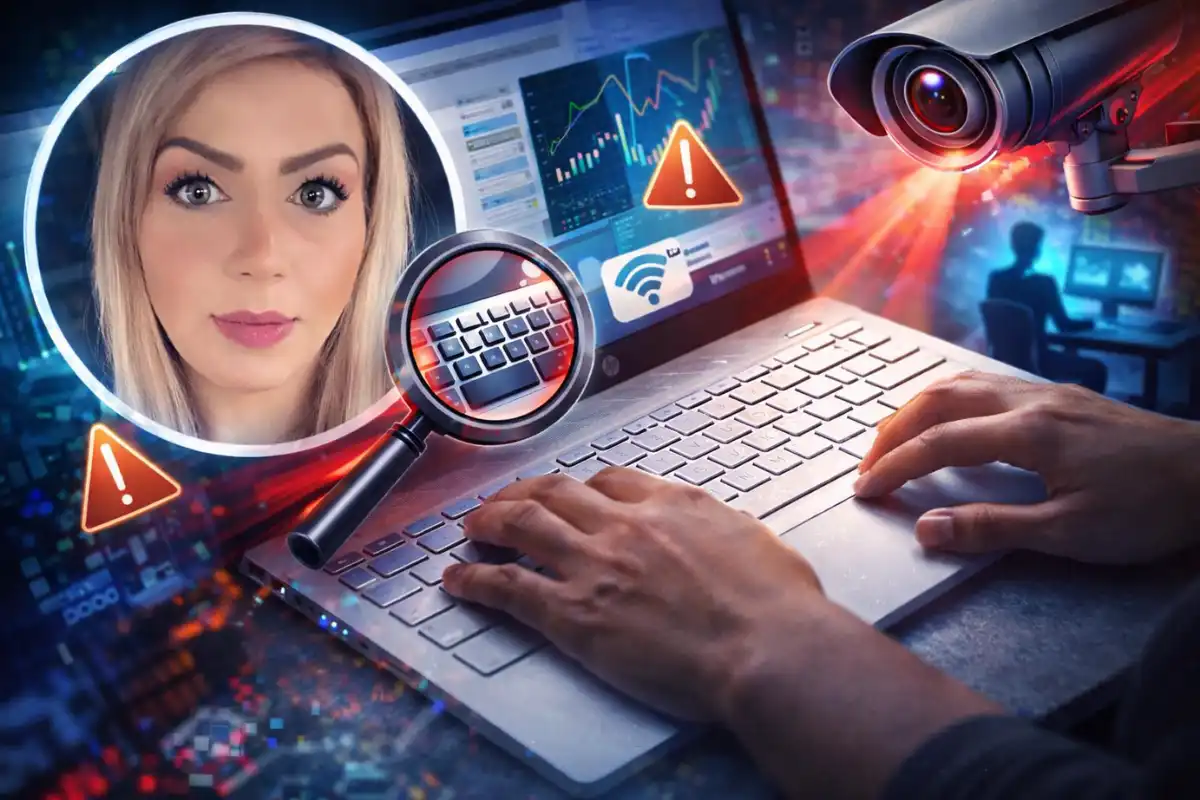
It’s a quiet kind of pressure—the feeling that every click, every pause, every second at your keyboard is being watched. That’s the reality behind remote work monitoring, and for one employee, it ended her career.
Suzie Cheikho had worked at Insurance Australia Group for nearly 18 years. Then, over a 49-day period, her employer tracked her keyboard activity while she worked from home. The data showed an average of about 54 keystrokes per hour, multiple late starts, early finishes, and even full days with no recorded activity. She was fired soon after.
The case quickly raised a question millions of remote workers are now asking: how much monitoring is too much?
A Long Career Reduced to Data
Cheikho wasn’t a new hire struggling to adjust. She had nearly two decades with the company, a stable role, and a track record that had kept her employed through years of change. But after being placed on a performance plan, her work shifted from being judged by outcomes to being measured by activity.
The monitoring software logged when she logged in, how often she typed, and how long she stayed active. Over those 49 days, the company reported she started late on 47 days, left early on 29, and had four days with no measurable work.
That was enough.
Her dismissal was later upheld as valid, with the company citing missed deadlines, unresponsiveness, and low output. Cheikho argued the data didn’t reflect her actual work and said she never stopped doing her job.
One number told the whole story.
And that number cost her everything.
The Rise of Remote Work Monitoring
What happened to Cheikho isn’t isolated. Remote work monitoring has expanded quickly since the shift to work-from-home setups during the pandemic. According to workplace studies, roughly one in three employers now use some form of employee monitoring software.
These tools track more than just keystrokes. They can log screen activity, take periodic screenshots, monitor app usage, and even flag “idle time” when no movement is detected.
For companies, the pitch is simple: protect productivity, ensure accountability, and reduce risk. For employees, the experience often feels different.
Being “active” is no longer about results. It’s about signals—typing, clicking, moving.
And those signals don’t always match real work.
When Activity Replaces Output
Here’s where the tension begins. Many jobs—especially in finance, admin, tech, or creative roles—don’t require constant typing. Thinking, reading, planning, or problem-solving can mean long stretches without touching a keyboard.
But monitoring systems don’t measure thinking.
They measure motion.
That gap creates situations where someone doing their job well could appear inactive, while someone tapping random keys might look productive. It shifts the definition of work from “what you deliver” to “what the software can see.”
Some employees have adapted in ways that sound almost absurd. Reports have surfaced of workers using mouse jigglers, auto-click apps, or even placing objects on keyboards to simulate activity.
In one UK case, police staff were caught pressing a single key thousands of times to trick monitoring systems. More than two dozen employees were investigated.
One person reportedly logged tens of thousands of keystrokes in a single session.
It wasn’t work.
But it looked like it.
Why Companies Are Doubling Down
Employers argue the tools are necessary. With remote teams spread across locations and time zones, visibility becomes harder. Monitoring software offers a way to track engagement without constant check-ins.
There’s also a financial angle. Labor is often the biggest cost for a business. When productivity drops—or appears to—companies look for ways to measure and manage it more tightly.
Some industries, like banking and insurance, face additional pressure around compliance and data handling. Monitoring can help ensure employees are following protocols and not exposing sensitive information.
Still, critics say the approach creates a culture of distrust.
Instead of managing people, companies manage metrics.
And metrics can be misleading.
The Debate Playing Out Online
The story sparked strong reactions across platforms like Reddit, LinkedIn, and Twitter. Threads discussing the case drew hundreds, sometimes thousands, of replies.
Some sided with the employer. If deadlines were missed and work wasn’t completed, they argued, the company had every right to act. Monitoring simply provided proof.
Others pushed back hard. They pointed out that keystrokes per hour is a poor measure of real productivity. Many jobs involve thinking, not typing. Measuring output through keyboard activity, they said, punishes efficiency and rewards noise.
A common sentiment kept appearing: “Work isn’t about how loud your keyboard is.”
That line stuck because it captured the problem in plain terms.
The Legal Gray Area
The legality of remote work monitoring varies by country, but in many places, employers are allowed to track activity on company devices—especially if employees are informed.
However, courts have also recognized limits. In Europe, rulings have affirmed that workers still have a right to privacy, even while on the job. Some countries have pushed back against excessive tracking, particularly when it becomes intrusive or disproportionate.
That leaves companies walking a fine line. Too little oversight, and productivity may slip. Too much, and they risk legal challenges—or losing employee trust.
The Cost of Being Watched
For workers, the impact goes beyond job security. Constant monitoring can change how people work, not always for the better.
It encourages performative behavior—staying active for the sake of appearing active. It can increase stress, reduce focus, and create a sense that every moment must be justified.
Over time, that pressure adds up.
It’s not just about doing your job anymore.
It’s about proving, second by second, that you’re doing it.
A Familiar Feeling for Many
If you’ve ever glanced at the clock during a slow moment and felt a flicker of guilt, you already understand the emotion behind this story. Remote work monitoring turns that small feeling into a constant presence.
It’s the difference between being trusted to work and being tracked while you do it.
And for many, that line is getting thinner.
Where It Leaves Suzie—and Everyone Else
After losing her job, Cheikho said she worries she may struggle to find work again. Her case has become a symbol of a larger shift in how work is measured and judged.
Not by results alone.
But by data points, patterns, and digital traces.
The question now isn’t whether remote work monitoring will continue—it already has.
The real question is simpler.
If your job came down to what your keyboard says about you… would it tell the whole story?