

The moment you pause at the checkout screen and feel that quiet panic—that’s where grocery price inflation lives now.
It’s no longer a headline. It’s a feeling. And for a growing number of households, it shows up the same way every week: a total that looks wrong, even before you leave the store.
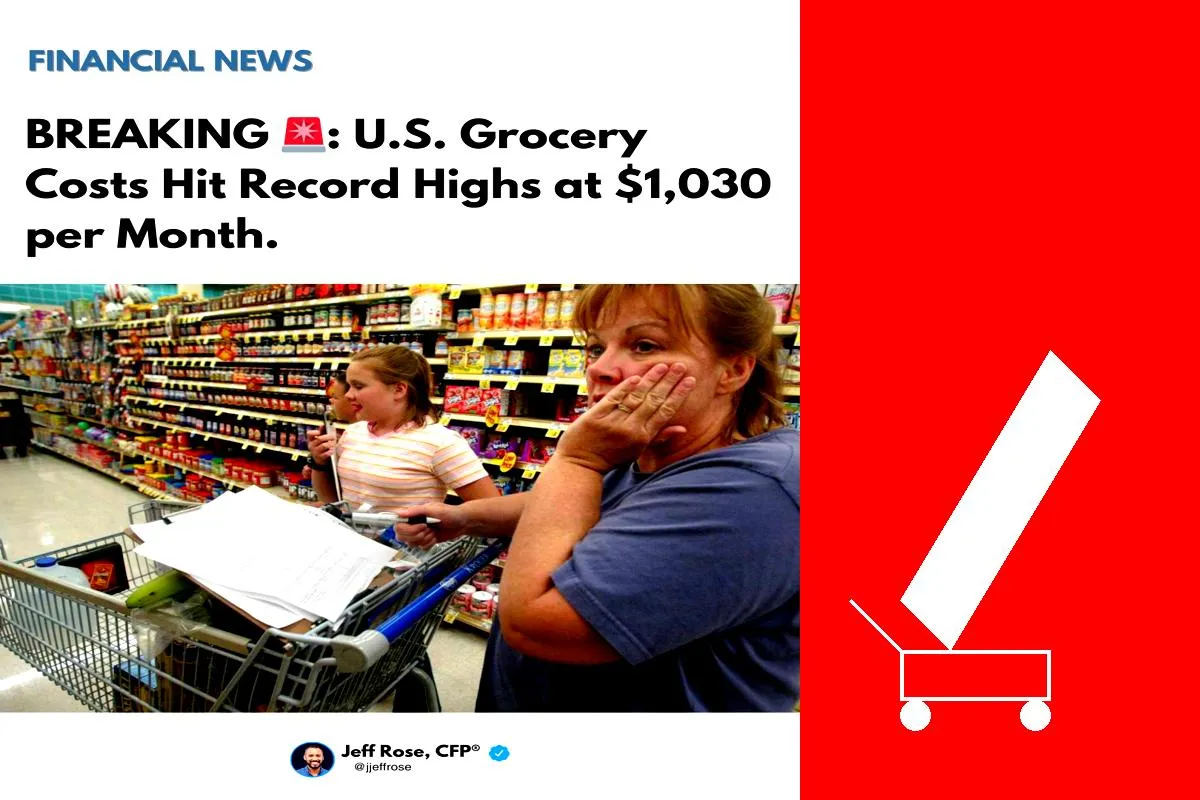
In the U.S., a family of four is now spending around $1,030 a month on groceries, according to recent data from the USDA, Urban Institute, and Bureau of Labor Statistics. That’s just food at home. No restaurants. No takeout.
The first question most people ask is simple: How did groceries get this expensive—and why aren’t they coming back down?
The checkout moment people are starting to talk about
For Maria Gonzalez, a 38-year-old medical assistant in Phoenix, the shift didn’t happen all at once. It crept in.
She used to spend about $180 a week feeding her family of four. Now it’s closer to $260. Same store. Same habits. Less meat, more store brands.
“I thought I messed up the math,” she told a local news station earlier this year. “But it’s every week now.”
She’s not alone. Across income levels, grocery price inflation has quietly become one of the most shared financial stress points—more common than rent increases in some online discussions.
And unlike rent, it changes every week.
The numbers behind the pressure
Since 2017, grocery prices have risen about 37% overall, according to combined federal and research data.
Even now, as general inflation slows, food prices are still climbing roughly 2.5% to 3% year over year.
That means the pressure doesn’t stop. It just slows down.
For families, the monthly cost now ranges widely depending on how tightly they shop:
- Around $1,002 for a strict budget
- Up to $1,631 for a more flexible plan
That spread isn’t about luxury. It’s about survival choices—what gets cut, what stays.
And the items rising fastest are the ones people rely on most.
Beef prices have jumped sharply due to limited supply. Coffee costs have surged after poor harvests and global shipping issues. Eggs have swung wildly after avian flu outbreaks reduced supply.
You notice it when your usual cart suddenly feels like a different lifestyle.
Why grocery price inflation isn’t going away
There isn’t one cause. That’s part of what makes this harder to fix.
At the base level, costs went up across the system:
Fuel prices increased the cost of moving food across long distances. Labor shortages pushed wages higher in farms, factories, and stores. Agricultural inputs—like fertilizer and feed—became more expensive during and after global disruptions.
Those costs don’t disappear. They get built into prices.
The U.S. Department of Agriculture has pointed to lingering supply chain instability as a key factor. Even after the worst of the pandemic passed, certain bottlenecks never fully reset.
Climate has added another layer. Coffee crops have been hit by extreme weather. Livestock supply has tightened after years of drought affecting feed and water.
And once prices rise, they rarely fall back to previous levels.
That’s the part most people didn’t expect.
The debate people are having right now
Online, grocery price inflation has turned into something bigger than numbers. It’s become an argument about fairness.
Some economists say what we’re seeing is a normal outcome of higher input costs and global disruption. Others point to rising profit margins among large food companies and question whether prices are staying high longer than necessary.
The term “greedflation” has started appearing more often in discussions, especially on platforms like Reddit and X, where threads about grocery bills regularly pull hundreds or thousands of comments.
One viral post showed two grocery bags totaling $98, with the caption: “This used to be $40.”
The top comments weren’t surprised. They were tired.
At the same time, retailers argue they are operating on thin margins and dealing with the same cost pressures as everyone else.
Both sides agree on one thing: prices aren’t dropping anytime soon.
What people are changing to keep up
The shift isn’t just emotional. It’s behavioral.
Families are adapting in ways that used to feel optional but now feel necessary.
Meal planning has become routine again. Store brands are replacing name brands. Discount chains and bulk buying are seeing renewed interest.
Apps that track weekly deals are gaining users. Coupons—once seen as old-fashioned—are coming back.
For some households, the changes go further. Less meat. Fewer snacks. Fewer spontaneous purchases.
Groceries used to be predictable.
Now they require strategy.
The quiet gut-check many people are having
If you’ve ever stood in line and mentally added up your cart before the total hits, you’ve felt it.
That moment where you’re hoping the number stays under what you expect.
And it doesn’t.
You start adjusting in real time. Maybe you skip something next week. Maybe you stretch meals a bit longer.
It’s not dramatic. It’s constant.
And that’s what makes grocery price inflation different from other costs—it shows up again and again, without warning, without pause.
Back at the register
Maria still shops at the same store.
She still walks the same aisles.
But now she watches every price more closely than she ever has.
Some weeks, she puts things back. Not because she wants to—but because the total is already too high.
She’s learned to adapt. Most people have.
The question is how far that adaptation can go.
Because at some point, it stops being about budgeting—and starts being about what you can afford to eat.
And if your grocery bill looked different this week than it did last year, you already know the answer.