

The first time someone watches cassava biodegradable plastic melt into a glass of hot water, it feels like witnessing a quiet rebellion against everything we thought we knew about waste.
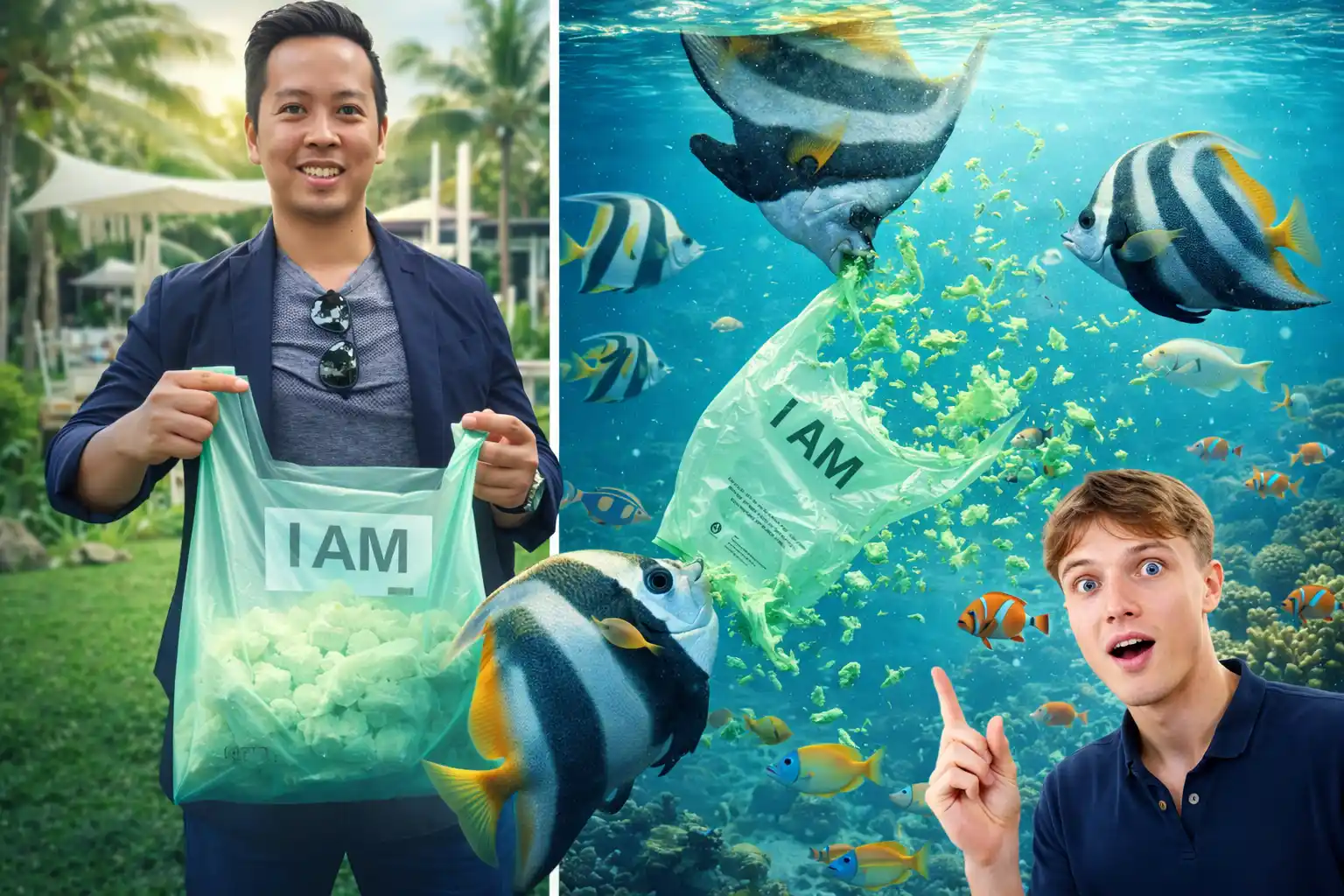
In recent years, cassava biodegradable plastic has drawn global attention after Indonesian entrepreneur Kevin Kumala demonstrated a shopping bag that dissolves harmlessly into liquid. The moment spread quickly across social media, raising a simple question: could this be a real alternative to traditional plastic that lingers in oceans for centuries?
A Surprising Fact Most People Miss
Plastic bags are used by the trillions each year. Many end up in waterways or landfills, where they can take hundreds of years to break down. The cassava biodegradable plastic innovation offers a striking contrast. In controlled demonstrations, the material dissolves within minutes in hot water and breaks down naturally without leaving toxic micro-residue.
For non-experts, that difference matters in a direct way. Less lingering plastic means less long-term damage to food chains, marine ecosystems, and even human health.
What Cassava Biodegradable Plastic Actually Is
Cassava biodegradable plastic is made primarily from cassava starch, combined with plant-based oils and organic resins. The resulting material behaves like conventional plastic in everyday use but is designed to decompose quickly under natural conditions.
In plain terms, it looks and feels like plastic. It can carry groceries, hold food, and be printed with logos. Yet when exposed to heat, moisture, or soil microbes, it begins to break down into organic components.
This is not the same as traditional “biodegradable” plastics that require industrial composting facilities. Cassava-based materials can degrade in open environments, making them especially relevant in regions lacking advanced waste infrastructure.
The concept emerged from growing alarm over Indonesia’s plastic crisis. Coastlines piled with debris prompted Kumala and his team to search for materials that would not persist in nature. Their solution was to use a crop already abundant in tropical regions.
Why This Matters in Daily Life
For the average consumer, the biggest impact of cassava biodegradable plastic is invisible. It shows up not as a dramatic shift but as a subtle improvement in everyday habits.
Shopping bags that dissolve rather than accumulate. Food packaging that does not linger for decades. Single-use items that break down before becoming a problem.
There are also potential cost benefits in the long term. Governments worldwide spend billions managing plastic waste. If biodegradable alternatives scale effectively, municipalities could see reduced landfill pressure and cleanup costs.
One industry particularly watching closely is hospitality. Hotels and restaurants are under increasing pressure to reduce environmental footprints, making plant-based packaging solutions an attractive option.
Still, price remains a hurdle. Cassava-derived materials are often more expensive to produce than petroleum plastics, at least for now. This cost gap influences how quickly adoption can grow.
Obstacles and Skepticism
Not everyone is convinced that cassava biodegradable plastic is a complete solution. Environmental researchers warn that switching materials alone will not fix the systemic drivers of pollution.
One concern centers on scalability. Global plastic demand is immense, and producing enough cassava-based alternatives would require significant agricultural expansion. Critics argue that using food crops for packaging could create competition with food supply chains.
Regulatory challenges also persist. Governments must verify biodegradability claims and establish standards to prevent greenwashing. Without consistent certification systems, consumers may struggle to distinguish genuine eco-materials from marketing language.
Another factor is infrastructure. While cassava plastic can degrade in natural conditions, proper disposal systems still matter. Waste management policies play a key role in determining real-world environmental outcomes.
The Human Story Behind the Innovation
Kevin Kumala’s journey began not in a laboratory but on Bali’s beaches. Seeing waves carry plastic debris ashore made the problem personal.
He started experimenting with natural polymers, testing combinations of plant starches until he achieved a material strong enough for daily use yet capable of dissolving quickly. Early demonstrations involved dissolving the bags in water and, in some cases, drinking the resulting liquid to show safety.
The visual impact of these demonstrations fueled viral interest. Videos circulated widely, sparking debates on sustainability forums and drawing attention from international media outlets.
For some viewers, the innovation symbolized hope. For others, it raised more questions than answers.
Both reactions helped propel the conversation forward.
Where the Technology Stands Now
Cassava biodegradable plastic is no longer a niche experiment. Products derived from the technology have reached markets in Asia, Europe, and the Middle East. Applications range from retail bags to food packaging and disposable utensils.
Research continues into improving durability, reducing production costs, and ensuring consistent performance in different climates. Industry analysts view plant-based plastics as one piece of a broader shift toward circular economies.
Meanwhile, governments are tightening regulations on single-use plastics. This policy pressure may accelerate adoption of alternatives like cassava-based materials.
Yet progress is uneven. Some regions have embraced bans and incentives, while others remain dependent on conventional plastics due to economic constraints.
A Milestone to Watch
The next real test for cassava biodegradable plastic will be large-scale policy integration. Several countries are exploring nationwide restrictions on petroleum-based bags, which could open space for plant-based substitutes.
If such policies take effect within the next few years, demand for biodegradable alternatives may rise sharply. That shift would determine whether innovations like cassava plastic remain symbolic or become standard.
For now, the image of a bag dissolving in water continues to resonate.
Because once you see plastic disappear in seconds, it becomes harder to accept why so much of it still stays with us for generations.