


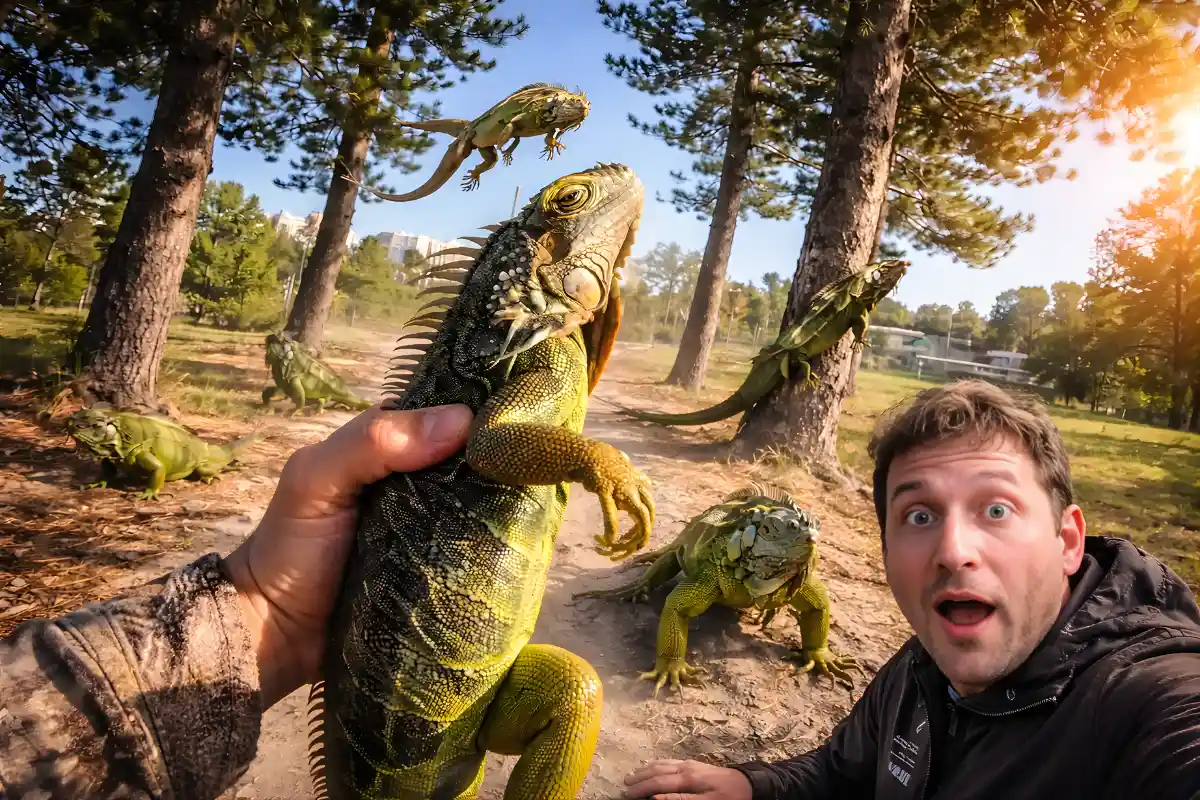
The first time I heard someone say “it’s raining iguanas,” I laughed. I thought it was a joke. Florida jokes are endless, after all. Then a friend texted me a photo. A full-size green iguana. Flat on the sidewalk. Right under a tree. No warning. No context. Just… there.
My first thought wasn’t science. It was, Do they bite when they wake up?
That’s usually where everyone’s head goes. And that’s why so many people end up searching for raining iguanas in Florida every winter.
So let’s clear it up.
Why Iguanas Fall From Trees in Cold Weather
Here’s the simple answer, no drama.
Iguanas are cold-blooded. That means they can’t warm themselves. They depend on the air around them.
When Florida temps drop below about 50°F, iguanas slow way down. When it gets colder—into the 40s or 30s—their muscles stop working right.
And here’s the key detail most people miss:
Iguanas sleep in trees.
So when their grip gives out, gravity takes over. They don’t jump. They don’t attack. They just… fall.
That’s it. That’s the whole mystery.
Are the Iguanas Dead?
This part trips people up every single time.
Most of the iguanas you see on the ground are not dead.
They’re cold-stunned. Think of it like a phone that shut off in freezing weather. Once things warm up, many of them turn right back on.
That’s why wildlife officers repeat the same warning every year:
- Don’t touch them
- Don’t bring them inside
- Don’t assume they’re gone for good
Plenty of people have tried to “help” one, only to watch it spring to life and panic everyone involved. Including the helper.
I’ve seen videos. Nobody looks cool in those moments.
When “Raining Iguanas” Usually Happens
This doesn’t happen all winter. It happens during sudden cold snaps.
Florida winters are usually mild. Iguanas adjust to warmth. But when a sharp cold front hits overnight, they don’t get time to adapt.
This has happened before:
- Late 2000s
- Early 2010s
- Late 2010s
- Early 2020s
- And again in recent winters
Each time, the same cycle plays out: cold night, morning shock, viral videos by lunch.
Why Florida Has So Many Iguanas Anyway
Another question I hear all the time:
“Why are there iguanas everywhere now?”
Short answer: people.
Green iguanas aren’t native to Florida. Years ago, they were popular pets. Some escaped. Some were let go. Florida’s warm weather did the rest.
They breed fast. They dig. They eat plants. They mess with seawalls and sidewalks. That’s why the state labels them an invasive species.
So when cold weather knocks a bunch out of trees, officials don’t see it as random. They see it as part of an ongoing issue.
What Officials Say to Do
When iguanas start falling, wildlife agencies usually keep it simple:
- Leave them alone if you can
- Keep pets away
- Don’t move them unless allowed
- Never relocate and release
During big cold snaps, thousands of iguanas can be found across the state in just a few days. That surprises people. It shouldn’t.
They’ve been there all along. The cold just makes them visible.
The Internet Reacts (Every Time)
This is where things get loud.
As soon as the first video hits, social media fills up fast.
You’ll see comments like:
- “Nobody warned me about this.”
- “This is my first winter here and I’m scared.”
- “Everyone laughs until they wake up.”
Memes spread even faster:
- “Florida unlocked a new level.”
- “Weather update: chance of iguanas.”
And honestly? I get it. Watching large lizards fall out of trees feels unreal. Even longtime locals still stop and stare.
The Weird Side Stories
Every cold snap brings strange side plots.
People wake up to iguanas in their yards. On cars. Near pools. On patios. Some find several under the same tree.
Others argue online about what to do:
- Call animal control?
- Leave it?
- Move it with a broom?
There are always a few folks who try to turn it into content. Those videos don’t age well once the iguana wakes up.
Are Iguanas Actually Falling From the Sky?
No. But it sure looks like it.
They fall from trees, often overnight. When you see three or four on the ground in one spot, your brain fills in the blanks.
That’s how the phrase raining iguanas in Florida stuck. It sounds wild because it is.
Does This Mean Florida Is Getting Colder?
Not really.
Florida is warming overall. That helps iguanas survive and spread. But warmer trends don’t cancel out sharp cold events.
The real issue is surprise cold. Iguanas don’t handle sudden drops well. And Florida weather loves surprises.
What I’d Do If I Saw One
Honestly? I’d keep my distance.
I’d assume it could wake up.
I’d watch my step.
I’d let the sun handle it.
Most of the time, that’s all it takes.
Final Thought
Florida has hurricanes, sinkholes, gators, and now falling iguanas. At some point, you stop asking “why” and start asking “what’s next?”
If you ever step outside on a cold morning and spot a frozen-looking iguana under a tree, don’t panic.
It’s not the end of the world.
It’s just another weird Florida morning.