


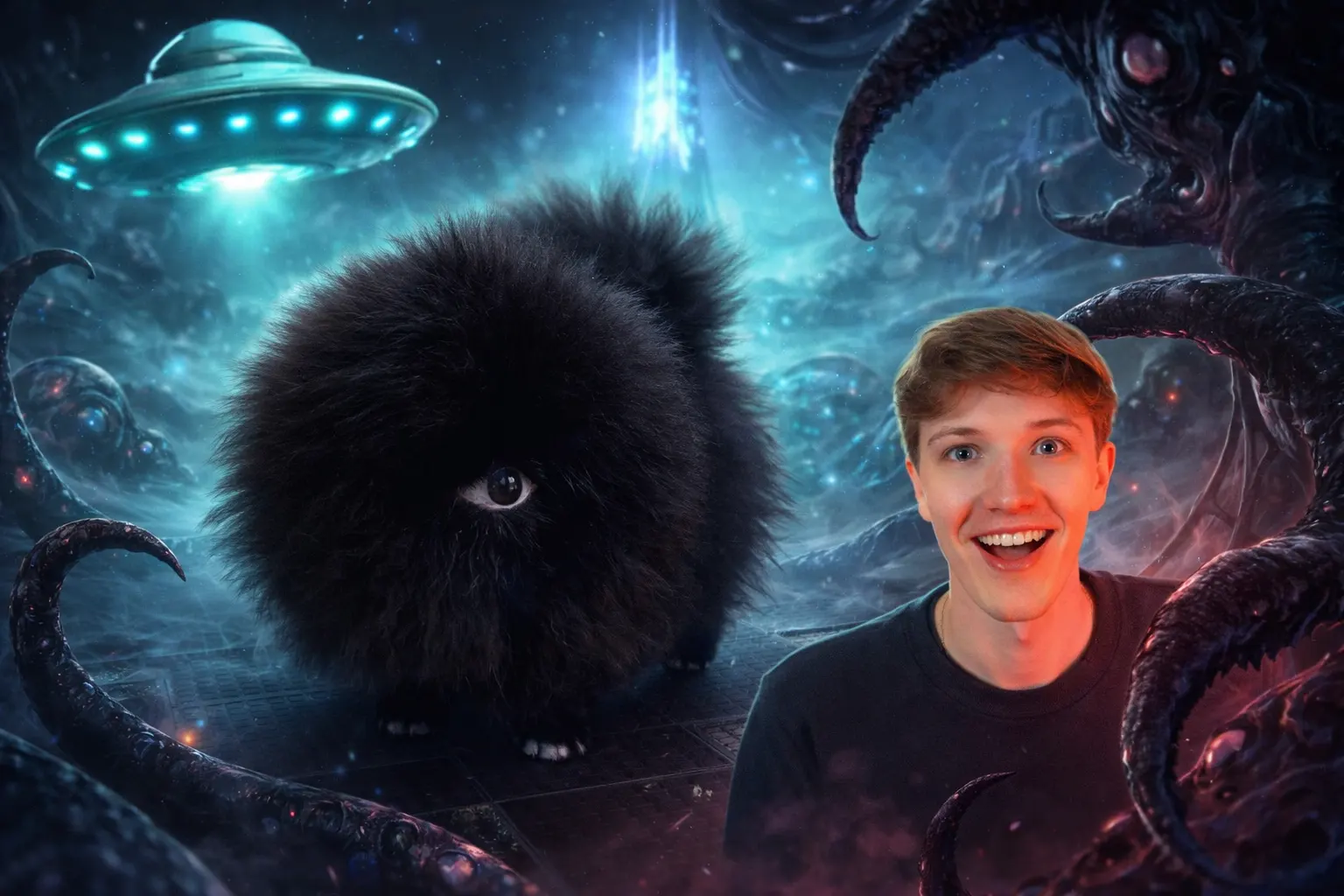
It felt like staring into the dark and realizing something was staring back.
That was the reaction thousands had when the viral alien Pomeranian first appeared online — a tiny black shape that looked less like a pet and more like a floating eye.
At first glance, many viewers assumed the image was edited or staged. It wasn’t. The now-viral alien Pomeranian is a real dog whose thick coat and perfectly framed snout created a natural optical illusion that spread across social media within hours.
The Image That Didn’t Make Sense
The moment that pushed the viral alien Pomeranian into internet fame came from a single photo shared on Reddit. In the image, the dog’s fluffy black fur blends into the background so fully that only a circular “eye-like” feature remains visible.
People paused.
Zoomed in.
Looked again.
Some thought it was computer-generated. Others compared it to a sci-fi creature or animated character. The confusion — and relief when the truth became clear — fueled rapid sharing across platforms like Instagram and Facebook.
One viral repost described it as “science fiction meets puppy fluff,” a phrase that captured the odd mix of unease and affection people felt when the illusion broke.
A Normal Dog With an Unusual Effect
The dog itself is a small Pomeranian, a breed known for dense coats and fox-like faces. What made this case different was the specific angle of the photo and the lighting conditions.
From certain perspectives, the animal’s facial structure disappears into its fur. Only the snout stands out. The result looks like a single large eye floating inside a dark sphere.
Optical illusion experts often point to a human brain pattern called pareidolia — the tendency to see faces or eyes in random shapes — as the reason such images spread so quickly.
The brain reacts before logic has time to catch up.
That moment of confusion is powerful online.
How the Story Spread Across Platforms
Within days, reposts of the viral alien Pomeranian image appeared in meme groups, pet forums, and entertainment pages. A single Reddit thread discussing the photo generated hundreds of replies, many focused on the same experience: disbelief followed by laughter.
Instagram users began sharing side-by-side comparisons showing the illusion and the full dog. Facebook posts framed it as a “double-take moment,” encouraging viewers to pause before reading captions.
This kind of content performs well because it delivers a fast emotional shift.
Shock.
Recognition.
Relief.
Researchers studying social media trends say that posts combining curiosity with emotional payoff often achieve longer viewing time, a key signal for platform algorithms.
The Real-Life Detail That Made It Stranger
The dog’s quiet personality added to the mystery. Reports from those who met it in person described an animal that rarely barked and moved calmly, which reinforced the surreal effect when first seen from a distance.
One owner reportedly dressed the dog in scarves or accessories to reduce the illusion during walks, an unusual but practical response to how others reacted.
Such small, grounded details often help viral stories feel real instead of manufactured.
Why People Couldn’t Stop Sharing It
The viral alien Pomeranian hit several cultural nerves at once. It tapped into fascination with optical illusions, affection for small pets, and humor drawn from science fiction references.
At the same time, the image offered a safe kind of shock — unsettling enough to spark curiosity but harmless enough to feel comforting once explained.
Online discussions frequently compared the dog to animated characters or movie creatures, turning the moment into a shared joke rather than a simple pet photo.
In a digital space crowded with content, anything that makes viewers pause and question what they see has an advantage.
The Larger Pattern Behind Animal Virality
Animal-based illusions have appeared online before, from cats resembling mythical figures to birds that look like abstract shapes. What sets this story apart is the clarity of the transformation.
One second, the viewer believes they are seeing something unreal.
The next, they are looking at a small household pet.
That emotional pivot is rare.
Social media analysts note that such moments can extend the lifespan of a viral trend because users share them with friends specifically to recreate the reaction.
The Image’s Staying Power
Weeks after the first posts circulated, new audiences continued to discover the viral alien Pomeranian through reposts and compilation videos. This long-tail visibility shows how visual puzzles can maintain attention even after the initial burst of interest fades.
Pet-related viral content often cycles back into popularity as algorithms resurface older posts based on engagement patterns. The illusion’s simplicity — no text required, no explanation needed — helps it cross language barriers and cultural differences.
That universality matters.
A Moment That Feels Both Strange and Familiar
What makes the viral alien Pomeranian story linger is not just the image itself but the shared experience it creates. Viewers around the world reported the same sequence of reactions: confusion, realization, and a surprising sense of delight.
It’s rare for a single photo to produce that kind of synchronized response.
In a feed filled with constant updates and fleeting trends, the idea that something so small could command global attention feels almost unreal.
Yet there it is — a fluffy dog whose unusual appearance briefly convinced millions they were looking at something from another planet.
And even after the illusion fades, that first strange feeling is hard to forget.