

Paying every month for something your car already has feels strange at first.
That’s exactly where the Tesla FSD subscription now lands—right between convenience and a new kind of bill.
For years, drivers could pay once and own Tesla’s most advanced feature. That option is now fading out, replaced by a $99 monthly charge that changes how people think about what they actually “own” in their car.
The Surprising Shift Most Drivers Didn’t Expect
The biggest surprise isn’t the price—it’s the model.
Tesla’s Full Self-Driving system used to be sold like a permanent upgrade, sometimes costing as much as $15,000 upfront. Now, the company is moving toward a subscription-only approach, asking drivers to pay monthly instead.
That shift matters because it changes the math.
Instead of a one-time decision, drivers now face a recurring cost. Over time, $99 a month can quietly add up to more than what the original feature once cost.
And yet, more people may actually try it.
What the Tesla FSD Subscription Really Is
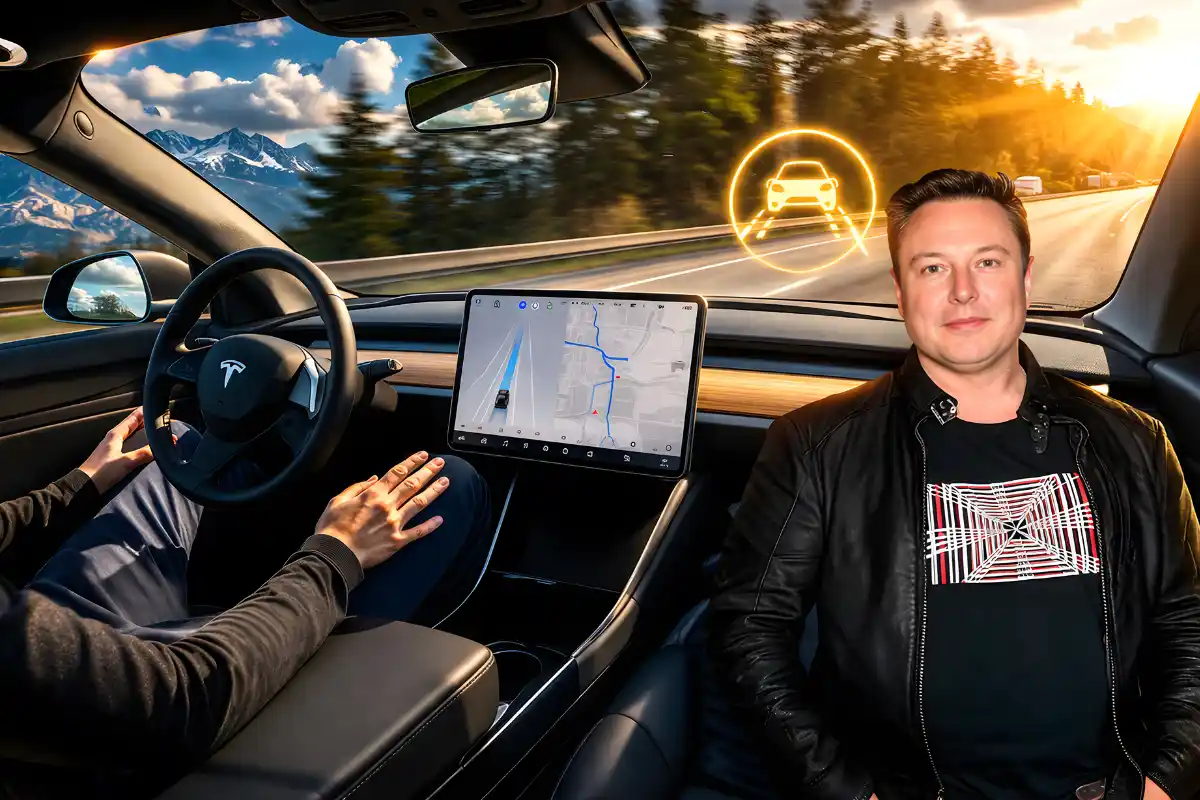
Despite the name, Full Self-Driving isn’t fully autonomous. It’s still a Level 2 driver-assist system, meaning the driver must stay alert and ready to take over at any moment.
In plain terms, it’s a smart assistant—not a replacement driver.
The system includes features like:
- Automatic lane changes on highways
- Navigation with traffic-aware driving
- Stop sign and traffic light recognition
- Parking lot movement with Smart Summon
It can handle a lot.
But it still needs you.
That gap between expectation and reality has been part of the conversation from the start.
How This Changes Daily Driving Costs
For many Tesla owners, the new pricing feels more accessible at first glance.
$99 a month is easier to accept than a five-figure payment. It lowers the barrier for people who were curious but hesitant to commit.
Some drivers are already using it selectively.
They subscribe for long road trips, then cancel once they’re back to daily commuting. Others treat it like a trial—testing the system without locking themselves into a major purchase.
That flexibility is new.
But so is the idea that your car’s features can feel like a streaming service.
One more monthly charge.
One more decision to keep or cancel.
Why Tesla Is Moving This Direction
The shift isn’t random. It’s part of a broader push toward software-based income.
Recurring payments are easier to predict than one-time sales. Investors tend to favor that stability, and companies across tech have moved in the same direction—Adobe, Apple, even car brands like BMW experimenting with feature subscriptions.
Tesla is leaning into that model.
According to financial analysts, software could become one of Tesla’s most profitable segments, especially as hardware margins tighten across the auto industry.
There’s also a long-term goal behind it.
Elon Musk has repeatedly pointed to a future where Tesla vehicles operate as part of a robotaxi network. In that scenario, software isn’t just an add-on—it’s the product.
Until then, the subscription bridges the gap.
The Pushback From Drivers
Not everyone is on board.
Online discussions, especially on Reddit and X (formerly Twitter), show a clear split in how people feel about the Tesla FSD subscription.
Some see it as fair.
Others see it as paying twice.
One recurring sentiment stands out: drivers feel like they already bought the hardware, so paying again to unlock it doesn’t sit right.
A Reddit thread with hundreds of replies summed it up in one line:
“Feels like renting something I already own.”
That tone comes up often.
At the same time, there are practical voices saying the lower entry price finally makes the feature worth trying.
The divide isn’t loud—it’s steady.
Safety, Naming, and Ongoing Scrutiny
There’s another layer to the conversation: safety and expectations.
Regulators in the U.S. and Europe have kept a close eye on Tesla’s driver-assistance systems, especially after high-profile incidents involving Autopilot or FSD features.
The name itself—“Full Self-Driving”—has drawn criticism.
Because it isn’t fully self-driving.
That mismatch can lead to confusion, especially for new users who expect more independence from the system than it actually provides.
Tesla maintains that drivers are clearly instructed to stay attentive. Still, the debate hasn’t gone away.
And the subscription model brings more users into that experience.
The Bigger Shift in Car Ownership
What Tesla is doing doesn’t exist in isolation.
The entire auto industry is experimenting with turning vehicles into software platforms.
BMW tested subscription-based heated seats. Mercedes has explored performance upgrades behind monthly fees. Other brands are watching closely.
Cars are starting to feel less like fixed products and more like evolving services.
Features can be added, removed, or updated over time.
Ownership starts to blur.
You buy the machine.
But you subscribe to what it can do.
The Human Side of the Change
For a typical Tesla driver, this isn’t about business models or investor strategy.
It’s about a simple decision.
Do you keep paying for something that still asks you to stay in control?
One driver in California described it as “cool, but not essential.” Another said they only use it on highways, where the system feels most reliable.
That pattern shows up often.
Curiosity leads to a subscription.
Use becomes selective.
Then comes the question: is it worth keeping?
Conclusion
Back in that first moment—the feeling of paying monthly for something built into your car—that tension hasn’t gone away.
It’s just becoming normal.
The Tesla FSD subscription isn’t just a pricing update. It’s a sign of where things are heading, one monthly charge at a time.
And the next time you open your car app and see that $99 option, the real question isn’t what the feature can do.
It’s whether you want to keep paying for it.