The Night the Internet Lost Its Mind
Last Sunday, I was half-watching the game and half-arguing with my cousin about whether the commercials were better than last year. Then halftime hit. Bad Bunny walked out. And within minutes, my phone started buzzing like it was on fire.
Group chats. Twitter. Texts from people who don’t even watch football.
That’s when I knew this wasn’t just another Super Bowl show. This was a full-blown Super Bowl halftime controversy.
If you’re wondering what actually happened — and why people are still fighting about it — here’s the straight story.
What Bad Bunny Did (The Facts First)
On February 8, 2026, Bad Bunny headlined the Apple Music Super Bowl LX halftime show at Levi’s Stadium in California.
Here are the hard facts:
- He became the first solo Latino artist to headline the Super Bowl halftime show.
- The performance was almost entirely in Spanish.
- The show drew about 128 million U.S. viewers, making it one of the most-watched halftime shows ever.
- Social media clips racked up billions of views within a day.
- Guest appearances included major artists like Lady Gaga and Ricky Martin.
So from a numbers point of view? It was massive.
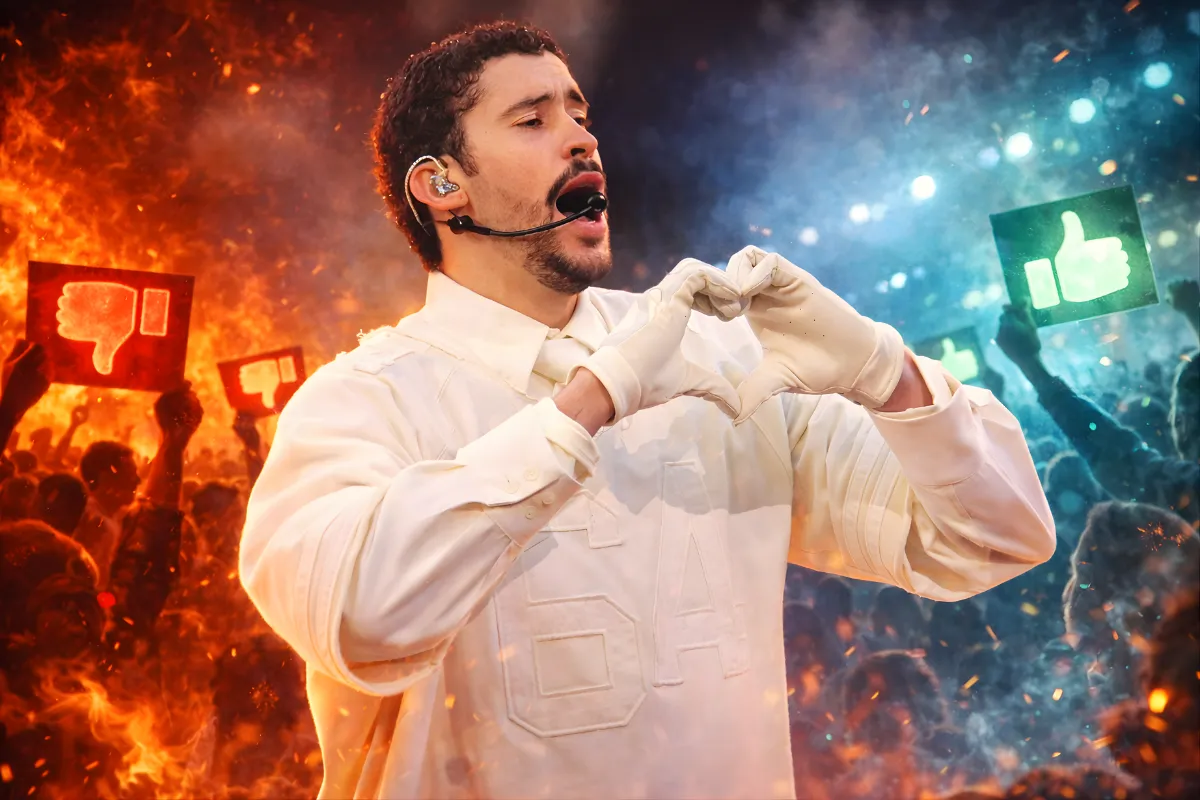
But the reaction? Split right down the middle.
Why People Got So Upset
Let’s not pretend we don’t know why this blew up.
Some viewers were angry that the show was mostly in Spanish. A few high-profile political figures publicly called it “terrible” and “one of the worst.” Conservative groups even put on an “All-American” alternative halftime show as a protest.
I saw comments like:
- “This is America. Speak English.”
- “Halftime is supposed to unite the country.”
- “I couldn’t understand a word.”
And then I saw the other side:
- “It’s called music. You don’t need subtitles.”
- “America includes Puerto Rico.”
- “You’re mad because it’s not about you.”
The same show. Two totally different reactions.
Fans vs. Non-Fans
Here’s where it got interesting.
Some fans said this:
- “I don’t speak Spanish, but I felt every beat.”
- “This was a cultural moment.”
- “Best halftime show in years.”
Others weren’t impressed:
- “Too much dancing, not enough hits.”
- “Bring back rock bands.”
- “It felt political.”
And then there were the neutral folks — the ones who just wanted to grab snacks and wait for the third quarter.
I get all of it. Not every halftime show is for everyone. I didn’t love every past performer either. But this one hit a nerve.
The Meme Storm
Within minutes, the internet did what it does best.
Memes everywhere.
One compared the 128 million viewers of the main show to the smaller audience for the alternative concert. Another joked that Americans suddenly remembered high school Spanish. Someone posted, “Duolingo about to make bank.”
I laughed. I also rolled my eyes.
That’s social media. Everything turns into a punchline.
But behind the jokes, there was something bigger happening.
Why This Was More Than Music
This wasn’t just about songs. It was about identity.
Bad Bunny is from Puerto Rico. Puerto Ricans are U.S. citizens. Spanish is spoken by millions of Americans every day.
Still, some viewers acted like hearing Spanish on the Super Bowl stage was shocking.
I kept thinking: we sing along to Korean pop songs. We blast Italian opera in movies. No one complains then. Why now?
Maybe because the Super Bowl feels like “America’s stage.” And when that stage looks different than people expect, they react.
Some cheer. Some push back.
The Numbers Don’t Lie
Here’s what can’t be ignored:
- The halftime show had over 128 million viewers.
- Streaming numbers for Bad Bunny’s music jumped right after.
- Social media engagement hit record levels.
Love him or hate him, people watched.
That matters.
Weird Side Stories You Might Have Missed
The fallout wasn’t just tweets and hot takes.
- One influencer said she refused to watch the show and lost a bunch of followers live.
- Bad Bunny wiped his Instagram clean right after the performance, which sent fans into full detective mode.
- The alternative halftime event got attention — but nowhere near the main show’s audience.
It felt like a pop culture soap opera for 48 hours.
The Real Question
Here’s what I keep coming back to:
What do we expect from a halftime show?
Is it supposed to be safe? Familiar? English-only? Or is it supposed to reflect the people who actually live here?
I don’t think everyone has to love every performer. That’s normal. Music is personal.
But when the backlash turns into “this isn’t American enough,” that’s when it stops being about music.
And that’s why this became such a big Super Bowl halftime controversy.
My Take
I didn’t know every lyric. I didn’t need to.
The energy was high. The crowd was loud. The visuals were strong. It felt like a party.
Was it perfect? No halftime show is. Some moments dragged. A few camera cuts felt awkward. But “worst of the century”? That feels dramatic.
We’ve had lip-sync drama. Wardrobe mishaps. Sound issues. Technical glitches. Every year, someone says it’s the worst ever.
Then we move on.
Where This Leaves Us
A week from now, most people will argue about draft picks or fantasy football again.
But this show will stick around in the bigger conversation.
Because it wasn’t just a performance.
It was a reminder that America looks different than it did 20 years ago. It sounds different too.
Some people are fine with that.
Some aren’t.
And the Super Bowl halftime stage? It just became the place where that debate played out in front of 128 million viewers.
Honestly, if a 13-minute music set can shake the internet this hard, maybe that says more about us than it does about Bad Bunny.