


What if the people many assume need the most help ended up feeding everyone else?
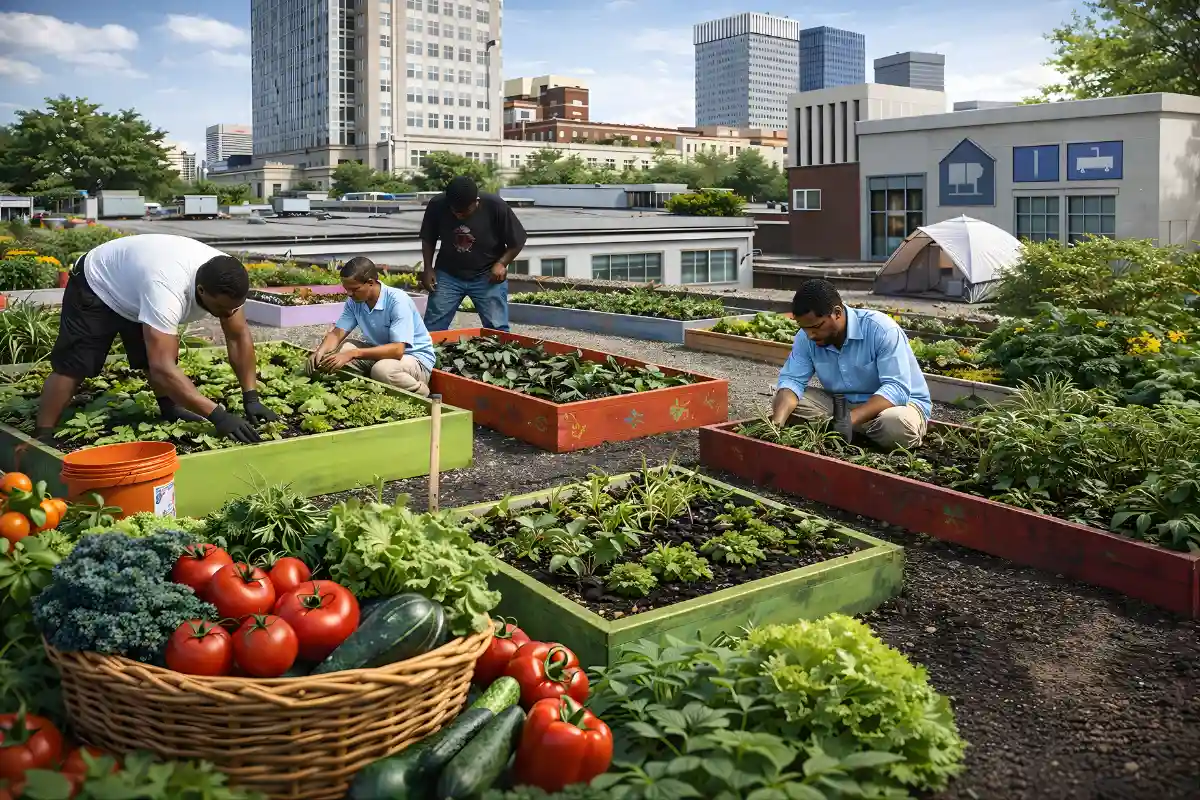
That question became real in downtown Atlanta when residents at a large homeless shelter turned an empty rooftop into a working organic garden. Instead of bare concrete, the roof slowly filled with rows of soil, raised beds, and vegetables.
Tomatoes. Kale. Squash. Greens.
And the food didn’t go to restaurants or farmers markets. It went straight into the kitchen that fed the shelter’s residents every day.
What started as a small idea grew into something bigger: fresh food, job skills, and a reminder that community solutions can show up in the most unexpected places.
How a Roof Became a Garden
The project began at the Peachtree-Pine shelter in Atlanta, once the city’s largest homeless shelter. At its peak, the building housed hundreds of men every night.
Space was tight. Budgets were tighter.
But the roof had something useful:
Sunlight.
So residents started building an urban garden above the shelter.
Here’s what they created:
- About 80 raised garden beds
- Rows of organic vegetables
- Rainwater tanks for irrigation
- Compost systems using food scraps
The first harvest alone produced about 55 pounds of fresh greens.
For a kitchen feeding hundreds, that may not sound huge. But it meant salads, cooked greens, and fresh ingredients in meals that were often built around donated food.
And the harvest kept coming.
Residents planted crops like:
- Kale
- Tomatoes
- Carrots
- Squash
- Swiss chard
- Herbs
The roof turned into a small farm sitting high above city traffic.
Why the Garden Worked
Urban farms can be tricky. But the roof had advantages.
Residents noticed a few things quickly:
- Fewer bugs than ground gardens
- Strong sunlight most of the day
- Warm roof surfaces that extended growing seasons
The garden also used rainwater tanks. Two large tanks collected rain from the roof, helping water crops during dry spells.
The system stayed simple.
No fancy equipment. No big budget.
Just soil, seeds, and time.
More Than Just Vegetables
The food mattered. But many residents said the garden helped in other ways.
Working in the garden gave people:
- A daily routine
- Skills they could use later
- A sense of pride
One resident explained it simply in an interview.
“When you’re out here working with plants, your mind clears. You think about life. You think about what comes next.”
Another resident said the garden reminded him of growing food with his grandmother as a kid.
And that memory mattered.
For many people staying at the shelter, normal routines had been lost. Gardening helped bring some of that back.
The Shelter Behind the Story
The garden became tied to the Peachtree-Pine shelter, which opened in the late 1990s.
At times, the building housed 700 to 1,000 people each night.
It served meals, provided beds, and offered basic services for those trying to get back on their feet.
But the shelter also became part of a long political fight in Atlanta. City leaders, developers, and activists debated its future for years.
After legal battles and financial struggles, the shelter closed in 2017.
That means many photos of the rooftop garden that circulate online today come from earlier years when the shelter was still open.
Still, the story keeps spreading online because it highlights something people rarely expect.
A group often described only by what they lack built something productive together.
The Internet Reacted—A Lot
When photos of the garden resurfaced online, reactions poured in.
Some people loved the story.
Comments often sounded like this:
- “People with the least sometimes do the most.”
- “Give someone purpose and watch what happens.”
- “Meanwhile I can’t keep my houseplant alive.”
Others were more skeptical.
A few comments asked practical questions.
One popular remark said:
“Eighty garden beds feeding 700 people? That’s a lot of kale.”
That comment actually sparked debate about how much food urban farms can produce.
Experts say rooftop gardens usually supplement food supplies rather than replace them.
Still, many readers said the real value wasn’t the number of vegetables.
It was the opportunity.
A Bigger Trend: Urban Farming
The rooftop garden also fits into a larger movement happening across many cities.
Urban farming has grown in places like:
- Atlanta
- New York
- Chicago
- Detroit
Cities with limited green space often turn unused areas into farms.
Examples include:
- Rooftops
- Empty lots
- Community gardens
- Converted parking areas
These projects help address something called a food desert—areas where fresh produce is hard to find.
Urban farms don’t solve every problem.
But they help communities access healthier food while creating local jobs.
A Few Odd Details People Love
Stories like this often stick online because of the unexpected details.
A few facts from the rooftop garden still surprise people.
For example:
1. Rooftop farms can grow longer seasons
Concrete roofs hold heat, which helps plants grow earlier in spring and later into fall.
2. Pests are fewer
Because the garden sits several floors up, many insects never reach the crops.
3. Rainwater can irrigate the whole garden
Simple collection tanks can provide most watering needs.
And perhaps the most interesting detail:
The farm existed in a place many people assumed was struggling just to survive.
Instead, it was growing food.
Social Media Humor Had Its Moment
Of course, the internet turned the story into jokes too.
One viral post said:
“Homeless shelter rooftop garden growing organic kale. Give it five years and a grocery store will sell it for $9 a bunch.”
Another meme compared the residents to office workers.
“Homeless guys running a farm on a roof. Meanwhile my coworkers can’t keep the break room plant alive.”
The humor worked because the contrast was real.
People often underestimate what communities can build when given space and trust.
What the Garden Really Shows
Urban farms alone won’t fix homelessness.
No one working on the project ever claimed that.
But the rooftop garden showed a few things clearly.
People who lived at the shelter proved they could:
- Build something together
- Grow food for their neighbors
- Learn new skills
Sometimes the biggest impact wasn’t the vegetables.
It was the confidence people gained while growing them.
A Simple Reminder
In the end, the rooftop garden story keeps spreading for one reason.
It flips expectations.
A group of people often seen as needing help managed to help feed an entire shelter.
No big investors.
No fancy farm equipment.
Just a roof, some soil, and a group of people willing to try something new.
And if there’s one lesson that keeps popping up in comments online, it’s this:
Sometimes the strongest communities grow in places most people never bother to look.