

There’s a kind of quiet heartbreak in watching someone push through pain just to make it to the end of the day. For one Tennessee delivery, that feeling hit millions at once when a 78-year-old DoorDash driver appeared on a front porch camera, moving slower than time seemed to allow.
A Man at the Center of a Viral Moment
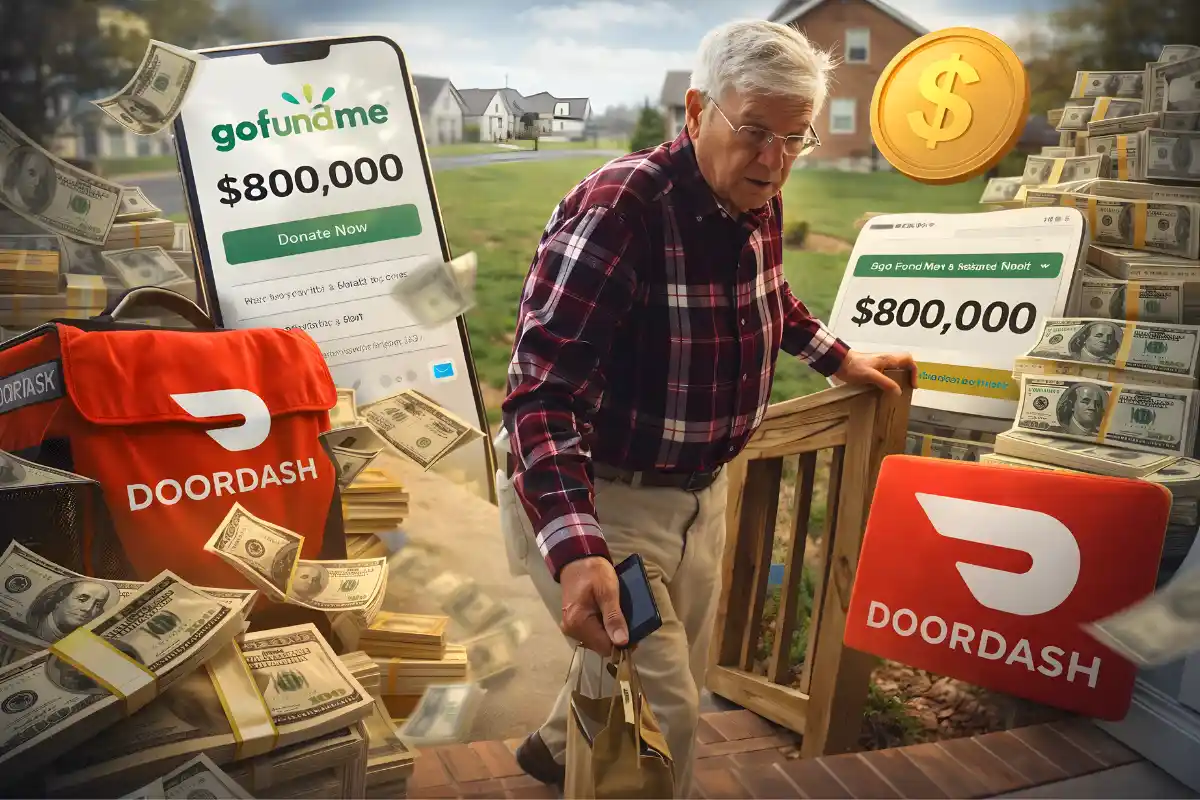
Richard, known online as “OG Ron,” wasn’t trying to be seen. He was just doing his shift. The Tennessee resident, in his late seventies, had returned to food delivery work to help cover basic bills after his wife lost her job. He moved carefully, relying on a steady grip and sheer will. A customer’s doorbell camera captured that moment and, without warning, turned it into a national story.
The clip was posted by customer Brittany Smith on TikTok. She later said she didn’t expect it to travel far. It did.
Within days, strangers were sending money, messages, and memories of their own aging parents.
The Numbers That Changed His Future
The fundraiser created in his name quickly surpassed $800,000. The goal was modest at first: help him stop working. The stakes became clear almost instantly. For many watching, this was not just about one man — it was about what happens when retirement savings fall short.
Gig work often fills the gap. Delivery driving, rideshare shifts, or short-term tasks can seem flexible, but they rarely come with employer-funded retirement plans. In the United States, Social Security provides a base, yet many seniors rely on additional income to maintain housing, healthcare, and basic living costs.
Richard’s situation turned into a symbol of that reality.
And symbols travel faster than policy.
Why Stories Like This Keep Happening
Economists point to a steady rise in older Americans working past traditional retirement age. According to the U.S. Bureau of Labor Statistics, participation among workers aged 75 and older has increased over the past decade. Some choose to stay active. Others feel they must.
Healthcare expenses, housing costs, and inflation have reshaped retirement math. A fixed income can stretch only so far when grocery bills rise or prescription costs climb. Financial advisors often stress the need for diversified savings, but many households enter retirement with limited reserves.
Gig platforms offer immediate income with few barriers to entry. That ease is part of their appeal. It is also part of the tension.
The structure leaves workers responsible for taxes, insurance, and long-term planning.
A viral video can spark empathy. It cannot replace systemic solutions.
The Debate That Followed
Online discussion about Richard’s fundraiser split into two broad camps. Supporters framed it as a heartwarming example of community care. They shared the GoFundMe link widely, calling it proof that kindness still scales in a digital economy.
Critics asked a harder question: why should someone’s chance at retirement depend on an algorithm’s attention? Labor advocates argued that the story highlights gaps in worker protections, especially for contractors without benefits. Some pointed to broader conversations about gig worker classification and retirement reform.
DoorDash itself was not the organizer of the fundraiser. Yet the company’s model became part of the conversation. That shift from individual story to industry critique happens often when personal hardship meets public visibility.
A Reddit thread with hundreds of replies summed up the mood in blunt terms: relief for him, worry for everyone else.
The Familiar Feeling Behind the Headlines
If you’ve ever stared at your bank balance and tried to do long division on hope, the story likely felt personal. It was not about celebrity wealth or abstract policy charts. It was about a porch, a bag of food, and a man moving as fast as his body allowed.
Financial insecurity rarely arrives with a headline. It shows up quietly in overtime shifts, delayed doctor visits, and postponed retirement plans.
That’s why this moment spread so quickly.
It felt close.
Too close.
The Ripple Effect of Viral Compassion
Fundraisers that surge past expectations often spark a mix of inspiration and discomfort. On one hand, they demonstrate collective generosity. On the other, they raise questions about consistency. Thousands of older workers share similar struggles but never appear on camera at the right time.
Digital charity can resemble a lottery. Visibility becomes currency.
Yet for Richard, the impact was tangible. Reports indicated he intended to use the funds to secure housing stability, cover medical needs, and step away from daily delivery shifts. For his supporters, that outcome was the point: a real person’s life changed in real time.
The story also renewed focus on retirement planning services, senior healthcare costs, and financial literacy programs. These topics carry high interest in an aging society where economic uncertainty remains widespread.
Empathy can spark policy conversations, but it often begins with a single face.
A Porch, a Camera, and a Question
The moment that started it all remains simple: a delivery completed, a door closed, a man walking back toward his car. Richard did not ask to become a case study in retirement economics. He just showed up to work.
Now his story sits at the intersection of viral culture and financial reality. It offers relief in one direction and reflection in another.
For every viewer who donated, there were many who paused to think about their own future. Savings accounts. Social Security estimates. The cost of getting older in a system that can feel unpredictable.
The fundraiser may have given Richard a path to rest.
But the larger question lingers on that same quiet porch: when your working years end, will your safety net be enough — or will you still be delivering dinner to someone else’s door?