

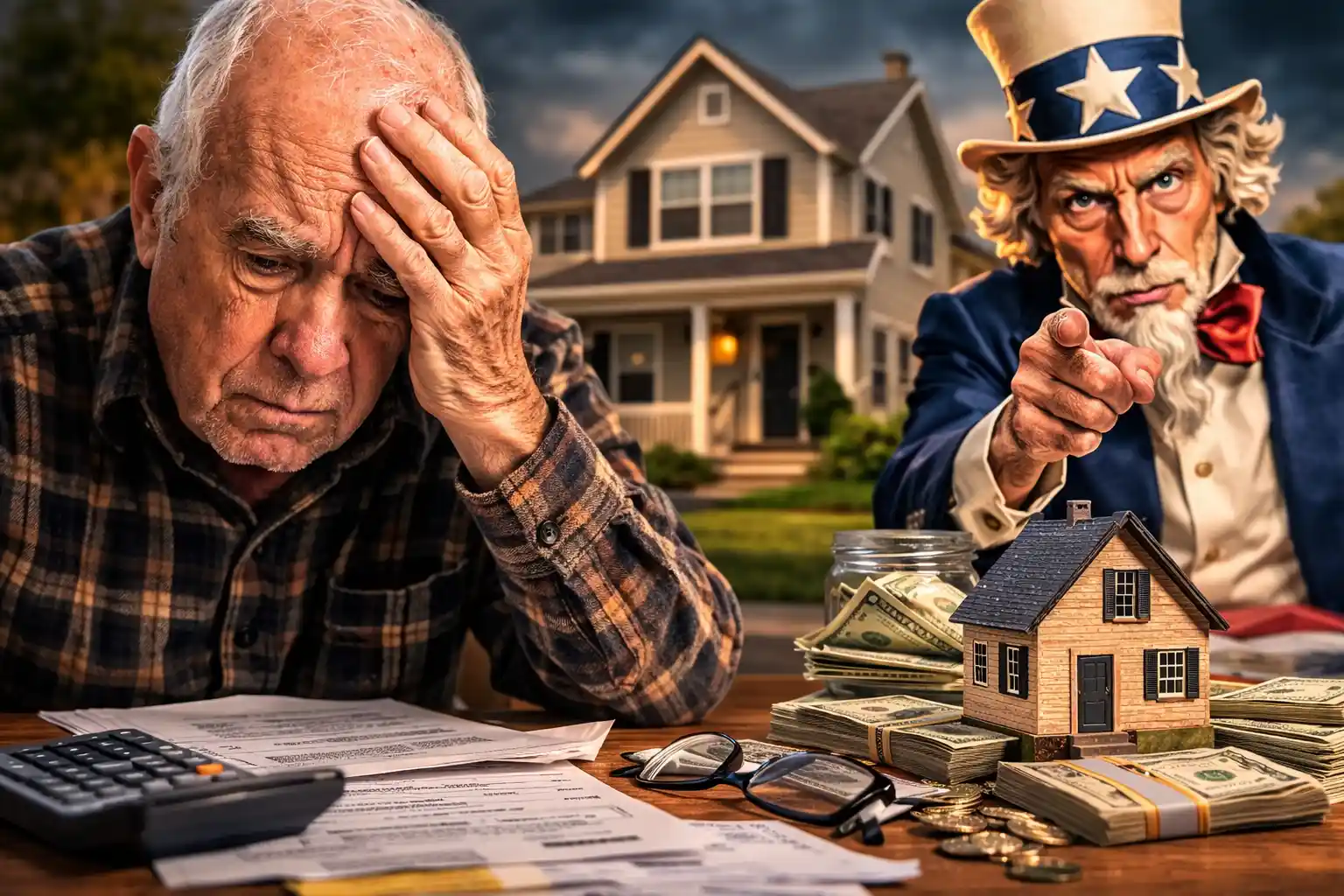
A paid-off house is supposed to feel like a finish line. For many owners facing the property tax crisis, it feels more like a second starting gun.
In cities across the United States, people who thought they were finally free from housing payments are opening mailboxes to find bills that rival their old mortgages. Some are stunned. Others are angry. Most are confused about why the cost keeps rising.
The Human Anchor
In Newark, New Jersey, a retired bus driver named Thomas Rivera thought he had done everything right. After three decades of steady work, he paid off his modest three-bedroom home in 2022.
The next year, his property tax bill climbed to nearly $14,700.
“I thought the worst was over,” he told a local community meeting, according to regional coverage. Instead, he now budgets more for taxes than he once did for his mortgage principal.
Rivera is not unique.
He is part of a growing wave of homeowners who feel trapped by rising tax assessments, even as their income stays fixed.
Core Fact + Stakes
The average U.S. property tax bill is around $3,000 annually, but in high-tax regions, homeowners can pay five times that amount. States like New Jersey and Illinois routinely post effective tax rates above 2% of a home’s value, among the highest in the nation.
In a hot housing market, that can translate into sudden spikes.
A home valued at $300,000 one year might be reassessed at $420,000 the next. The owner’s wealth on paper grows. So does the tax bill.
For retirees or workers living paycheck to paycheck, that change can turn stability into crisis.
Missed payments can trigger liens.
Liens can trigger foreclosure.
Foreclosure can erase decades of equity.
Why It’s Happening
Local governments depend heavily on property taxes to fund public services. Schools, police departments, fire stations, and road repairs are all financed largely through this revenue stream.
As home values surged during the pandemic housing boom, tax bases expanded. Municipalities facing budget gaps leaned on reassessments to balance their books.
According to data from the Tax Foundation, property taxes account for nearly 30% of total state and local tax collections in the U.S., making them one of the most stable and predictable funding sources.
That stability for governments often translates into volatility for homeowners.
When market prices rise faster than wages or pensions, tax bills follow suit.
In many areas, assessment appeals processes are complex, time-consuming, and poorly understood. Some homeowners never challenge their new valuations simply because they don’t know how.
The result is a quiet financial squeeze that can last for years.
The Debate
Supporters of the current system argue property taxes are fair because they tie public funding to community wealth. If a neighborhood grows more valuable, the logic goes, it can afford better schools and infrastructure.
Critics see it differently.
They argue the system punishes people for staying put.
Homeowners who bought decades ago at lower prices may face higher taxes simply because the area around them became desirable. This dynamic has been linked to displacement in rapidly gentrifying cities.
Policy experts also note that property taxes can function like a “wealth tax” on illiquid assets. A homeowner may have significant equity but little cash on hand, making rising bills harder to manage.
Some states have introduced caps or exemptions for seniors. Others have debated tying tax increases to income rather than property value.
The arguments are not just economic. They are emotional.
To many, the idea of losing a fully paid home over taxes feels like a betrayal of the promise of ownership.
The Relatable Gut-Check
If you have ever stared at your paycheck and wondered where it all went, the property tax crisis taps into that same anxiety.
Housing was supposed to be the stable part of the budget.
Instead, it is becoming a moving target.
For younger buyers, rising property taxes add another layer of uncertainty to an already expensive housing market. For older owners, the fear is more immediate: the possibility of outliving their savings while still technically “owning” their home.
Social media threads and local news comment sections show a mix of frustration and resignation. Some users argue taxes are the price of functioning communities. Others say the system discourages long-term roots.
Both sides agree on one thing.
The bills are getting harder to ignore.
Returning to the Human Moment
Back in Newark, Rivera has begun renting out his spare room to help cover his tax payments. It is a solution he never expected to need.
He still loves his neighborhood. He still feels proud of paying off his mortgage. But each year, as reassessment notices arrive, the sense of security he once felt grows thinner.
For homeowners across the country, the question is becoming less abstract and more personal.
If the house is paid off, why does it still feel like you are paying rent?