
That slow burn of anger when you’re stuck behind someone who won’t move—it’s a feeling almost every driver knows. And for many, it has a name: left lane campers.
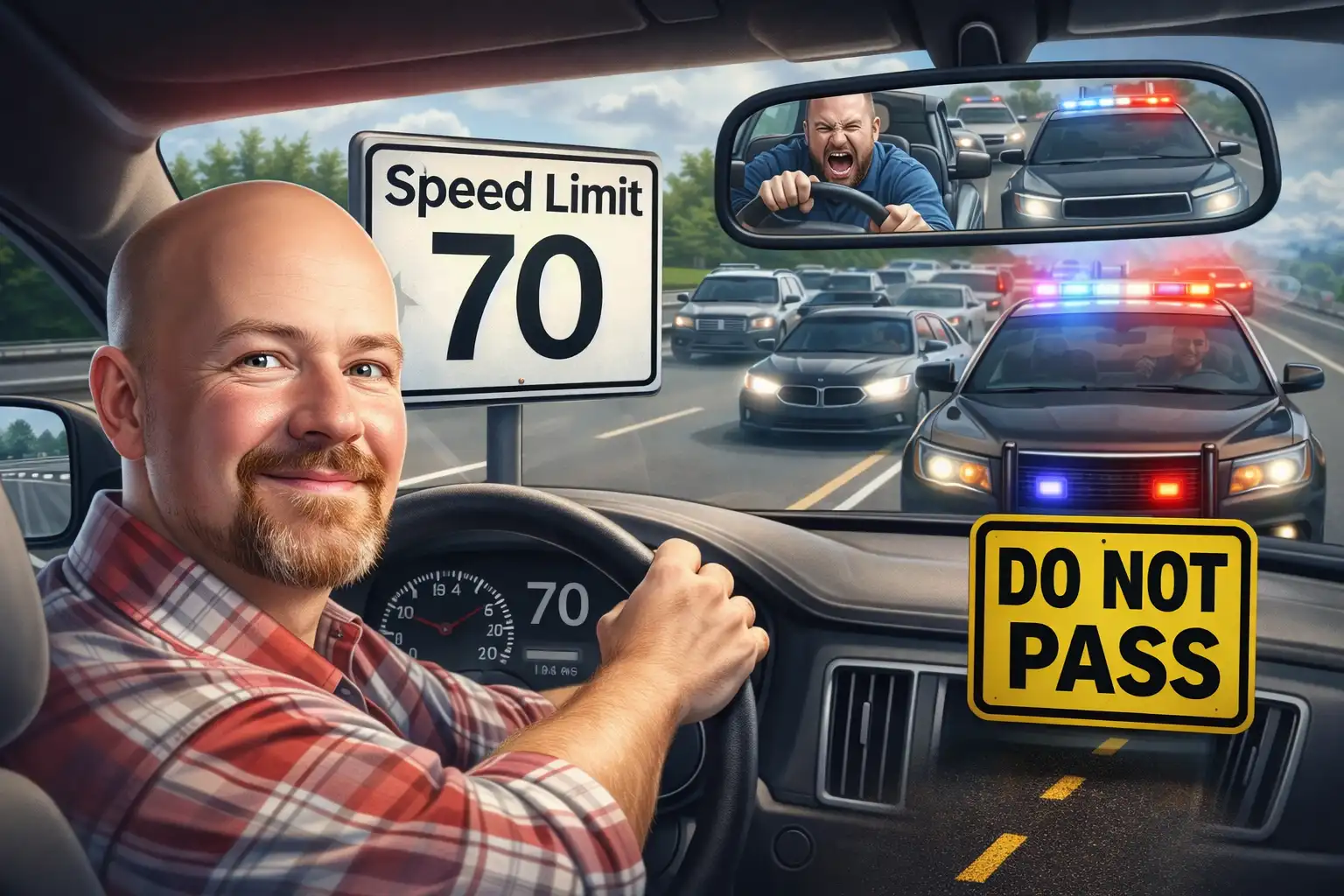
It came into sharp focus when an Indiana state trooper pulled over a driver who had been blocking the left lane while a long line of cars stacked up behind her. The officer later said nearly 20 vehicles had formed a backup. The moment spread online fast, not because of a crash or a chase, but because people recognized the situation instantly—and took sides just as quickly.
The Scene Everyone Recognized
The traffic wasn’t heavy. The road wasn’t blocked. But one car stayed in the left lane, holding steady, while others piled up behind it.
Indiana State Police Sgt. Stephen Wheeles stepped in after watching the buildup form in real time. He later explained that the issue wasn’t just speed—it was the chain reaction behind it.
Cars began to cluster. Drivers grew impatient. Some prepared to pass on the right.
That’s where risk starts.
Who This Affects—and Why It Keeps Coming Up
For drivers like Mark Jensen, a 38-year-old sales rep who spends hours each week on highways outside Chicago, the frustration is routine. He says the problem isn’t slow drivers—it’s drivers who don’t move.
“You can be going 70, 75, it doesn’t matter,” he said in a local interview. “If someone’s behind you and you’re not passing, just move.”
That idea isn’t just personal opinion. Traffic rules in many U.S. states back it up. Laws in places like Texas and Florida say drivers should not stay in the left lane if they are being overtaken by faster traffic. Signs along highways repeat the same message: keep right except to pass.
So the stakes are simple. It’s not just about annoyance. It’s about flow.
And when flow breaks, everything behind it starts to tighten.
The Full Story Behind the Friction
The left lane was never meant to be a cruising lane. It exists to let faster traffic pass slower vehicles, then clear out again. When that system works, traffic moves like a steady stream.
When it doesn’t, it turns into something else.
Picture a line of cars moving at different speeds. One driver settles into the left lane and stays there. The cars behind begin to compress. The distance between vehicles shrinks. Drivers get closer than they should.
Then someone tries to get around.
They move right, accelerate, and slip past. Another driver follows. Now you have multiple speed changes, more lane shifts, and less space between cars.
That’s what officers and safety experts call the “accordion effect.” It’s not one sudden crash—it’s a buildup of small risks.
And it happens fast.
Some drivers who stay in the left lane believe they’re doing the right thing. They may be driving the speed limit. They may feel they’re keeping others from speeding.
But traffic law doesn’t work that way. It focuses less on personal judgment and more on overall movement. In many places, blocking the flow—even at the legal speed—can still be considered improper lane use.
That gap between what feels right and what the law expects is where most of the conflict lives.
The Debate Playing Out Online
The Indiana stop didn’t just go viral—it lit up comment sections across platforms like Reddit, Facebook, and X.
On one side, drivers cheered the enforcement. Threads filled with stories of long highway stretches ruined by a single car that wouldn’t move. Many used the same phrase: “It’s not the fast lane, it’s the passing lane.”
On the other side, some pushed back hard.
They argued that drivers who tailgate or demand faster speeds are the real danger. In their view, someone already going the speed limit shouldn’t be forced to move just because someone else wants to go faster.
The tone split quickly.
One Reddit thread with hundreds of replies summed it up in a simple rule that both sides debated: if someone is behind you and you’re not actively passing, move over.
Sounds easy.
It rarely is.
Because real roads aren’t empty. Traffic builds. Exits come up. Drivers make judgment calls. And those calls don’t always match what the person behind expects.
That’s when frustration turns personal.
Why This Keeps Happening
There isn’t one reason left lane conflicts keep showing up. It’s a mix of behavior, habit, and environment.
In busy metro areas, heavy traffic blurs lane roles. When all lanes are packed, drivers stop treating the left lane as temporary. It becomes just another place to sit.
In less crowded areas, the issue shifts. With more open road, expectations rise. Drivers expect the left lane to stay clear unless someone is actively passing.
Then there’s human nature.
People tend to judge their own driving as reasonable. If they’re going fast, it feels justified. If they’re holding steady, it feels responsible. Everyone else becomes the problem.
A line from comedian George Carlin still gets shared for a reason: anyone driving slower than you is an idiot, and anyone faster is a maniac.
That mindset shows up clearly in this debate.
What It Feels Like From Behind the Wheel
If you’ve ever been stuck behind a car that won’t move, you know the shift.
First, it’s mild.
Then it’s annoying.
Then it’s personal.
You check the right lane. You consider passing. You glance at the growing line behind you. The longer it lasts, the more it feels like something is wrong—even if nothing technically illegal is happening in that moment.
That’s the part numbers don’t capture.
It’s not just speed. It’s expectation.
And when expectation breaks, patience goes with it.
Where It Leaves Drivers Now
Back on that Indiana highway, the moment passed quickly. The driver was stopped. The line cleared. Traffic flowed again.
But the reaction didn’t stop there.
The story spread because it hit something familiar. Not a rare event, but a daily one. Something small that turns into something bigger because everyone involved believes they’re right.
That’s what makes left lane campers more than a driving habit. It’s a clash of rules, habits, and personal judgment playing out at highway speed.
And the next time you’re behind one—or you realize someone’s behind you—the question comes back, simple and sharp:
Are you moving with traffic, or holding it in place?