
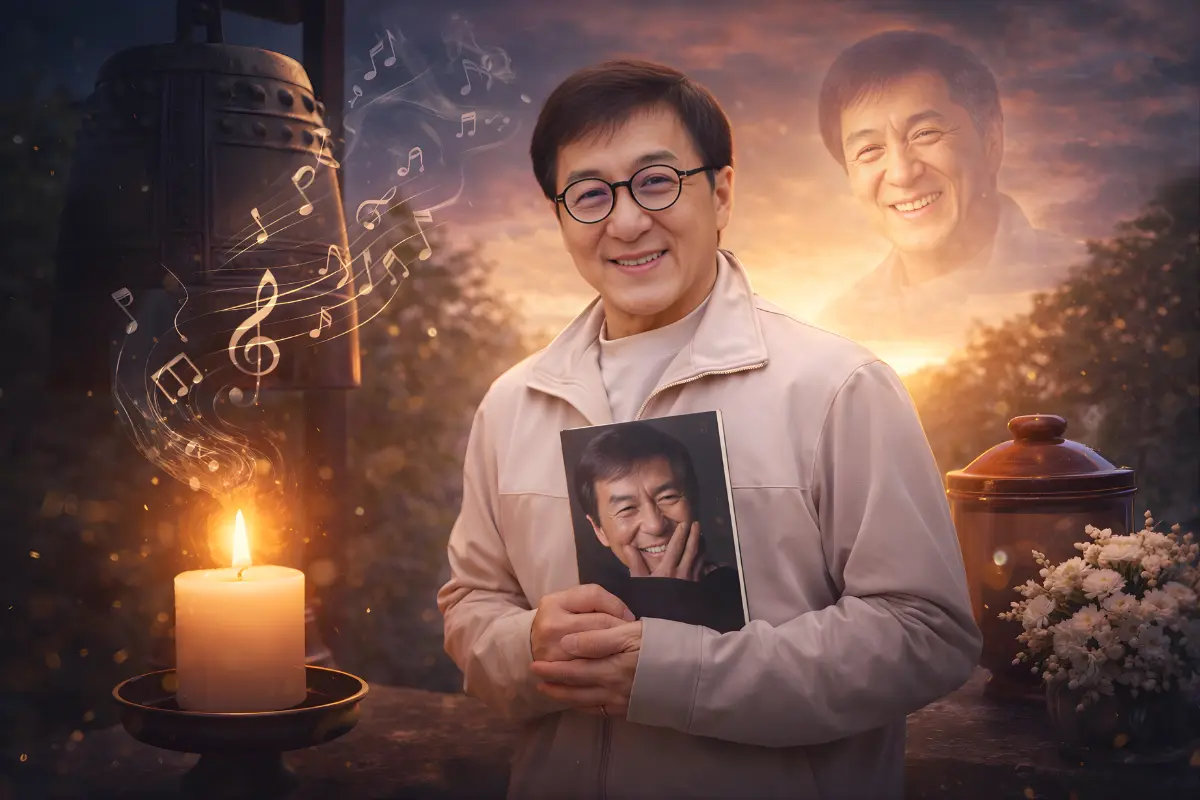
A Legend’s Final Message?
What would you say to the world if you knew your last words would echo long after you were gone?
That’s the question many fans are asking after Jackie Chan confirmed he has already recorded a farewell song. The track, he said, will only be released after his death. No sneak peeks. No early drop. Just a final message, saved for the end.
The news came during the Beijing premiere of his latest film, Unexpected Family. Chan, now 71, spoke calmly about it. He explained that after losing close friends in recent years, he began thinking about aging and what he wanted to leave behind. The song, he said, is personal. He would not share the lyrics. He joked that if he sang it now, people might cry.
That’s it. No title. No hint about the sound. Just intention.
And somehow, that’s what hit people hardest.
What We Know So Far
Here are the confirmed facts:
- Jackie Chan has recorded a farewell song.
- He asked his team and family to release it only after his passing.
- The announcement was made publicly at a film premiere in Beijing.
- He described it as a “final message” to fans and loved ones.
- No details about lyrics, title, or style have been shared.
Chan has released music before. Many forget that he’s not just a stunt legend. He has recorded albums in Mandarin and Cantonese over the years. Music has always been part of his career. So this isn’t a random idea. It’s personal. And planned.
The timing also matters. In Unexpected Family, Chan plays an elderly man dealing with memory loss. The role already deals with themes of age and time. So when he mentioned the farewell song, it didn’t feel like a publicity stunt. It felt real.
Why This Feels Heavy
Fans know Jackie Chan as the guy who jumps off buildings. The man who breaks bones and smiles through it. The blooper king who laughs at pain.
So hearing him calmly talk about death? That hits different.
On social media, reactions came fast:
- “I’m not ready for this song,” one fan wrote.
- “The man survived a thousand stunts and now he’s planning his goodbye.”
- “Why is this making me emotional on a Tuesday?”
Even non-fans weighed in:
- “It’s smart. Everyone should think about their legacy.”
- “This feels like something a legend would do.”
The mood online wasn’t dramatic. It was thoughtful. A bit quiet. A bit stunned.
Memes showed up too, of course. One viral post joked: “Jackie Chan planning his farewell song while I can’t even plan dinner.” Another showed a clip of his old action scenes with the caption: “He beat gravity for 40 years and now he’s thinking about eternity.”
That’s the internet for you.
Not the First to Plan Ahead
Chan isn’t the first public figure to think about posthumous messages. Some artists have left letters. Some actors have planned how their work will be handled after death.
But recording a song meant to drop only after you’re gone? That feels rare.
In the era of estate planning, intellectual property rights, and high-value media assets, this also raises quiet questions about digital legacy. Who controls the release? How is it handled? Will it be streamed? Sold? Donated?
Those are legal and financial questions that sit in the background. For now, the focus is emotional, not business.
Still, in a time when celebrity estates can generate major revenue, planning ahead is common. From copyright management to trust funds, public figures often map out their final wishes carefully. Chan’s move fits into that broader trend, even if the heart of it feels simple.
A Life That Makes This Make Sense
Let’s zoom out.
Jackie Chan’s career spans decades. From Hong Kong cinema to Hollywood blockbusters. From Police Story to Rush Hour. From bruises to Oscars.
He received an honorary Academy Award in 2016. He has survived serious injuries on set. Skull fractures. Broken fingers. Near disasters.
So when someone who has faced death on film so many times talks about his real final message, people listen.
And age changes things. Chan has openly spoken about slowing down. He’s taken on roles with more depth. More heart.
He has also watched friends pass away. That changes your outlook.
He reportedly said that seeing others leave made him reflect on how he would be remembered. That reflection led to the recording.
No drama. Just thought.
The Online Debate
Of course, not everyone reacted the same way.
Some asked: “Why talk about death when you’re still active?”
Others said: “It’s honest. We avoid this topic too much.”
There’s also the quiet fear behind many comments: If he’s preparing, does that mean something is wrong? There is no indication of health issues tied to this announcement. Reports confirm this was a personal choice, not linked to any illness.
But the internet doesn’t like mystery. It fills in gaps.
One puzzling case: Earlier this year, false rumors about his death spread through AI-generated posts. They were quickly debunked. So when this real announcement surfaced, some people hesitated at first. Was it true? Was it another hoax?
It wasn’t. Multiple news outlets confirmed it.
Still, in an age of fake headlines, even a calm statement can feel surreal.
Fans vs. Reality
There’s a strange dilemma here.
Fans love legends. But they don’t like being reminded that legends age.
We cheer for comeback films. We share old fight scenes. We celebrate anniversaries.
But when the topic shifts to farewell messages? The mood changes.
It becomes personal.
A fan in one comment summed it up well: “I grew up watching him. If he’s thinking about goodbye, that means I’m not a kid anymore.”
That’s what makes this story bigger than a song. It’s about time. And how fast it moves.
What Happens Next?
Right now? Nothing.
The song stays locked away. No teasers. No countdown.
Chan continues acting. Continues appearing at premieres. Continues smiling.
Life goes on.
But somewhere, stored safely, is a track meant to play when he’s no longer here.
And that knowledge alone feels powerful.
A Final Thought
Most of us avoid thinking about our last message. We put it off. We scroll. We plan vacations. We worry about bills.
Jackie Chan did the opposite. He sat down and recorded his goodbye.
That doesn’t mean the end is near. It just means he thought ahead.
Maybe that’s the real lesson here.
Not the sadness. Not the drama.
Just a simple question: If you had one last song, what would you say?
And would you be brave enough to record it?