


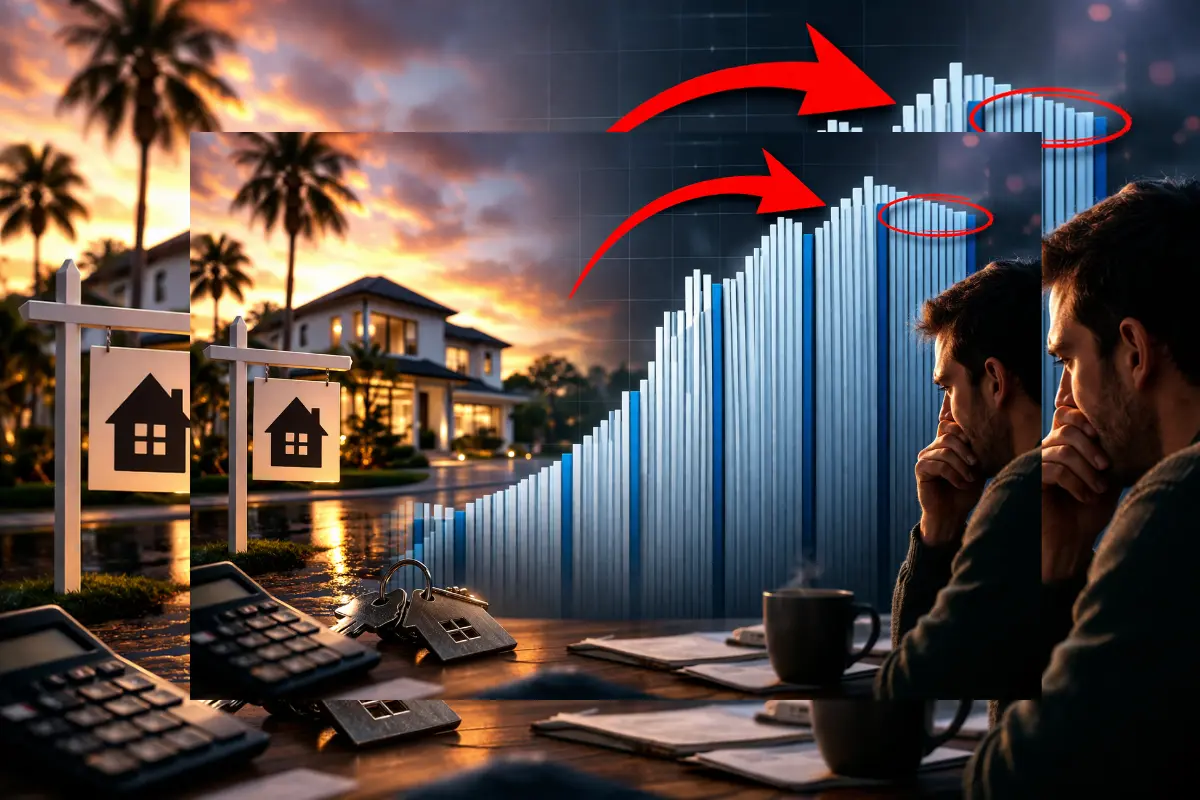
The Moment It Stops Adding Up
There’s a quiet kind of panic that hits when the numbers on paper stop making sense.
The housing affordability gap isn’t something people read about anymore—it’s something they feel the second they open a mortgage calculator and realize the answer isn’t even close.
Right now, it takes about $93,000 a year to afford the average home in the United States, while the median household income sits closer to $86,000. That means the typical family earns less than what’s required to buy the typical house.
For millions of people, that’s the moment the plan breaks.
The Person Behind the Numbers
Take a 34-year-old office worker in Phoenix earning around $82,000 a year. Stable job. No major debt. Years of saving. On paper, everything looks responsible.
But when they sit down with a lender, the answer is simple: not enough.
They’re told they either need a bigger down payment, a second income, or a cheaper home—if one even exists. What used to be considered a solid middle-class income now falls short of entry-level homeownership in many cities.
And they’re not alone.
The Core Fact—and Why It Hits So Hard
The housing affordability gap didn’t creep up slowly. It jumped.
- Around $52,000 income needed in 2020
- About $63,000 by 2022
- Then a sharp climb to nearly $98,900 at its peak
- Now hovering around $93,000
That’s roughly a 79% increase in just a few years.
Wages didn’t move like that.
Most households saw income rise modestly, often just enough to keep up with basic expenses. Not enough to chase a housing market that accelerated far ahead.
This creates a simple but brutal reality: even people doing everything “right” can’t catch up.
Why This Is Happening
The biggest shift came from one place most people don’t see until it’s too late: borrowing costs.
Mortgage rates that sat near 3% in 2020 climbed toward 7–8% in recent years. That alone can double a monthly payment for the same home price.
A house didn’t just get more expensive. It became more expensive to finance.
Then there’s supply.
The U.S. has been short millions of homes for years. Builders slowed down after the 2008 crash and never fully caught up. Add labor shortages, zoning limits, and higher material costs, and fewer homes hit the market just as demand surged.
Demand didn’t come from nowhere either.
During the pandemic, remote work pushed people to move, upgrade, or leave cities. Investors stepped in too, buying homes in bulk, often with cash. First-time buyers suddenly found themselves competing with companies.
And then something unexpected locked the system in place.
Millions of current homeowners secured ultra-low mortgage rates years ago. Selling now would mean giving that up and taking on a much higher rate. So they stay.
Fewer sellers. Fewer listings. More pressure on buyers.
The Debate Everyone Is Having
Some economists argue this is a temporary imbalance. If interest rates drop, monthly payments ease, and affordability improves.
Others say the gap runs deeper.
A recent analysis by the National Association of Realtors points to long-term supply shortages as a core issue. Even if rates fall, there still aren’t enough homes in the right price range.
On one side, you hear: “Wait it out. The market will correct.”
On the other: “This is the new normal.”
Online discussions reflect that divide. Reddit threads with hundreds of replies show the same split—some users tracking rates daily, others giving up entirely and shifting to long-term renting.
The tone isn’t angry as much as it is tired.
The Reality People Are Living
First-time buyers are disappearing—not because they don’t want homes, but because the math blocks them.
The share of first-time buyers has dropped to historic lows.
That changes more than just ownership rates. It shifts timelines.
People are delaying families. Staying in rentals longer. Moving back in with parents. Pooling money with partners or even friends just to enter the market.
Some are turning to unconventional options like multi-generational homes or smaller properties far from city centers.
Others simply pause.
The Gut Check
If you’ve ever looked at your paycheck and thought, “This should be enough,” this is where the frustration lands.
You did the saving.
You built the credit.
You followed the advice.
And still, the numbers say no.
That’s what makes the housing affordability gap feel different from past market swings. It doesn’t feel like bad timing. It feels like a door quietly closing.
Where It Leaves People Now
Back in Phoenix, that same buyer runs the numbers again, hoping something changed.
Maybe rates dipped.
Maybe prices softened.
Maybe this time it works.
But the result looks familiar.
Close—but not close enough.
And the question that follows isn’t about markets or policies. It’s simpler than that.
If the average income can’t buy the average home… what exactly is the plan now?