

A quiet night out doesn’t feel so simple anymore.
That uneasy pause before taking a sip — that’s exactly where the idea of drink spiking nail polish begins to make sense.
It started with a simple question: what if you could test your drink without anyone noticing?
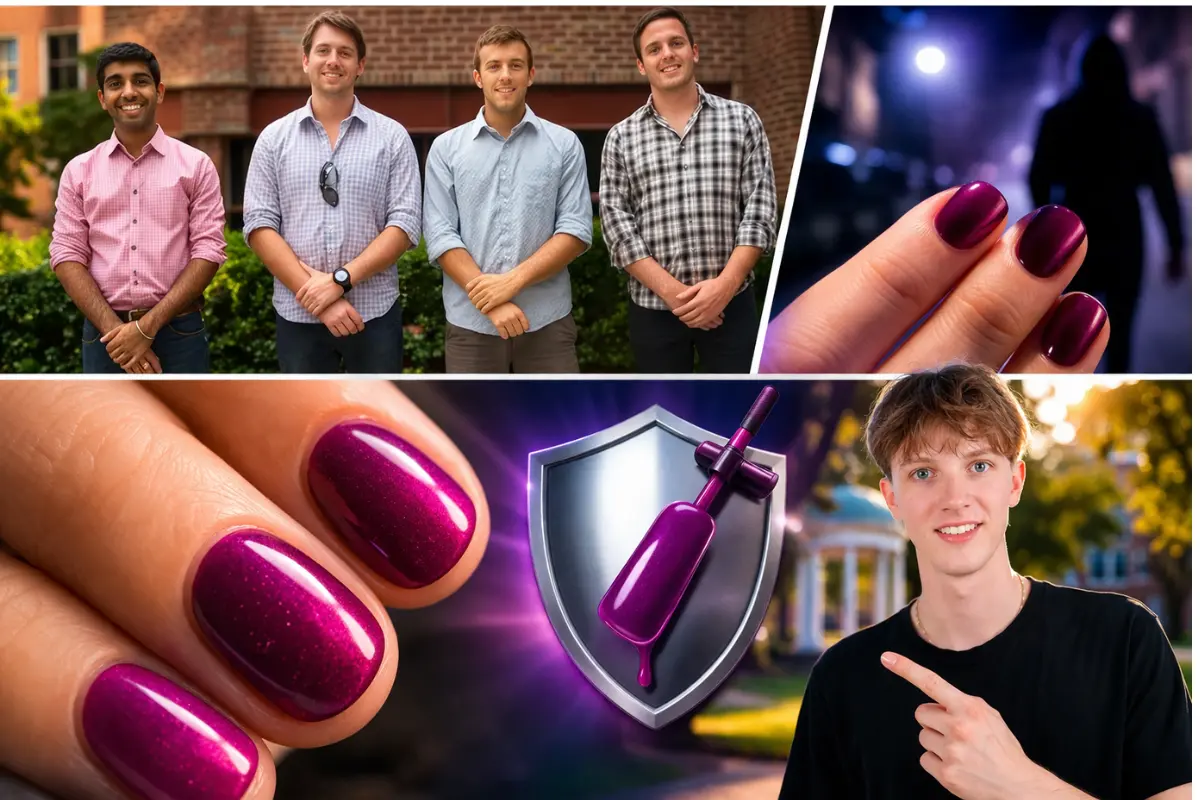
A group of students from North Carolina State University believed you could.
The One Detail Most People Miss
Most people assume drink tampering is rare or easy to spot.
It isn’t.
Many of the substances linked to drink spiking are colorless, odorless, and nearly impossible to detect without tools. That’s what made the nail polish concept stand out — not because it looked flashy, but because it tried to fit into something people already use every day.
You dip your finger into a drink. If the polish changes color, something may be wrong.
Simple on paper. Much more complex in reality.
What This Nail Polish Actually Does
The idea, later known as “Undercover Colors,” was built around a chemical reaction.
The polish contains materials designed to react when they come into contact with certain substances often linked to drink tampering, such as Rohypnol or GHB.
When those compounds are present, the polish shifts color.
No extra device. No visible test kit. Just a quick, discreet check.
That’s what made it go viral.
It felt like something out of a spy movie — but grounded in everyday life.
Why These Students Built It
The project didn’t come from a random lab assignment.
It came from personal stories.
The students behind the idea said they were motivated by knowing people who had been affected by drink-related incidents.
They weren’t trying to build a beauty product.
They were trying to build a layer of awareness.
And they worked on it like it mattered — long hours, repeated testing, and a clear goal: make something people could actually use in real situations.
What It Means in Daily Life
If it worked perfectly, the impact would be obvious.
You’re at a bar. You step away for a moment. You come back. Instead of guessing, you check.
That moment of doubt becomes a quick signal.
No conversation needed.
No attention drawn.
That’s the appeal.
It fits into real behavior without asking people to change how they act.
But here’s where things get complicated.
The Limits No One Talks About Enough
The polish doesn’t detect everything.
Some substances may not trigger a reaction. Some drinks could interfere with results. And timing matters — not every reaction is instant or clear.
There’s also a bigger reality.
Research shows that alcohol itself is often the most common factor in these situations, not rare or exotic substances.
So while the nail polish targets specific compounds, it doesn’t solve the full picture.
That’s where critics step in.
The Debate That Took Over Online
The reaction wasn’t just excitement.
It was divided.
On one side, people saw a smart, practical idea.
Something small that could help someone avoid a bad situation.
On the other side, critics raised a harder question:
Why is the solution focused on the person at risk instead of the person causing harm?
That question didn’t go away.
It showed up in comment sections, articles, and long online threads where people debated whether tools like this actually shift responsibility in the wrong direction.
Some called it helpful.
Others called it incomplete.
Both sides had a point.
A Bigger Trend Behind the Idea
The nail polish didn’t exist in isolation.
It became part of a larger wave of “hidden safety tools” — everyday objects designed to do more than they seem.
Things like:
- Drink-testing coasters
- Smart straws
- Portable test kits
- Wearable alerts
All built around the same idea: protection without drawing attention.
That’s the real shift.
Not just one product, but a growing push to blend safety into normal routines.
The Human Side That Stays With You
Strip away the headlines, and the story comes back to a simple moment.
Someone sitting with a drink, unsure if it’s safe.
That’s the gap this idea tries to fill.
Not with guarantees.
Just with a signal.
The students behind it didn’t claim to fix everything. They tried to create something small that could help in a specific moment.
And whether people see it as a smart step or an incomplete answer, the reason it spread so fast is clear:
It speaks to a situation many people recognize, even if they’ve never said it out loud.
The One Thing to Watch Next
The concept made headlines years ago, but the real milestone isn’t hype — it’s whether tools like this can meet strict testing standards and become widely available.
Because an idea is easy to share.
A reliable product is much harder to build.
And that’s where this story still stands today.
Right at that line between possibility and proof.