


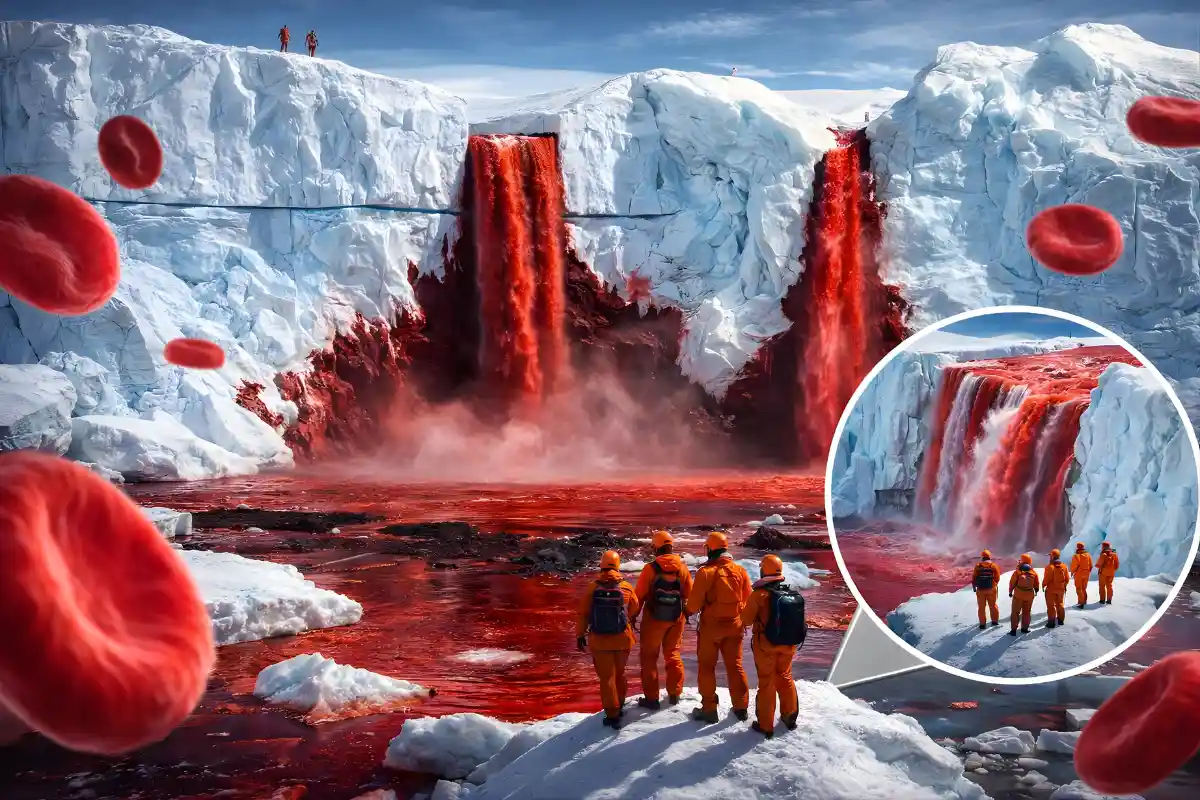
The first time I saw Antarctica Blood Falls, I thought someone was messing with Photoshop. A white glacier. A red waterfall. It looked fake. Like a horror movie set.
But it’s real. I double-checked.
Antarctica Blood Falls flows out of the Taylor Glacier in East Antarctica. The water is packed with iron and salt. When it hits the air, the iron reacts with oxygen and turns red. Like rust on an old bike.
That’s it. No mystery creature. No secret lab. Just iron and air.
Still wild, though.
Why It’s Red
When I first heard about it, I thought, “Is it algae?” That’s what early explorers thought back in 1911 when geologist Thomas Griffith Taylor spotted it.
Turns out, no.
The water under the glacier is rich in iron. Down below, it looks darker and less bright. When it comes out and meets oxygen, the iron rusts. That’s when it turns that deep red color.
It’s the same thing that happens when metal sits out in the rain.
Simple chemistry. Dramatic result.
Why It Doesn’t Freeze
Here’s the part that surprised me more.
Antarctica is cold. Like, painfully cold. So how does water even flow there?
Salt.
The water under the glacier is not just salty. It’s way saltier than the ocean. Some studies show it’s two to three times saltier than seawater. Salt lowers the freezing point. So even when the air drops far below zero, this brine stays liquid.
Think of it like road salt in winter. Same idea. Bigger scale.
The brine sits under about 400 meters of ice. Over time, pressure builds. Cracks form. Then the red water pushes out.
It’s not bleeding. It’s venting.
There’s Life Under There
This part made me stop.
The water trapped under that glacier has been sealed off for a very long time. Some researchers think millions of years. No sunlight. No fresh air.
And yet, there are microbes living in it.
Tiny life forms survive down there by feeding on iron and sulfur. No oxygen needed.
When I read that, I thought about space. If life can live under ice like that, what else is possible?
Scientists study this place to better understand how life might survive on Mars or icy moons like Europa.
It’s not science fiction. It’s happening right now.
The Internet Had Feelings
Of course, when photos of Antarctica Blood Falls started popping up online, people lost it.
I saw comments like:
“The Earth is bleeding.”
“This looks like a crime scene.”
Some people joked that Antarctica had a bad day. Others thought it was a sign of climate doom.
I get it. The image is shocking.
But it’s not a warning sign. It’s not pollution. It’s natural.
Still, I can’t blame people for reacting. A red waterfall in a white desert looks dramatic. You don’t see that every day.
What We Know So Far
Here’s what I’ve learned digging into it:
- It was first seen in 1911.
- It flows from the Taylor Glacier in the McMurdo Dry Valleys.
- The red color comes from iron reacting with oxygen.
- The water is super salty, so it doesn’t freeze easily.
- Microbes live in the brine beneath the ice.
Scientists only figured out how the flow works in recent years. Ground scans showed a hidden network under the glacier. The brine moves through cracks before reaching the surface.
For over 100 years, people wondered what was going on. Now we have solid answers.
Can You Visit It?
Not really.
Antarctica is one of the most remote places on Earth. The Dry Valleys are even more remote. Tourists rarely get close to Blood Falls. Access is tightly controlled to protect the area.
So for most of us, it’s something we’ll only see in photos.
Maybe that adds to the magic.
Is It Changing?
People always ask that. With climate shifts in the news, it’s a fair question.
Right now, there’s no clear sign that Blood Falls is speeding up or slowing down in a dramatic way. It still flows in bursts. The process stays the same: pressure builds, cracks open, red brine spills out.
Researchers keep watching it. Antarctica matters when we talk about sea levels and ice sheets.
But Blood Falls itself isn’t some sudden crisis.
Why It Sticks With Me
I’ve seen a lot of strange nature photos. Pink lakes. Blue lava. Glow-in-the-dark waves.
But this one feels different.
Maybe it’s the contrast. Bright white ice with deep red water slicing through it. It looks like a painting.
Or maybe it’s the idea that something so simple — iron plus air — can create something that looks so unreal.
We like big stories. Hidden threats. Secret causes.
Sometimes the truth is just chemistry.
Still, I keep going back to that image. A frozen place. A red flow that won’t freeze. Life surviving in total darkness under thick ice.
It reminds me that the planet doesn’t need drama to be strange. It already is.