


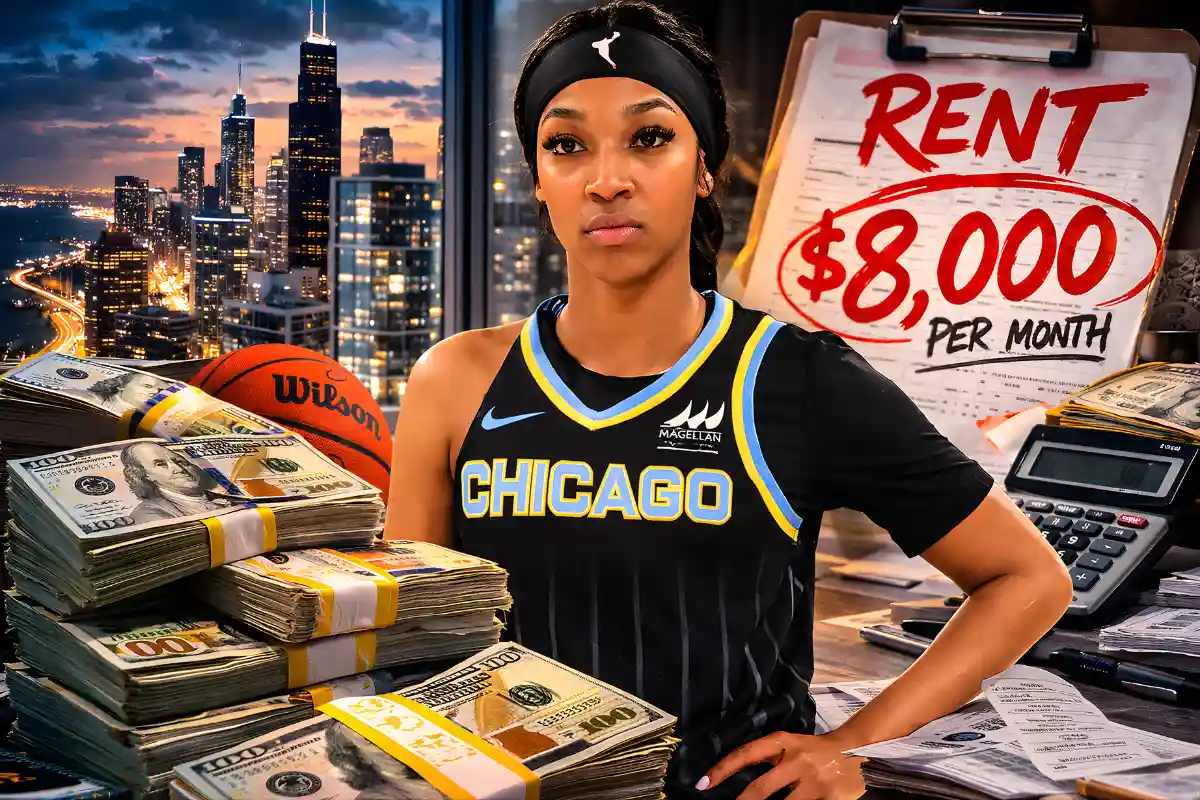
A rookie pro athlete earning about $73,000 a year might sound solid — until the rent bill shows up. When reports spread that Angel Reese pays close to $8,000 a month for housing, fans did the math fast. The result? A viral debate about sports pay, big-city costs, and what “making it” really looks like.
The buzz started when Chicago Sky star Angel Reese talked about life on a rookie deal. Her base WNBA salary sits in the low-to-mid five figures. That number quickly turned into a social media talking point once housing costs entered the chat.
Fans began asking the same simple question:
How can a pro athlete earn less than the rent she’s said to pay?
What the numbers actually show
Here’s what is publicly known about the situation:
- Rookie contracts in the WNBA often range from about $70K to $80K per year.
- Luxury apartments in major cities like Chicago can reach $6K–$10K monthly.
- Many players boost income with endorsements, brand deals, and off-season leagues.
- Reese has built a strong personal brand that goes far beyond her league pay.
Still, viral math does not wait for context. Screenshots spread. Memes popped up. Comment sections filled with hot takes and cold jokes.
The internet reacts — loudly
Social media users did what social media users do best: compare lives.
One viral comment read:
“Imagine making $72K and signing a lease for $8K rent. That’s a horror movie plot.”
Another joked:
“Pro athlete salary vs luxury influencer lifestyle. Pick your fighter.”
Others defended Reese.
“She’s not just a player. She’s a brand,” one fan wrote.
A non-fan added, “This is about league pay, not her choices.”
The debate spilled into sports talk shows, podcasts, and finance channels. Everyone had a calculator. Everyone had an opinion.
A bigger pay gap story
The topic taps into a long-running talk about pay in women’s sports.
Compared to the NBA, WNBA salaries are much lower. That gap is tied to revenue, TV deals, and league size.
Key context often shared by analysts:
- The WNBA salary cap is far smaller than the NBA’s.
- Many players earn more overseas than at home.
- New media deals and rising viewership could change future pay.
Some economists point out that league growth takes time.
Fans counter that star power is rising faster than salary growth.
Endorsements change the math
Here’s where the story gets more layered.
Reese’s off-court earnings, from sponsorships and marketing deals, can exceed her base salary by a wide margin.
That leads to another viral line of thought:
Is the rookie pay debate missing half the story?
Brand deals and athlete endorsement income have become a key part of modern sports finance.
Players now build personal brands early. Social media reach often matters as much as points per game.
One finance creator summed it up in a trending clip:
“League salary is step one. Personal brand is step two. Most fans only see step one.”
The Chicago cost angle
Luxury housing costs in big cities also became part of the narrative.
Real estate pages began using the story as a case study.
Videos toured high-rise apartments with skyline views and private gyms.
Some viewers asked:
Why choose luxury living on a rookie deal?
Others replied:
Security, image, and convenience matter for public figures.
The debate turned into a wider talk about cost of living in major cities.
Suddenly, the topic wasn’t just sports. It was about modern life.
Memes, jokes, and late-night laughs
Comedy shows and podcasts joined in.
The contrast between pro athlete pay and high-end rent became an easy punchline.
Popular meme themes included:
- “WNBA contract vs influencer contract”
- “My rent vs my paycheck calculator crash”
- “Luxury lease energy on rookie budget”
Humor kept the story alive longer than most sports finance topics ever manage.
Lessons fans say they see
Amid the jokes, some viewers found deeper takeaways:
- Budget choices matter, even with fame.
- Athlete income is more complex than base salary.
- Public perception often skips context.
A puzzling angle also emerged.
College athletes with strong NIL deals sometimes earn more than rookies in pro leagues.
That twist surprised many casual fans.
Why this story resonates
At its core, the viral moment connects with everyday stress.
Housing costs. Paychecks. Lifestyle choices.
Most readers can relate, even if they never dribble a ball.
The story reflects a shift in how sports success is viewed.
Today, fans track contracts, brand deals, and lifestyle moves in real time.
And in a world where viral math spreads faster than facts, nuance often arrives late.
CONCLUSION
In the end, the Angel Reese rent debate says as much about the internet as it does about sports pay. Numbers spark headlines. Context trails behind.
Maybe the real lesson is simple:
Whether you’re a rookie athlete or an office worker, rent math hits hard.
And if nothing else, this story proved one thing.
The internet loves two topics more than any box score — money and housing.