

You know that hollow feeling when someone else’s paycheck looks like it belongs to another planet. The phrase “airline pilot salary” suddenly stopped sounding like trivia and started sounding like a fault line.
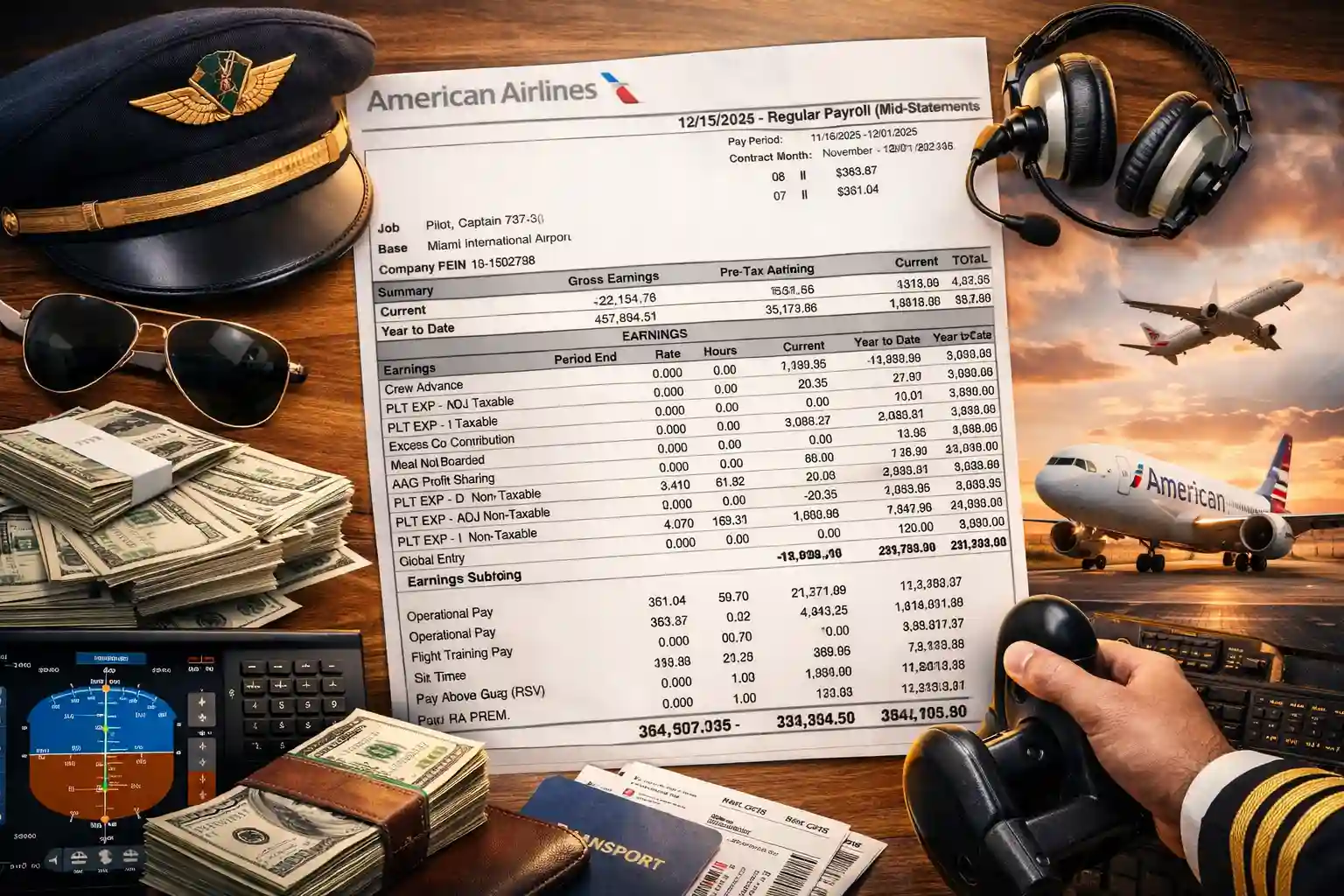
The moment that pushed it into public view was oddly mundane: a screenshot of a pay statement shared online by a Miami-based American Airlines Boeing 737 captain. The figure at the center was about $458,000 year-to-date, with hourly pay listed at more than $360. For many readers, the first question was simple and blunt: is that normal?
The Human Anchor
The pilot who posted the pay statement did not set out to become a headline. By most accounts, he is a senior captain based in South Florida, part of the group that has spent decades moving through airline ranks. The image showed what he had earned so far that year, not a lifetime total or a one-time bonus.
Still, the number alone was enough.
He did not offer a grand speech about pay equity. He simply shared proof.
And the internet took it from there.
The Core Fact and What It Means
Major U.S. airlines now pay top-tier captains far more than many travelers assume. Recent labor contracts and industry data show that experienced captains at large carriers can earn well above $400,000 annually, depending on aircraft type, seniority, and schedule.
Wide-body pilots, who fly long-haul routes on larger aircraft, can earn even higher hourly rates. New contracts at several airlines include raises through the late 2020s, reflecting a tight labor market after pandemic layoffs and early retirements.
For readers outside aviation, the stakes are personal. Pay levels at the top of a field often shape expectations elsewhere. When one profession breaks past a perceived ceiling, it changes how people talk about value, risk, and fairness.
That is why the screenshot spread.
Why It Is Happening
Airline pay is the result of several forces moving at once. The first is supply. Training a commercial pilot takes years, requires significant financial investment, and is governed by strict safety rules. The pool of qualified candidates is smaller than demand during periods of travel growth.
The second factor is bargaining power. Pilot unions in the United States have negotiated multi-year contracts that lock in raises tied to both inflation and airline profitability. Analysts note that pilot groups entered negotiations with strong momentum after the rebound in travel demand.
A third reason is the nature of the job itself. Aviation regulators cap how many hours pilots can fly, which means compensation is not structured like most hourly work. A high hourly rate reflects both skill and the limits on how often that skill can be used.
The result is a pay model that feels foreign to people used to clock-in wages.
The Debate Unfolds Online
A Reddit thread that gathered hundreds of replies became a microcosm of a broader wage debate. Some commenters defended the pay, pointing to years of training and the responsibility of carrying hundreds of passengers at a time. Others saw the number as evidence of a widening gap between elite professions and everyday jobs.
One widely shared comment read, “Pilots negotiated what they could. Why didn’t everyone else?” That line captured the tone: admiration mixed with frustration.
The divide was not just about pilots. It was about the rules people believe govern success.
A Pattern in Modern Work
Economic researchers often describe a shift toward winner-take-most pay structures in specialized fields. Professions tied to high risk, regulation, or scarce expertise tend to see outsized earnings at the top. Aviation fits that pattern.
At the same time, many workers feel stuck in roles where extra effort does not translate into higher pay. This contrast creates emotional whiplash when a headline salary surfaces online.
It is not just envy.
It is confusion.
And sometimes disbelief.
Real Context Beyond the Screenshot
Industry data shows the path to a top airline captain’s salary is long. Many pilots begin at regional airlines earning under $100,000 a year. Moving up requires thousands of flight hours, years of seniority, and the willingness to relocate or accept unpredictable schedules.
The lifestyle can be demanding. Pilots often work nights, weekends, and holidays. Fatigue rules restrict flying time but do not eliminate time away from home.
None of that nuance fits neatly into a viral image.
Yet it shapes the reality behind the number.
The Human Reaction
If you have ever stared at your own paycheck and wondered how far it can stretch, this story hits a nerve. A salary like $458,000 is not just a statistic. It becomes a mirror for questions about fairness, ambition, and what different careers promise.
Some readers see inspiration in it. Others see distance.
Most feel both.
Returning to the Moment
The Miami captain likely logged off after posting the screenshot, returning to preflight checks and routine safety briefings. His day did not change because the internet argued about his income.
But the conversation he sparked keeps moving.
And the next time you book a flight or glance at your own pay stub, you might find yourself asking a quieter question: what would it take for your work to feel valued in the same way?