

how this story hooked me
I remember watching that Super Bowl like it was yesterday. The game itself? Pretty much decided early. My phone, though, was more fun than the TV. Group chats were firing off jokes, memes, complaints about the score, and side bets gone wrong. Then the game stopped for a moment. Commentators went quiet. Cameras cut away. And someone said, “Wait… did a guy just run on the field?”
That’s when this story really started.
Because it wasn’t just a streaker. It was a streaker who claimed he bet on a streaker. Himself.
And that’s why people still talk about it.
What happened first (the part everyone asks about)
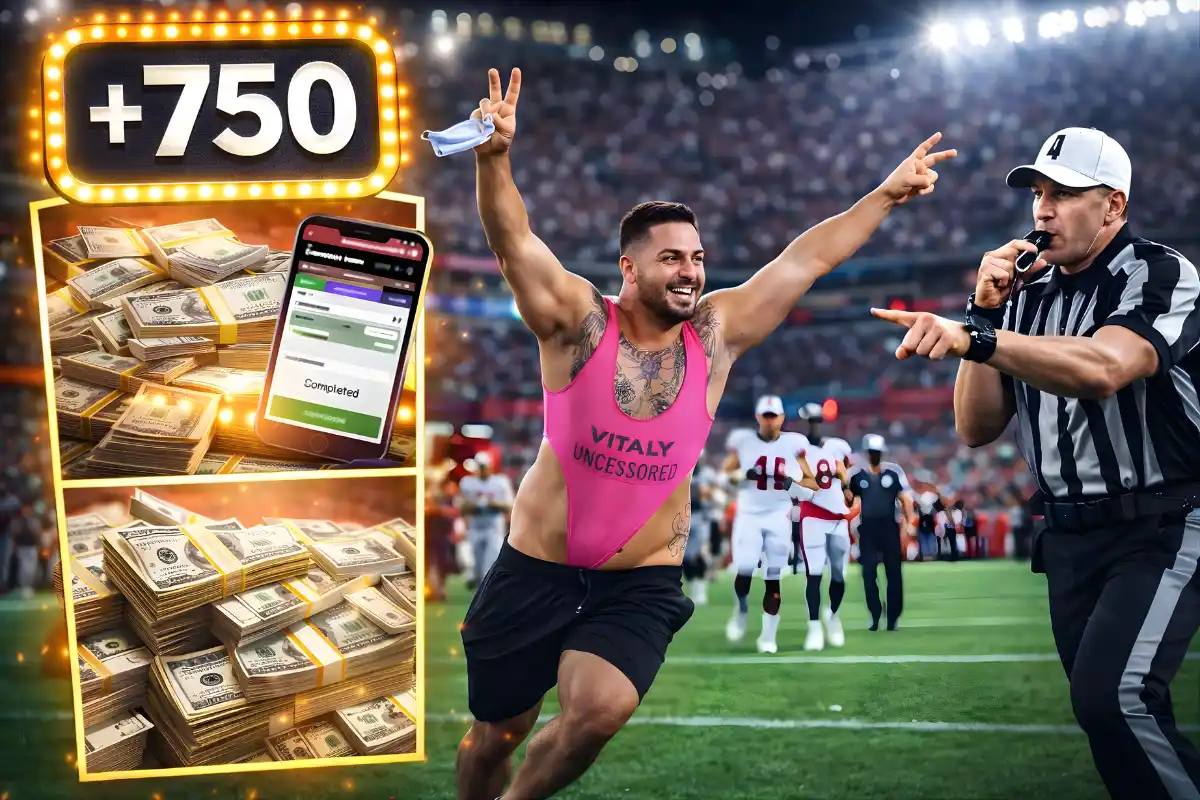
During Super Bowl LV in 2021, a man ran onto the field late in the fourth quarter. Security tackled him fast. TV viewers barely saw it because networks don’t show that stuff anymore.
After the game, the internet filled in the blanks.
The man later said he had placed a $50,000 bet that someone would run onto the field during the game. The odds were said to be +750.
If that bet paid out, the profit would land around $374,000.
The fine for running on the field?
About $1,000.
That gap alone made people stop scrolling.
Why this wasn’t just another streaker
People run onto fields more often than leagues like to admit. It happens at football games, soccer matches, even tennis events. Usually it’s written off as a dumb stunt.
This time felt different.
Money was involved. A lot of it.
I remember reading the headline and thinking, “No way this is real.” And I wasn’t alone.
Sports bettors were split right down the middle.
Some said:
“That’s genius. Risky, but genius.”
Others said:
“No sportsbook would ever allow that bet.”
Both sides had a point.
The betting part that raised eyebrows
Here’s where things get messy.
Yes, streaker prop bets have existed. They usually show up as novelty bets. Same category as:
- Coin toss results
- Gatorade color
- Anthem length
But here’s the catch.
Most legal sportsbooks cap those bets hard. We’re talking small limits. Not $50,000.
So how could this even happen?
The most likely answer people landed on was offshore sportsbooks.
Offshore books:
- Allow higher limits
- Don’t answer to U.S. rules
- Don’t confirm payouts publicly
That explains why no major sportsbook ever stepped forward to say, “Yes, we paid him.”
And that’s also why the story lives in this gray zone between proven and possible.
Was the payout real?
Short answer: parts of the story are confirmed. Parts aren’t.
What’s solid:
- The man did run onto the field
- He did claim he placed the bet before the game
- Similar bets have existed
What’s unclear:
- Where exactly the bet was placed
- Whether the full payout was honored
Fact-checkers later said the claim wasn’t made up, but also couldn’t be fully proven with paperwork.
And honestly? That uncertainty made it spread even more.
People love a story where the system might’ve been beaten.
The internet reaction was wild
I watched this play out online in real time.
Some fans crowned him a legend.
Posts everywhere said things like:
- “Best run of the night.”
- “Outperformed half the roster.”
- “Risk vs reward math checks out.”
Memes popped up showing the streaker labeled “MVP.”
But others pushed back hard.
One comment stuck with me:
“If this is real, it’s the last time sportsbooks offer fun bets.”
That turned out to be pretty close to the truth.
How sportsbooks reacted behind the scenes
After that Super Bowl, something changed.
People noticed:
- Fewer novelty prop bets
- Lower limits on weird bets
- Tighter rules in the fine print
Sportsbooks don’t like bets that fans can control themselves. It’s the same reason you don’t see props on fights breaking out in the stands or mascots tripping players.
This streaker story became a quiet lesson.
If a bet can be forced to happen, it doesn’t belong on the board.
Legal trouble vs the money
Another reason this story stuck? The punishment felt tiny.
Running onto the field usually leads to:
- Trespass charges
- A fine
- A stadium ban
Compared to hundreds of thousands of dollars, that felt like nothing.
People asked real questions:
- Should fines be higher?
- Does this invite copycats?
- Is this a safety issue?
Others just shrugged and said:
“People will always do dumb stuff for money.”
That might be the most honest take of all.
Fans and non-fans saw it very differently
Football fans were annoyed but amused.
One friend texted me:
“That streaker had more impact than our offense.”
Non-fans loved it.
I saw comments like:
- “This is the only reason I’m glad I watched.”
- “I don’t get football, but I get this.”
It crossed out of sports talk and into regular conversation because it wasn’t really about football. It was about someone spotting a loophole.
Why this story keeps coming back
Every Super Bowl season, this story resurfaces.
Usually when:
- Betting ads ramp up
- Someone asks about prop bets
- Another fan runs onto a field
It’s become shorthand for a bigger idea.
That sometimes the biggest moment in the biggest game has nothing to do with the score.
And that money changes how we see everything.
The part that still makes me laugh
The funniest thing? The broadcast never showed it.
Millions watched. Almost no one saw it live.
Yet years later, people remember the streaker more than half the plays from that game.
That says a lot about how sports, betting, and the internet collide now.
Final thought
I don’t know if that streaker really walked away with every dollar people claim. No one outside that betting slip ever will.
But the story worked because it felt possible.
One risky bet. One short run. One small fine.
And a reminder that sometimes the most talked-about moment of the Super Bowl doesn’t happen in the end zone.
It happens when someone decides to test the rules—and the rest of us can’t stop talking about it.