
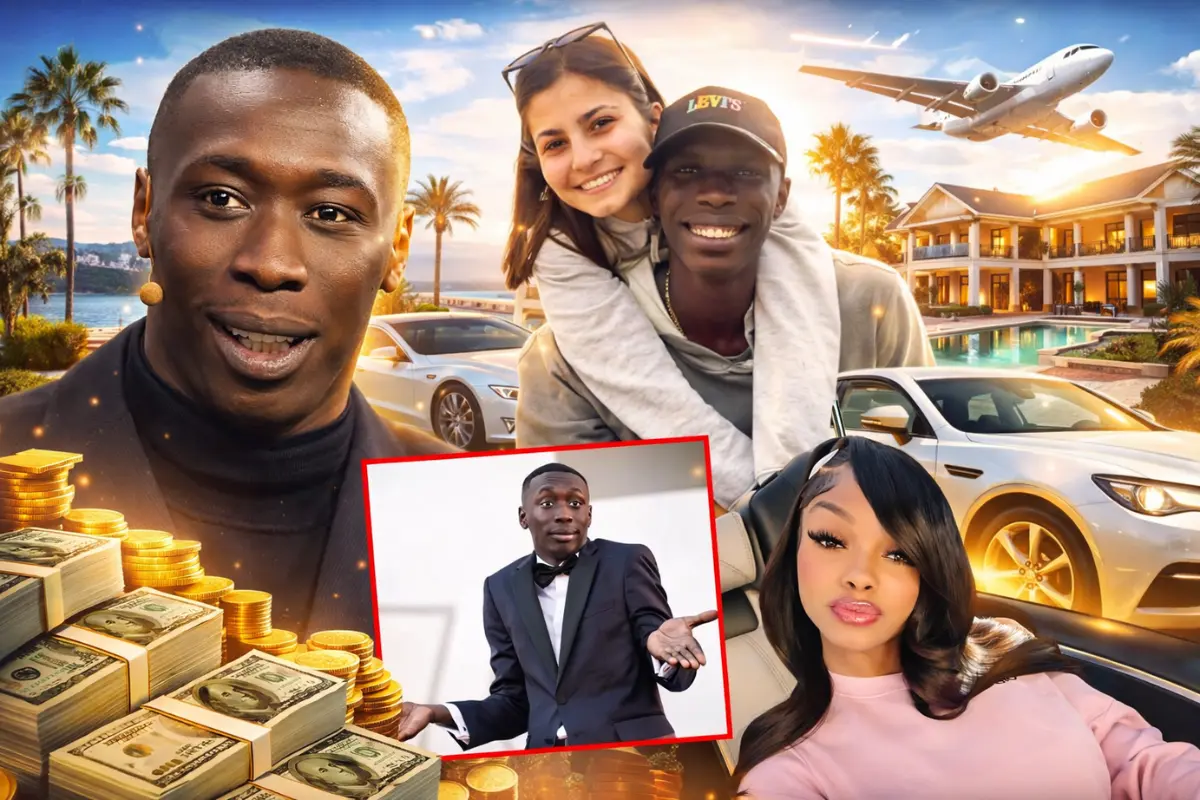
A quiet paper filing can feel louder than any viral video.
The phrase “Khaby Lame divorce” started spreading after reports claimed his wife filed to end their marriage and seek a share of his wealth. But what caught people off guard wasn’t just the split—it was the claim that the most-followed TikTok creator may legally own nothing at all.
That detail turned a private situation into a global conversation almost overnight.
The Scene
It didn’t begin with a press statement or a polished announcement.
It began with fragments—legal whispers, reposted claims, and screenshots circulating across social platforms. Then came the name: Khaby Lame, the silent creator known for simplifying complicated life hacks, suddenly tied to a story that felt anything but simple.
Within hours, the narrative shifted from “celebrity divorce” to something stranger: how can someone worth millions technically own nothing?
Who He Is — And Why This Blew Up
Khaby Lame built his career on one idea: less is more.
No talking. No overthinking. Just a calm shrug and a simple solution.
That approach made him the most-followed creator on TikTok, surpassing even early platform stars. Brand deals followed. Luxury partnerships followed. Money followed.
Estimates place his earnings in the tens of millions.
So when the divorce story surfaced, the assumption felt obvious—there was a large fortune to divide.
Then came the twist.
The Full Story
Reports tied to the Khaby Lame divorce claim his wife is seeking a portion of his assets as part of the separation process.
That part isn’t unusual.
What is unusual is the claim that those assets may not legally belong to him.
According to circulating court-related information, much of his wealth is reportedly registered under his father’s name rather than his own.
If accurate, this changes everything.
Because divorce courts typically divide what is legally owned—not what appears to be owned.
That creates a gap between perception and paperwork.
And that gap is where the story lives.
Some interpret this as a deliberate strategy—an example of asset protection used by high earners to reduce legal exposure.
Others see it as cultural or family-based financial structuring, where wealth is shared or managed across generations.
And some question whether the details are complete at all.
But regardless of the explanation, the effect is the same: a public figure with visible wealth, and a legal structure that may say otherwise.
That contrast is what made this spread.
Fast.
Public Reaction
The discussion didn’t stay quiet for long.
On platforms like TikTok, Reddit, and X, the tone quickly split.
One side framed it as smart planning.
The other saw it as something that doesn’t sit right.
A Reddit thread with hundreds of replies focused on one idea:
how can someone earn millions and still “own” nothing?
Some comments leaned practical—pointing out that wealthy individuals often use legal structures to manage risk.
Others leaned emotional—comparing it to everyday situations where people can’t hide even a small income from taxes or obligations.
And then there was the humor.
Posts began pairing complex legal explanations with Khaby’s signature shrug.
No caption needed.
Because the joke writes itself.
The Bigger Truth
At its core, the Khaby Lame divorce story isn’t just about a relationship ending.
It’s about how money works at a level most people never see.
Ownership isn’t always straightforward.
Control isn’t always visible.
And the line between the two can shape everything—from taxes to lawsuits to divorce outcomes.
For everyday people, income is simple.
You earn it. It’s yours. It’s counted.
For high earners, it can be layered.
Registered here. Managed there. Owned by someone else on paper.
Same money.
Different reality.
That difference is what makes stories like this feel unsettling.
Not because they’re rare—but because they’re usually invisible.
Conclusion
What started as a quiet filing turned into a loud question.
If someone can build a global brand, earn millions, and still legally own nothing—what does “having money” actually mean?
And more importantly…
Who really owns what, when it matters most?