


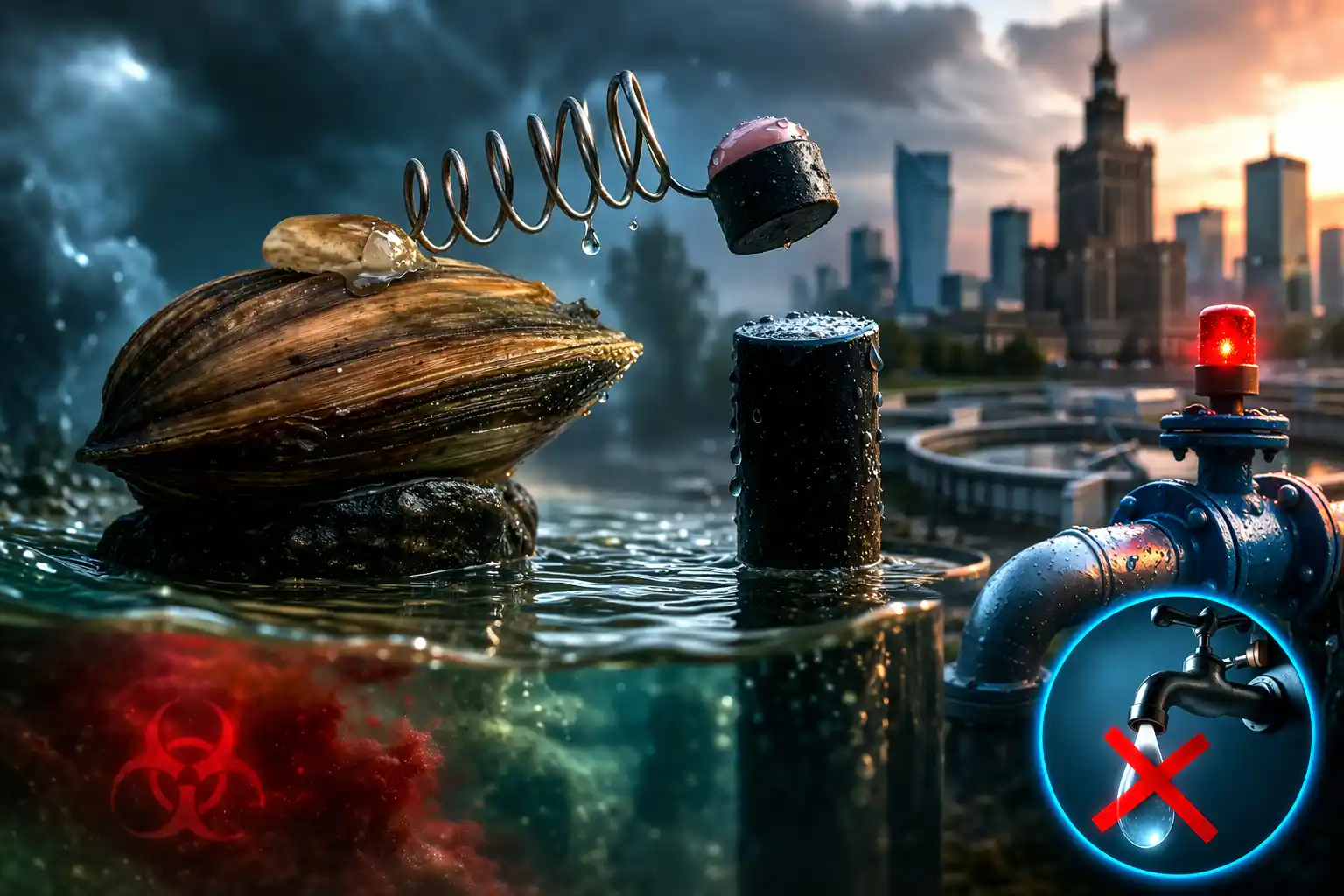
It feels strange to think your drinking water might depend on something that can’t even speak. In Warsaw, mussels water monitoring means tiny shellfish react before any machine sounds an alarm—and for millions of people, that reaction matters more than most realize.
One sudden closure of a shell can trigger attention across an entire city.
So the real question is simple: are mussels actually protecting Warsaw’s water, or is that just a viral exaggeration?
The Surprising Fact Most People Miss
Most people assume water safety is handled entirely by advanced sensors and lab tests. But in Warsaw, a small group of freshwater mussels plays a critical role in early detection.
These mussels act as living warning systems.
They don’t analyze data or send reports. They simply react.
When water is clean, their shells stay open. When something feels wrong—heavy metals, toxins, sudden contamination—they close.
And that natural reaction is exactly what engineers watch.
What Mussels Water Monitoring Actually Means
Despite the viral claim, Warsaw is not “run by clams.” The system is more controlled—and more practical—than that.
At a facility along the Vistula River, eight freshwater mussels sit in a monitored tank connected to the city’s intake water. Each one has a small sensor attached to its shell.
These sensors track movement in real time.
If a single mussel closes, nothing happens. That could be normal behavior.
But if most of them close at once—and stay closed—the system flags it.
That’s when humans step in.
This is not an automatic shutdown system. It’s an early warning layer inside a much larger water safety process that includes lab testing, digital monitoring, and human oversight.
How It Works in Real Life
The process is simple but precise:
Water flows from the Vistula River into a controlled chamber.
The mussels filter that water naturally.
Sensors track how wide each shell is open.
If several mussels suddenly clamp shut at the same time, an alert is triggered.
Engineers then run immediate tests to confirm if contamination is real.
Only after confirmation would any serious action—like adjusting or stopping water flow—be considered.
That distinction matters.
Because online, the story often gets simplified into “mussels shut off the city’s water,” which isn’t true.
They don’t control anything.
They warn.
Why Scientists Still Trust Shellfish
It may sound outdated, but there’s a reason this system exists.
Mussels respond to a wide range of pollutants—not just one specific chemical. That makes them useful in ways many machines are not.
A digital sensor can be programmed to detect certain compounds.
A mussel reacts to anything harmful enough to affect living tissue.
That includes substances that might not yet be identified or measured.
According to environmental monitoring research cited in scientific journals like PubMed Central, biological indicators like mussels are still widely used across Europe because they provide real-time responses to complex contamination.
And they do it without needing calibration every time a new threat appears.
The Real Limits Behind the Viral Story
The viral version of this story leaves out the most important part: mussels are not in charge.
They are one layer.
Water safety in a major city like Warsaw relies on multiple systems working together:
- Automated chemical sensors
- Lab testing teams
- Flow control systems
- Human decision-making
The mussels simply add another level of protection.
There are also limitations.
Not all toxins trigger the same response. Some pollutants may not cause immediate shell closure. Environmental factors like temperature can also influence behavior.
That’s why the system never acts alone.
The Moment That Made This Go Viral
The image of a clam connected to a trigger mechanism spread quickly online, often paired with bold claims.
“8 clams control a city’s water supply.”
That line alone was enough to grab attention.
On Reddit, a thread about the system gathered hundreds of comments. Some people found it fascinating. Others questioned whether something so simple could be trusted.
One user joked, “We trust mussels more than politicians now.”
Another pointed out that using living organisms might actually be smarter than relying only on machines.
The mix of disbelief and curiosity is what pushed the story to go viral.
Because it sounds absurd at first.
Then it starts to make sense.
The Human Side Behind the System
Behind the sensors and tanks are engineers who monitor the system daily.
They don’t just watch screens.
They interpret behavior.
If the mussels react, someone has to decide what that means. Is it contamination? A natural fluctuation? A false alarm?
That decision carries real weight.
Because millions of people rely on that water.
And while the mussels may react first, it’s still humans who carry the responsibility.
Why People Keep Sharing This Story
There’s something about this system that sticks with people.
Maybe it’s the contrast—modern city, ancient method.
Maybe it’s the idea that nature still does some things better than technology.
Or maybe it’s just the image itself.
A small, silent creature acting as a guard for an entire population.
It feels unlikely.
But it’s real.
CONCLUSION
Back at the monitoring station, the mussels continue their quiet work—opening, closing, reacting to changes no one else can see yet.
No headlines. No alarms most days.
Just a system waiting for something to go wrong.
And if it ever does, the first signal won’t come from a machine.
It will come from a shell snapping shut.